
 E-Paper



Former Punjab Police SP gets 10-yr RI in 1993 fake encounter case
Two constables were picked up from their homes, kept in unlawful custody, and later declared as “unidentified militants” killed in an encounter

 Prefer HTon Google


A CBI court in Mohali sentenced former Punjab Police officer Paramjit Singh, 67, to 10 years of rigorous imprisonment in a 32-year-old fake encounter case in which two constables were declared militants and killed. The court also imposed a fine of ₹50,000 on the convict, who was then the station house officer (SHO) of Beas.
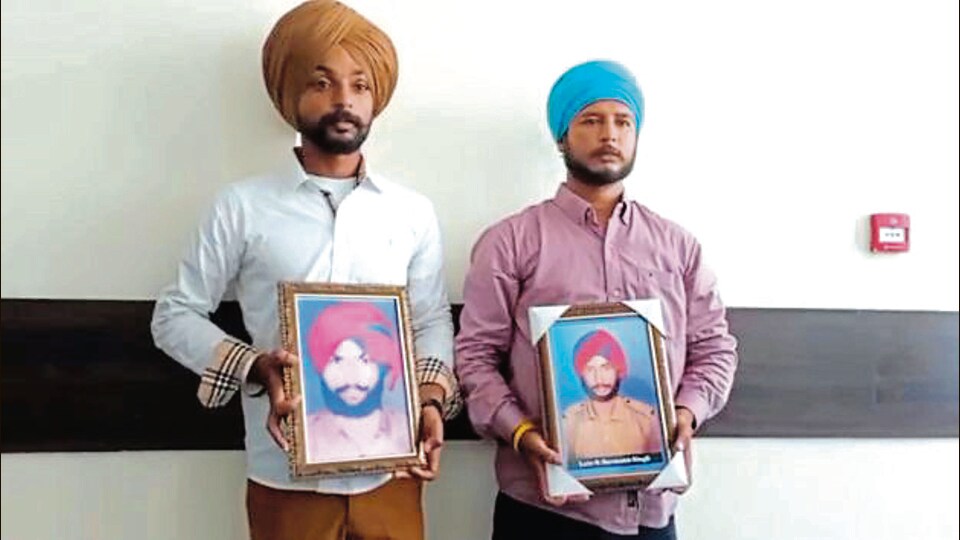
Four others— then inspector Dharam Singh, 77, ASI Darbara Singh, 71, and ASI Kashmir Singh, 69 — were acquitted due to lack of evidence. Another accused, ASI Ram Lubhaya, died during the course of the trial in 2002.
Delivering the judgment, special CBI Judge Baljinder Singh Sra held that the 1993 case had shocked the state for its brazen misuse of power.
As per the CBI investigation, on April 18, 1993, constable Surmukh Singh, a resident of Muchhal village of Baba Bakala, Amritsar, was taken from his home around 6 am by a police party led by inspector Paramjit Singh. Later that day, around 2 pm, another constable, Sukhwinder Singh of Amritsar’s Khiala village, was picked up by a team led by SI Ram Lubhaya.
Two days later, on April 20, Sukhwinder’s parents, Balbir Kaur and Dildar Singh, visited the Beas police station, but were denied access to their son. On April 22, the Majitha Police claimed that two unidentified militants had been killed in an encounter. FIRs were registered under IPC Sections 307/34, Sections 25/54/59 of the Arms Act, and Section 5 of the TADA Act. The bodies were cremated without identification.
Shockingly, within a week, SHO Dharam Singh filed an “untraced report,” claiming the bodies were unidentified and no further investigation was required. However, a subsequent CBI probe established that the “unknown militants” were, in fact, the two constables picked up days earlier by the Beas Police.
The investigation revealed that the encounter was staged and police documents were fabricated to make it appear genuine.
CBI public prosecutor Anmol Narang, assisted by advocates Sarabjit Singh Verka, Pushpinder Singh Natt, and Jagjit Singh, represented the complainant families. The accused were represented by advocates KS Nagra and Janpal Singh.
The case was among several related to mass cremations of unidentified bodies in Punjab that were handed over to the CBI by the Supreme Court in the 1990s. Following the apex court’s directions, a preliminary inquiry was registered by the CBI on December 26, 1995. During the probe, Balbir Kaur testified that her son, Sukhwinder Singh, was taken away by police and never returned. She alleged he had been killed and cremated as ‘lawaris’ (unclaimed). Charges in the case were formally framed on September 9, 1999. However, the trial saw repeated delays due to stays granted by higher courts from 2001 to 2016 and again from 2016 to 2022, owing to what the victim’s counsel termed “frivolous petitions” filed by the accused. These petitions were ultimately dismissed.
Due to the prolonged trial, only 27 witnesses could be examined — several had died in the intervening years, while others allegedly turned hostile under pressure.
After more than three decades of legal struggle, the court has finally delivered its verdict. “Justice has been delayed, but not denied,” said Sarabjit Singh Verka, counsel for the victims’ families. “Despite every attempt by the accused to delay and derail the process, truth has prevailed.”


