
 E-Paper



Guest Column | Double engine or drift: Punjab faces a stark choice
Blurb: Alignment with the Centre is vital. When central frameworks find an implementation partner in the state, fund utilisation improves, and bureaucratic friction reduces

 Prefer HTon Google


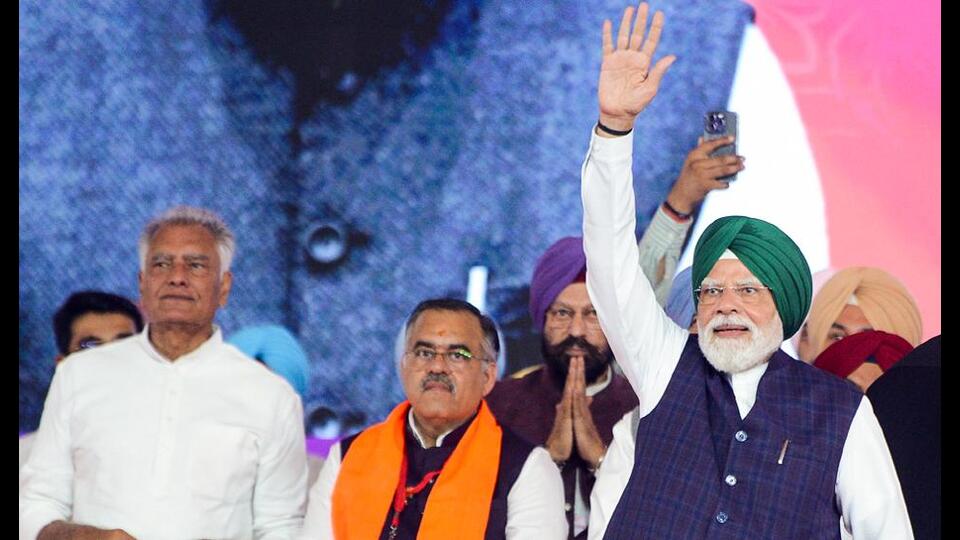
Last Friday, Prime Minister Narendra Modi arrived in Jalandhar and inaugurated rail and road infrastructure worth over ₹5,470 crore — 75 redeveloped Amrit Bharat stations, a new Punjab-Himachal rail line, and highway stretches, including sections of the Delhi-Amritsar-Katra Expressway. The Centre’s development commitment to Punjab, he said, does not depend on who governs the state — a tangible demonstration of what double-engine coordination delivers: capital deployed, projects completed, and connectivity that lowers the cost of moving Punjab’s wheat, rice, and industrial output to market.
But a railway station, however well redeveloped, cannot by itself rescue a state from compounding crises. Punjab, once India’s beacon of agricultural prosperity and industrial growth, now grapples with an agrarian debt spiral, a drug epidemic, mass unemployment, and a deteriorating law and order environment — problems infrastructure spending alone cannot solve, and that demand synchronised Centre-state governance. Before pressing further, a caveat is necessary: coordination is not, in itself, a remedy. It is necessary, not sufficient.
The scale of distress is quantifiable, though estimates vary. Average household agricultural indebtedness stands at ₹2.03 lakh, among the highest nationally; over 54% of farming families are trapped in debt, and farm loans exceed ₹1.4 lakh crore. Youth unemployment (ages 15-29) stood at 20.2%, more than double the national average of 9.9%, per the Periodic Labour Force Survey. The drug menace claims an estimated 782 confirmed overdose deaths annually between January 2024 and April 2025, per the Punjab health department, with PGIMER Chandigarh projecting the real toll at 2-3 times higher.
Compounding this is a deteriorating law and order picture: Cross-border drone trafficking of weapons and narcotics, resurgent gangland shootings and extortion networks reaching into the diaspora, and periodic unrest that unsettles investor confidence. No industry relocates a plant, and no trader expands operations, into a state where security cannot be assured.
Coordinated Centre-state security architecture needed
Law and order is not a side issue to Punjab’s economic revival. It is the precondition for it. A coordinated Centre-state security architecture, integrating BSF surveillance, anti-drone capability, and Punjab Police intelligence, restores that assurance. Indeed, only such an assurance of a safe environment for trade and industry can bring back the capital and generate jobs and revenue in a sustained manner.
These interconnected crises demand integrated solutions spanning economic policy, law enforcement, agricultural modernisation, and skill development — precisely where the double-engine model becomes an operational necessity, not a slogan.
Yet Punjab’s governance capacity is being consumed elsewhere. The Congress, even as it prepares for the 2027 assembly polls, remains locked in a tussle between the Charanjit Singh Channi and Amarinder Singh Raja Warring camps, with successive “unity” meetings in Chandigarh and Delhi failing to even paper over the rift. The ruling AAP finds itself in the cross-hairs of Sikh clergy over the anti-sacrilege law. This is a disconcerting development even as governance challenges intensify.
Both principal contenders, in other words, appear consumed by the contest for power rather than governing. Election cycles bring populist spending and fresh borrowing to shore up short-term fortunes — commitments that deepen debt without addressing structural causes.
Why double-engine governance matters
A state cannot out-borrow a governance deficit. This is why alignment with the Centre matters, and why the BJP’s claim to offer implementable double-engine governance deserves consideration on its merits. When central frameworks find an implementation partner in the state, fund utilisation improves, and bureaucratic friction reduces.
MSP guarantee legislation requires coordination on procurement and credit; the PM Viksit Bharat Rozgar Yojana, targeting three crore jobs for the youth, requires synchronised skill delivery. On the drug crisis, a joint task force to bring the BSF, Narcotics Control Bureau, and Punjab Police under one command is what double-engine alignment reliably delivers.
Yet alignment alone cannot substitute for competence or reform. Punjab needs hard choices: Agricultural subsidy restructuring, land and water reform, revenue enhancement, and institutional capacity-building. This is required urgently regardless of who governs where. A government that uses alignment merely to access resources, without these reforms, will have purchased a longer runway for the same unsustainable trajectory — postponement, not governance.
Sceptics will say alignment cannot guarantee outcomes. True. But misalignment compounded by internal chaos — factional infighting, or a standoff with the Panth’s highest authority — all but guarantees failure. Successive state governments have pursued varied approaches to identical problems without marked improvement, which argues for structural change: a coordinated framework, pursued by a partner genuinely invested in implementation, with clear accountability and synchronised resource flows.
India’s 2047 vision provides the roadmap. Punjab’s role is implementation excellence across agriculture, jobs, skills, and security — not submission to centralisation, but a rational choice to access coordinated resources while its principal actors remain preoccupied elsewhere. The Jalandhar announcements are a down payment. The comeback hinges on turning alignment into sustained reform.
(The writer is a Rajya Sabha MP. Views expressed are personal)


