
 E-Paper



Guest column: Executive accountability in Covid – a fool’s errand
At a time when the executive has abjectly failed in designing a coherent vaccine policy and securing seamless medical supplies, the legislature does not have an avenue to expeditiously hold the executive accountable


As the second wave of the coronavirus pandemic causes carnage throughout the country, the legislature has been conspicuously silent, refusing to convene, ostensibly on grounds of the danger posed by the pandemic to members of the House.
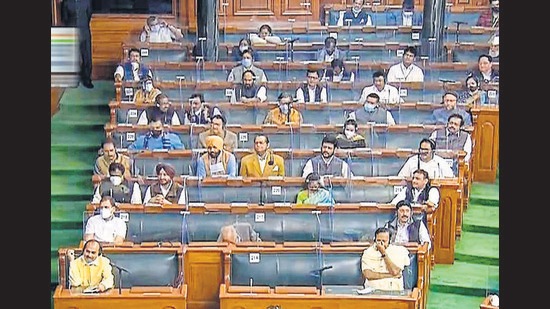
Against this backdrop, it is pertinent to understand the system of government envisaged under the Constitution and whether this system has fulfilled its original purpose during the times of the pandemic. India is a Parliamentary democracy based on the Westminster model where the executive emanates from the legislature. The executive power of the Union vests in the President but he is merely a formal figurehead. A closer reading of the Constituent Assembly Debates sheds light on the architecture of Indian polity. Elaborating on the position of the President, Dr BR Ambedkar, had said, “He is the head of the State but not of the executive. He represents the nation but does not rule the nation.”
The Apex Court has reaffirmed the Parliamentary nature of the executive and has said that the satisfaction of the President does not require his personal satisfaction but satisfaction in the constitutional sense, that is, of the council of ministers.
Ambedkar felt a non-parliamentary executive will be less responsible
The chief protagonist of the parliamentary system was Dr Ambedkar who believed that a non-parliamentary executive will be less responsible. In comparisons drawn with the American presidential system, where strict separation between the legislature and executive existed, the consensus was that it created impunity for the executive. The parliamentary system, it was argued, will preclude the possibility of a dictatorial executive through the principle of collective responsibility. More importantly, it provided for daily assessment of responsibility through questions, resolutions and debates. Such daily assessment, according to Ambedkar, was more effective and necessary than the periodic assessment done by the electorate at time of the election. Thus, the touchstone for choosing the system of government was the one providing greater responsibility.
The inefficiency of the legislature in exercising vigil over the executive has reached the nadir under Covid. Data from PRS Legislative Research reveals that the Lok Sabha has cumulatively met for 34 days in the financial year 2020-21, lowest to date. The 2020 budget session shortened amid the pandemic outbreak, which was followed by a curtailed monsoon session where the question hour was suspended. The winter session was cancelled altogether. The 2021 budget session was adjourned sine die on March 25, two weeks ahead of the original schedule.
The constitutional imperative on calling of sessions is that a period of six months shall not elapse between the last sitting of one session and the first sitting of the next. However, the government of the day enjoys discretion in summoning and proroguing of sessions (excepting cases where President exercises discretion). This provision has been opportunistically utilised to reduce the legislature to a rubber stamp for bulldozing of the annual budget, approval for ordinances and passing of laws through its brute majority. But as evidenced by the Constituent Assembly debates, the legislature is much more than just a law-making forum. The true performance metric of the executive for its daily activities lies in the legislature.
Executive has unchallenged monopoly in summoning sessions
However, the current system ensures the predominance of the executive as it has an unchallenged monopoly in summoning of sessions. In such a scenario, daily assessment of the executive is woefully inadequate when the legislature refuses to meet regularly during a public health emergency such as the pandemic. At a time when the executive has abjectly failed in designing a coherent vaccine policy and securing seamless medical supplies, the legislature does not have an avenue to expeditiously hold the executive accountable since the government can avoid scrutiny by conveniently paying lip service to the six-month condition.
Time is of the utmost essence, and it would be futile for the legislature to do a post-mortem analysis of the executive once the tide has passed. This loophole has unintentionally created a crippled legislature leaving it ill-equipped to carry out its basic function of ensuring ‘greater responsibility’.
Thus, the current design of Indian Parliamentary system with no fixed calendar and vesting the executive with the sole power to convene a session is dysfunctional.
It betrays the original principle of greater responsibility and compromises the independence of the legislature. The indifferent attitude of the executive during Covid-19 is merely a symptom. The real disease lies in the hollow functioning of our parliamentary system and until we have a thorough reinforcement of the parliamentary ethic and spirit, daily assessment will remain elusive.
(The writer is an advocate at the Punjab and Hayana high court. Views expressed are personal)


