
 E-Paper



Guest Column | Kolkata doctor rape-murder calls for radical changes in residency
Doctors who pursue their master’s degree or specialisation are popularly called ‘residents’. They run the show, working long hours under a pressure-cooker situation without leave. A resident is the most hard-working, most burdened yet most neglected individual in the medical college.

 Prefer HTon Google


The RG Kar Medical College and Hospital rape-murder case has caused a stir across the country. The body of a second-year resident lady doctor in the chest medicine department was found inside the seminar hall of the hospital with multiple injury marks on August 9. The preliminary autopsy report indicated sexual abuse before her murder. Various disturbing angles are emerging from this heinous crime and now it’s being investigated by the Central Bureau of Investigation (CBI) after the Calcutta high court’s intervention.
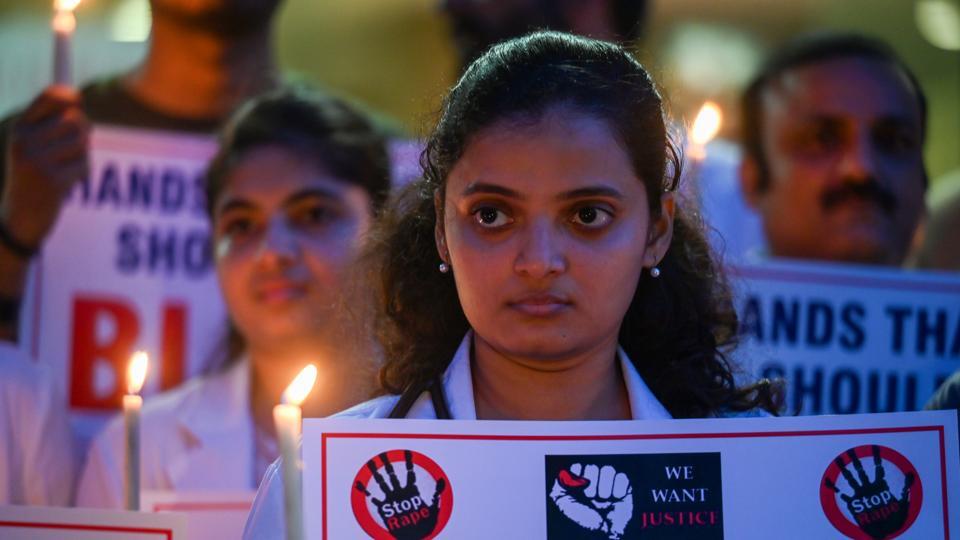
Apart from the deep-rooted misogynist mindset of Indian society, the tragedy has brought forth major flaws in the residency system of India. On the fateful night, during her 36-hour-long shift, the resident doctor had dinner with her juniors around 2am. She then went to the seminar room, since there was no separate on-call room, to take rest. Doctors who pursue their master’s degree or specialisation in various disciplines are popularly called ‘residents’ or ‘PG trainees’. The resident is that white-coat who runs the show in medical colleges. It’s the resident who spends the maximum time in patient care from the first point of contact in the emergency to the last (either discharge or demise). Residents in India work long hours under a pressure-cooker situation without any leave.
Inhumane conditions
Heavy patient load, complex cases coupled with limited resources at their disposal and high-stakes decision-making contribute to an extremely high-stress environment. It’s a joke in medical colleges that a resident is at the bottom rung of the hierarchy. The hierarchy goes like: Professor>associate>assistant>SR>matron>nurse>aaya>sweepers>chowkidar>stray dogs, cockroaches and termites in the ward>JR3>JR2>JR1. Though passed as a joke, this is the realistic picture. A resident is the most hard-working, most burdened yet most neglected individual in the medical college. Apart from taking care of the patient; the resident is supposed to run the “tea club” for faculty, do the personal chores of the professor, get the discharge cards printed, fill gas in the AC or water in the coolers, give expensive gifts at Diwali, provide expensive “guru-dakshina” during thesis submission, help the faculty “run their private shops” and what not!
Asking women residents for sexual favours, just like the casting couch in the film industry, is not uncommon. Married women residents are “encouraged” not to get pregnant during residency. Their hostels are shabby and messes a mess. The author did his residency from a prestigious medical college where the residents had to go to a nearby mall, not for shopping but to answer nature’s call. Getting a leave sanctioned is considered next to a miracle in residency. You can spot cases where residents are given a one-day leave to get married or to bury a parent.
Since the public healthcare system of India is rotten up, expectations of the patients and their relatives are often unmet. In the medical colleges, it’s the resident doctor, the one who’s in the forefront, who faces the anger of the unsatisfied public which often takes the form of a violent mob.
Under these inhumane conditions, some residents leave residency, few commit suicide, some become victims of poor mental health, some fall prey to communicable diseases, such as TB or hepatitis, and others become a well-oiled part of a corrupt medical machinery. A study on suicide deaths among medical students, residents and physicians in India spanning a decade (2010-19), published in 2021, found a total of 358 suicide deaths were reported during the period among medical students (125), residents (105) and physicians (128). In a separate 2023 study, nearly a quarter of doctors said they were depressed. Doctors die by suicide at rates higher than the general population. In a 2022 survey, one in 10 doctors said they’d thought about or attempted suicide. Residents live under a constant fear of their thesis not being signed or getting failed in the finals by their angry or unsatisfied professors.
Crucial reminder
After the issue was raised in Parliament and brought in the public domain by the media, the National Medical Commission was forced to pass an advisory to Post Graduate Medical Education Board (PGMEB) on August 10, 2022, writing to director/principal/dean of all medical colleges/ institutions imparting post-graduate courses to safeguard the mental health and well-being of post-graduate medical students. It directed PG institutes to provide information about cases of suicide, gender bias and incidences of dishonour to woman decency, etc, to the NMC on a regular basis. Barring acknowledgment of the horrible condition of residents, the advisory doesn’t seem to have served any purpose.
Born in a misogynist society; she became a victim of an immoral and corrupt political structure, a degraded public healthcare system, and a faulty residency programme. Like sister Aruna Shanbaug’s (another often talked-about case of sexual assault against a medico) death compelled the system to bring changes in laws regarding passive euthanasia, increased awareness about violence against women and need for improved security measures in hospitals, let’s hope this tragic episode serves as a crucial reminder for all of that. And let it be a triggering point that could bring radical changes in the residency programme of India.
drgagandeepshergill@gmail.com
The writer is a medical specialist with the Punjab department of health and family welfare. He is a former fellow, Tata Memorial Centre, Mumbai.


