
 E-Paper



Guest Column: Making a ase for responsible tourism In Ladakh
No matter which direction we chose, Ladakh would reward our quest for beauty with staggering variations


A dust cloud coats the windshield of the car, obscuring the vision for a few seconds but our driver is able to deftly steer the vehicle ahead and the rugged terrain in the mountains again reveals itself in all its glory.
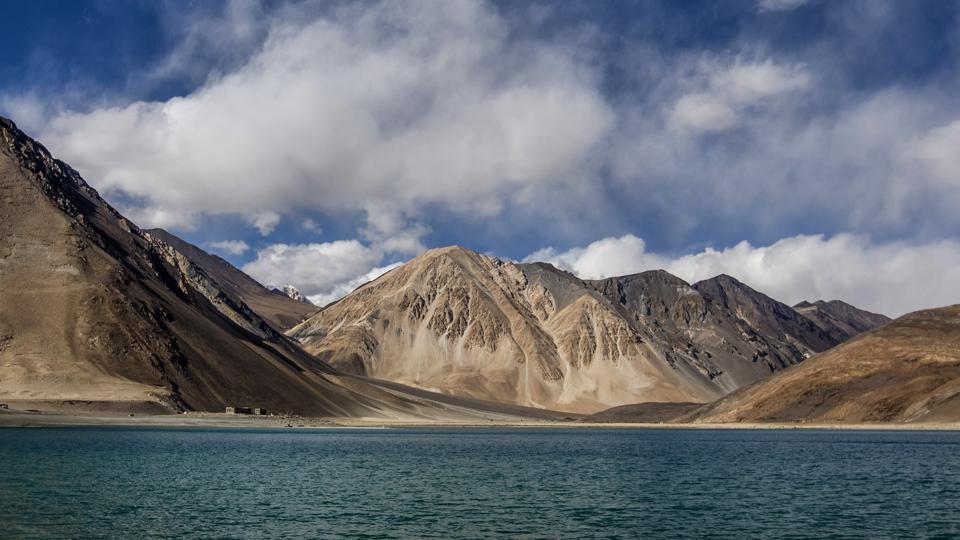
This is my fifth day in Ladakh. The stark mountains with sharp, jagged peaks had initially left me in a daze and just when I found myself growing accustomed to the stunning grey, the landscape would spring a surprise with splashes of lush greens.
By now, I had discovered that the beauty of Ladakh was in its contrasts. The mountains laid bare before the visitors, smears of pink and purples and even blobs of flaming orange as if to recompense them for leaving behind the familiar comfort of homes to venture on the gravelly roads.
No matter which direction we chose, Ladakh would reward our quest for beauty with staggering variations of frozen streams along the white sand dunes as if to reiterate the fact that it is a high-altitude, cold desert.
I couldn’t help envying the bikers zipping past my van for the closer proximity they seemed to have with the mountains, sans the door glass.
While crossing the sand dunes, one can see the Bactrian camels, a two-humped specie also called Mongolian camels is a remnant of the glorious trading past along the Silk Route.
I have discovered that travellers thriving in the tough conditions of Ladakh is not a sign of their physical fitness but a badge of their wisdom.
Taking ample time to acclimatise and frequently sipping water to stay hydrated are the foundation of a trouble-free stay here! Jas, our tour-organiser had insisted on us bringing a water bottle from home so we do not rely on plastic. Even the hotels we stayed at always brought water to the rooms in large glass bottles.
It appears as if the true religion in Ladakh is Nature. The friendly locals who walk around leisurely and greet everyone with a joyous smile and are not stubborn when tourists bargain. They understand how fragile the ecosystem is. It is up to the tourists to take the cue and leave the pristine locations unblemished.
Driving across a meadow, we come to spot a colony of marmots, the chubby squirrel-like animal with a woolly fur that hibernates all through the harsh winter of Ladakh. Few other cabs are aware of their presence at that spot and my heart sinks when one of them takes a pack of chips and starts offering it to them. How can we be unaware that this animal does not need us to feed it! Whatever it needs is available around it and it knows how to tend to its needs. Until of course, we step in to disturb the delicate balance Nature creates. The summer months would lead to a greater influx of tourists and then more cabs would halt at this spot, more packets of chips would pop open and perhaps the marmots would gradually develop a taste for them, innocently messing-up its internal system, overcome the fear of humans and even demand food from humans.
Back in our vehicle, we move on and spot a huge herd of yaks grazing in the valley below.
Though it was heartening to see them freely roaming around and not being held captive so the tourists can click pictures, it was difficult to overlook the fact that the population has shown a decline in recent years. The unpredictability of weather is to be blamed for that.
With rising temperatures, yaks now have less hair and are growing weaker. With grass growing sparse, they need to climb higher.
Historically, the mighty animal has led an inter-woven life with the local communities.
On the last day of sightseeing in Ladakh, I sat near the sparkling azure waters of Pangong Tso lake, the stunning lake that saw violent clashes between Indian and intruding Chinese soldiers. Since then, the BRO has been hard at work building roads to bolster the defence readiness and give a strategic fillip to the region. With better connectivity, more tourists can also be expected to throng the union territory.
Jas remarks wistfully that because of difficult terrain and non-existent roads, only the adventure-seekers and nature-lovers that tend to be responsible tourists, would visit Ladakh. The one who knows that the mountains talked to you if you sat still and listened!
Now with better connectivity, every kind of tourist would flock here. And that would include the kind that feeds spicy chips to innocent marmots. Or the ones who would dump plastic bags into the picturesque Pangong.
I wish there was a way of conveying to all of them that Ladakh invites exploration. But, it also inspires awe with its mystery and magnitude, which can be best appreciated either unobtrusively from a distance or with an interaction that does not interfere with the sublimity and soundlessness of Ladakh.
rupymand@gmail.com
(The writer is a Jalandhar-based freelance contributor.)


