
 E-Paper



Guest column: Remembering the Sardarji in the bulb and his Sardarni
We were privileged to have been granted a moment — a memory — with one of the finest writers of our times, a man whose stories, much like the man himself, would never fade.

 Prefer HTon Google


It was the winter of 1994. The fog rolled in thick, while the Canal Guest House in Amritsar buzzed with excitement. The evening’s guest of honour? None other than Khushwant Singh, a man immortalised not in wax, but in the glow of a 60W bulb. His reputation preceded him, and accompanying him was KPS Gill, the towering Punjab Police chief. These two were the rock stars of their time — no drama, just fine Scotch and even finer stories.
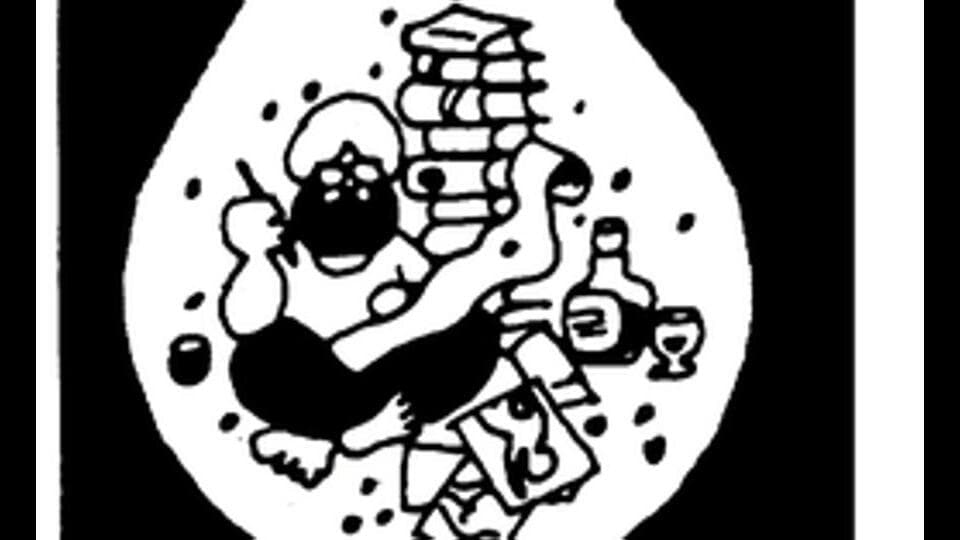
The women in the room weren’t sure what to expect. Khushwant Singh’s fondness for the company of women was no secret. When the writer arrived, he looked like he’d just rolled out of bed in his rumpled Pathani suit. The real showstopper, however, was his wife, Kaval Malik. She floated in with quiet elegance — slim, graceful, and with the kind of calm that said she could hold her own with any literary giant.
Small act of defiance
As the evening unfolded, Khushwant Singh began to debunk every tabloid-fuelled myth surrounding him. No, he wasn’t some boozy womaniser. He was a scholar, a storyteller with anecdotes that could make you laugh and think. His whisky was closely monitored by Kaval, who, with a subtle glance, reminded him of his two-drink limit. The man, who could outwit a room full of intellectuals, clearly knew better than to cross his Sardarni.
Amritsar, back then, was still reeling from its wounds of terrorism. Bomb blasts and curfews were part of the daily reality. But Khushwant Singh was determined to take a stroll down Lawrence Road. My husband, Karan Bir, then deputy commissioner of Amritsar, and a posse of jittery police officials, walked along. But with his characteristic nonchalance, Khushwant Singh strolled on, and perhaps it was this small act of defiance that signalled the beginning of Amritsar’s healing.
Our paths crossed with Khushwant Singh many times thereafter — at Pingalwara, where he donated generously; in Delhi, at E-49, his red-brick Sujan Singh Park apartment, where a sign on his door read, “Do not ring the doorbell unless you are expected”; and in Kasauli, where conversations flowed freely.
At heart, a family man
Every September, when he took his annual break in Kasauli, we would drive up the hills to Raj Villa, Khushwant Singh’s charming Kasauli cottage, inherited by Kaval from her father. The ivy creeping up the mossy walls, the tall trees whispering secrets in the breeze — it felt like stepping into another world. Inside, the fire always crackled, the fading carpets and colonial furniture gave the house a genteel patina of age, and every corner was filled with books, Emily Eden paintings, and memories — each object a chapter in Khushwant’s life. Tucked away in a corner, with a clear view of the hillside, was the spartan study where our host had penned most of his works in longhand.
Khushwant Singh always welcomed us with that familiar twinkle in his eye, guaranteed to make most women weak-kneed, and we’d join a group of carefully selected guests. Ever the raconteur, he would have us all enthralled with his wit, wisdom, gossip and political scandals.
Though known for his sharp pen, Khushwant Singh was, at heart, a family man. He spoke tenderly of Kaval, who was battling Alzheimer’s, and his children, who took turns caring for their mother. His stories about his “gawky schoolmate” — the Sardarni he had fallen in love with all those years ago — were laced with affection.
As the evening would mellow, dinner would be served promptly at eight, in true Khushwant style. The food was sumptuous, the company delightful, and dessert, as always, the perfect end to a perfect evening.
Every time we stepped out after an evening at Raj Villa, I couldn’t help but feel that we were walking away with more than just a meal. We were privileged to have been granted a moment — a memory — with one of the finest writers of our times, a man whose stories, much like the man himself, would never fade.
The writer is a Chandigarh-based retired Indian Revenue Service officer. She can be reached at punamsidhu@gmail.com


