
 E-Paper



Guest Column: Target land acquisition, sustaining livelihoods in Punjab
While industrialisation and urbanisation are essential for the state’s economic future, they must not come at the cost of its farming communities. By adopting inclusive, sustainable practices and prioritising the preservation of cultural identities and livelihoods, Punjab can set a precedent for harmonising development with the well-being of its people.

 Prefer HTon Google


Land acquisition in Punjab represents a complex and contentious process that intertwines the state’s economic future with the preservation of its agrarian heritage. The narrative of land acquisition in Punjab is one of transformation, where economic development clashes with the cultural and social fabric of rural life. As the state faces increasing pressure to industrialise, urbanise, and modernise its infrastructure, the repercussions of land acquisition on farming communities and their livelihoods cannot be ignored. These are one of the major reasons for the persistent farmers’ unrest in the state.
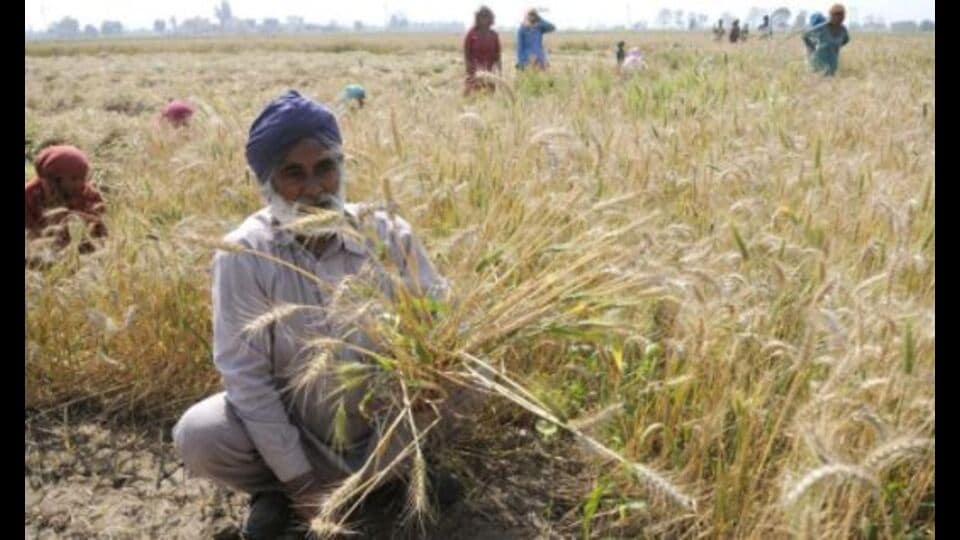
For decades, farming has driven Punjab’s economy and culture. However, the agricultural sector faces a crisis due to issues, such as groundwater depletion, falling crop yields, rising input costs, and climate change. Consequently, the state has embarked on a path of industrialisation and urbanisation to ensure economic growth and modernisation. While these shifts hold promise for the state’s future, they come at significant social and human costs, particularly for its farming communities.
The Punjab State Investment Promotion and Industrial Policy, 2019, outlined an ambitious vision for industrial and infrastructural growth, requiring over 50,000 hectares of land to be repurposed for development over the next decade. This policy emphasised large-scale projects like special economic zones (SEZs), the Ludhiana-Kolkata and Amritsar-Kolkata Freight Corridors, Rajpura Industrial Park, and the Katra-Amritsar-Delhi highway. These initiatives aim to revitalise Punjab’s economy by generating millions of jobs, boosting industrial output, and improving logistics. A 2016 report by the Indian Council for Research on International Economic Relations (ICRIER) estimated that such projects could create over two million jobs, fuelling substantial economic expansion.
Trade-offs accompany progress
However, significant trade-offs accompany progress. The lands that once sustained Punjab’s farmers are increasingly being diverted for industrial use, disrupting lives, uprooting communities, and threatening a centuries-old way of life. For farmers, land is not merely an economic asset but a cornerstone of their identity and heritage. Consequently, the loss of agricultural land extends beyond financial hardship, representing a profound social and cultural upheaval.
Many farmers, displaced and deprived of their ancestral land, have reported receiving compensation far below market value. For instance, in the case of the Amritsar-Kolkata Freight Corridor, farmers claimed the compensation was insufficient to replace their properties, let alone account for the loss of their way of life. The emotional toll of displacement and estrangement from ancestral land leaves deep scars, affecting not just individuals but entire communities.
This displacement is further exacerbated by threats to common lands—shared grazing areas, water bodies, and village commons. These resources are essential for the socio-economic stability of rural communities, yet they are increasingly privatised and encroached upon. The loss of these community resources undermines rural economies and social bonds, depriving villagers of vital safety nets during crises like droughts or crop failures.
Despite these challenges, industrialists and developers argue that such land repurposing is essential for economic progress. They see these projects as opportunities to modernise infrastructure, create jobs, and stimulate growth. From their perspective, transitioning from agriculture to industry is vital for Punjab’s future. However, this view often neglects the social costs borne by rural communities, widening the divide between urban beneficiaries and displaced farmers.
Striking delicate balance
The government, caught between these competing pressures, must strike a delicate balance. On one hand, it needs to foster economic growth to ensure prosperity. On the other, it must protect the livelihoods, identities, and cultural heritage of farming communities. Development should not be a zero-sum game but rather an opportunity to integrate rural communities into the growth process.
To achieve this balance, Punjab must adopt a more inclusive and equitable approach. Fair compensation mechanisms should reflect not only the market value of acquired land but also the cultural, social, and emotional costs of displacement. Transparent processes involving community consultations must be implemented to ensure displaced families receive compensation that genuinely benefits them.
Monetary compensation alone is insufficient to address the upheaval caused by displacement. A comprehensive rehabilitation programme is essential, offering alternative farmland, access to infrastructure, and vocational training to help affected farmers transition to new livelihoods. Successful resettlement models, such as those implemented in Bangalore, where displaced families received land and skills training, can serve as valuable guides for Punjab.
Protecting rural stability also requires safeguarding common lands, which are vital for village cohesion and economic resilience. Shared grazing areas, water bodies, and other community resources must be shielded from privatisation and encroachment. These should be secured for the development of public utilities and social infrastructure. Land pooling mechanisms, which allow industrial projects to exchange developed land for agricultural or cultural land, can help balance development with rural heritage preservation.
Sustainability should be central
Sustainability should be central to Punjab’s development strategy. High-yield agricultural zones must be designated as protected areas, while precision farming techniques are promoted to enhance productivity without sacrificing land to industry. Industrial and urban projects should incorporate green infrastructure, such as smart water management systems and renewable energy technologies, to minimise environmental degradation and ensure a sustainable future.
Governance and accountability mechanisms must also be strengthened. Fast-track courts can expedite dispute resolution, while independent bodies should oversee land acquisition projects to protect rural communities. Transparent governance and strong oversight will reduce corruption and ensure equitable policy implementation.
Bridging urban-rural gap
Finally, bridging the gap between urban and rural stakeholders is critical. Public awareness campaigns and community engagement initiatives should highlight the cultural and economic significance of land acquisition, ensuring that farmers’ voices are included in policy making. Dialogue between urban beneficiaries and displaced rural communities can foster mutual understanding and cooperation.
The story of land acquisition in Punjab is one of balancing traditions with progress. While industrialisation and urbanisation are essential for the state’s economic future, they must not come at the cost of its farming communities. By adopting inclusive, sustainable practices and prioritizing the preservation of cultural identities and livelihoods, Punjab can set a precedent for harmonizing development with the well-being of its people. The state’s future lies in growing together, where development empowers rather than displaces its citizens, especially its farmers.
The writer is a retired Punjab-cadre IAS officer. Views expressed are personal. He can be reached at sureshkumarnangia@gmail.com


