
 E-Paper



Guest column: When the Chandigarh spring beckons
The city’s spring foliage fiesta that takes place in the first three weeks of April is second to none, neither the famed New Jersey fall nor Seattle fall colours

 Prefer HTon Google


A few months ago, on my flight back to Chandigarh, I had a panoramic view of the tree-lined vistas of Chandigarh. The foliage was so dense that one could not identify much, except some landmarks such as the Secretariat and the Sukhna Lake.
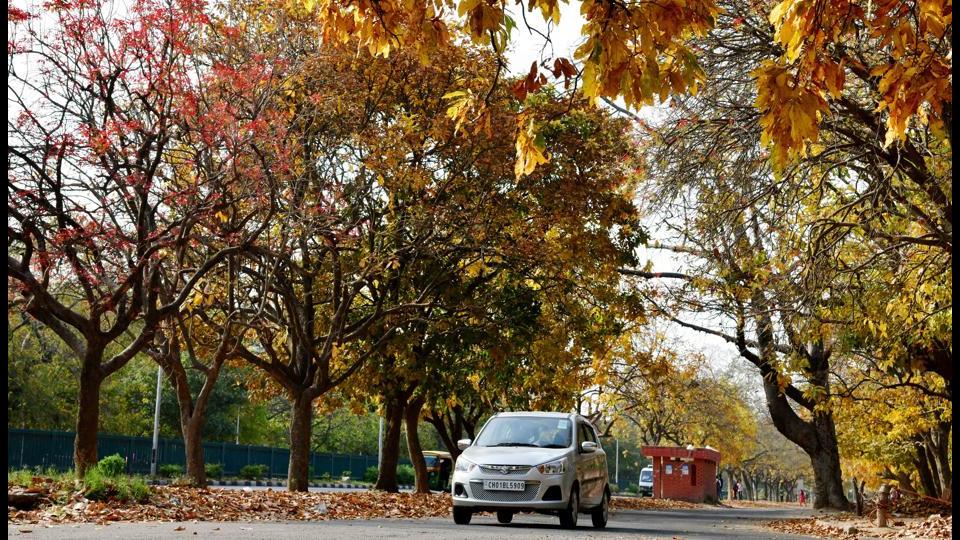
I was reminded of the view on the morning of Good Friday (April 2) when I was chauffeuring my son for a photography trip. As we scouted for vantage points to get the best frames, I was struck by the mesmerising views. We enlisted Google’s help to identify trees and I was taken back to my college days in the 1970s when as botany students we would go around the city looking for different trees and plants. Their common and botanical names used to be etched on small metal boards.
From mid-March to the next four weeks, Chandigarh’s foliage is a riot of colours. The brilliant transformation of Chandigarh’s winter landscape to the vibrant hues of copper, yellow, purple, red and green happens gradually over three-four weeks in the backdrop of verdant evergreen trees. One can identify more shades of green than in a paint catalogue.
An early morning drive on the city’s roads is a pleasurable treat as colourful flowers carpet the ground — in March it is the bright red bottle brush while in April it is the purple Jacaranda or beautiful pink and purple flowers of the Moulmein rosewood. In the afternoon, you can see different hues of green and brown shimmering in the sunlight. At dusk the view is radiant as the leaves and flowers seem to change colour. If there is a breeze, or if it rains the view becomes heavenly. If I were to pick one tree, I would choose the leaning yellow flower trees, the yellow trumpet or Tecona, on the Jan Marg as the most eye-catching.
Is Chandigarh’s spring foliage fiesta any less than the famed New Jersey fall or Seattle fall colours? The best time to see the hues of the Seattle fall is the first two to three weeks of October while it is the last 10 days of October in New Jersey. Chandigarh’s spring bonanza seems to last first three weeks of April.
My desire to know more about Chandigarh trees was rekindled when a nephew of mine visited us last week. An environmentalist, he was all praise for the founding fathers of the city as he explained that six mature trees offset one tonne of carbon dioxide. Despite having the highest per capita CO2 emission and per capita car ownership in the country, it is probably the lush tree cover of over 100 varieties that maintains the city’s beautiful character. It was interesting to know that of the 60 odd avenue trees in Chandigarh nearly half are from countries as far away as Brazil and Australia. The onus lies on us to preserve our city’s heritage.
(The writer retired as a professor of gastroenterology from PGIMER, Chandigarh)


