
 E-Paper



HC recalls order on handing over management of Rupnagar dargah to Punjab government
The judgment was recalled as the petitioners had argued that neither the directions issued in the May 27 judgment were sought nor was the subject matter of the dispute between the contesting parties


The Punjab and Haryana high court has recalled a May 27 judgment in which management of shrine Khanqah of Baba Budhan Shah at Kiratpur Sahib was handed over to the government.
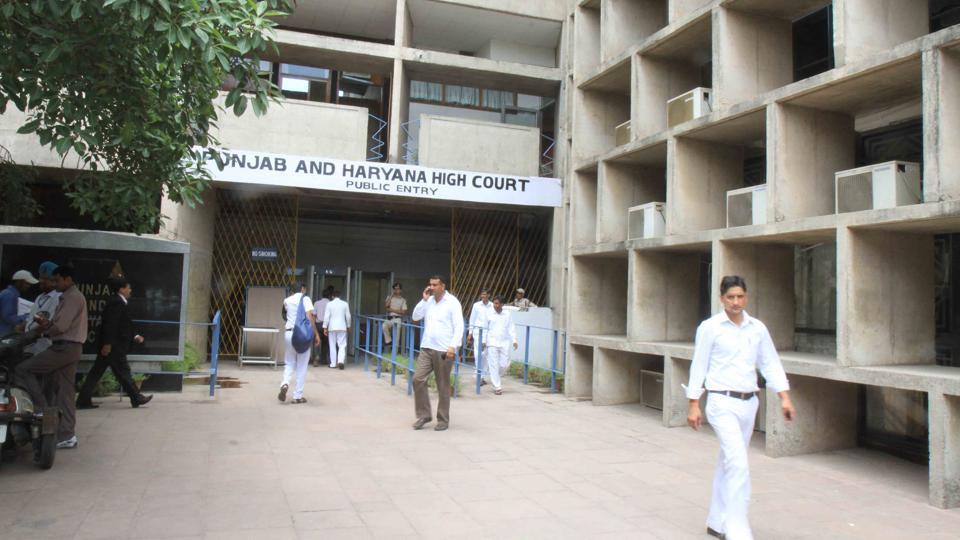
It was recalled two months after justice Fatehdeep Singh (retd), who had authored the judgment, demitted office on July 7.
It is said that it was at this place that Guru Nanak Dev met saint Budhan Shah, a 14th century saint, in a jungle. The shrine follows the tenets of Sufism.
The judgment was recalled as the petitioners had argued that neither the directions issued in the May 27 judgment were sought nor was the subject matter of the dispute between the contesting parties. It was also claimed that all the affected parties were also not heard before passing of the order.
The bench of Justice Anil Kshetarpal, before passing the order to recall the May 27 judgment, had asked the state’s advocate general, who had submitted that he has no objection if the entire matter is reheard. The petition will be reheard now from September 7.
The May 27 judgment was passed in a plea filed by the family members of a sewadar, Dildar Mohammad, after whom dispute has arisen between his heirs -- Amran Khan (son), Rani (widow), Dilbag Mohammad, Iqbal Mohammad, Sharif Mohammad, Gafoor Mohammad (collaterals) and Amitaj (son) – over the share of the proceeds of offerings and properties attached to it.
Justice Fatehdeep Singh had observed that it is not an estate and property owned by any of the persons.
“..what could one draw an inference is that the holy shrine has been there since times historical and immemorial and has been looked after by different persons from time to time who act as sewadars,” he had observed, adding that Dildar Mohammad was one of such persons.
“How or by what means such property of a holy shrine, where admittedly public at large visits in routine to pay obeisance and make offerings, can be claimed to be a personal property which can be bestowed upon at the whims and fancies of executant of a Will,” justice Singh had observed referring to a Will pertaining to the shrine and terming it a “blatant fraud” being perpetrated upon the devotees.
He had questioned how the offerings could be divided among family members.
The May 27 judgment further said that the very nature of the functioning of the shrine, its origin, and the undisputed fact that the shrine over a period of time and usage has come to be a public institution for and by the public at large and cannot be allowed to be run by mere “muscle power and influence of a particular family”.
The judgment further added that the administration of the shrine should be properly made on lines of the Durgah
Committee constituted under the Durgah Khawaja Saheb Act, 1955, at Ajmer, and the administration, management and governance of Mata Vaishno Devi shrine through Jammu and Kashmir Shri Mata Vaishno Devi Shrine Act, 1988, so that wealth that has accumulated and is likely to accumulate is put to the welfare of the shrine and the visitors.
The court had further directed to legislate an Act so that the authorities who are trying to “sleep over such matters for political ends”, wake up from their slumber and act to save the innocent disciples and devotees from being fleeced by such false claims.
As an interim measure, a committee headed by the Rupnagar deputy commissioner was ordered to be constituted to run day-to-day affairs.


