
 E-Paper



Hefty shrimp production: South Malwa farmers make most of saline water
The groundwater salinity, which had forced farmers in southern Malwa districts to abandon their land and work as daily wagers for livelihood a few years ago, turned into a boon since they have taken up the shrimp farming, resulting in “hefty earnings”, say fishery experts


The groundwater salinity, which had forced farmers in southern Malwa districts to abandon their land and work as daily wagers for livelihood a few years ago, turned into a boon since they have taken up the shrimp farming, resulting in “hefty earnings”, say fishery experts.
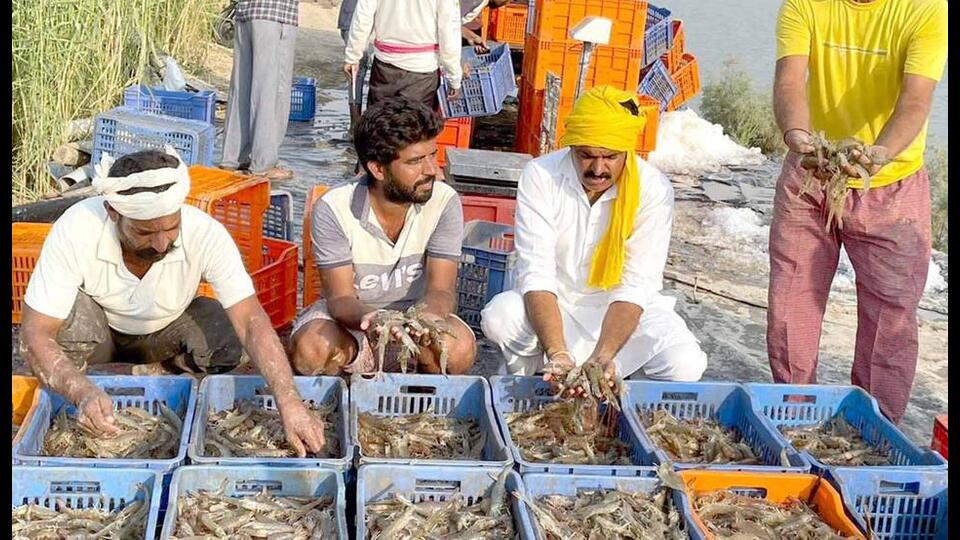
According to state fisheries director Jasbir Singh, these districts, including Fazilka, Sri Muktsar Sahib, Bathinda, Mansa and Faridkot, saw production of 2,700-tonne shrimp last year. The sale of one-kg shrimp fetches ₹300.
Raju Narang from Sajrana village in Fazilka, who has a 12-acre fish farm and claims to have been earning a profit of ₹4 lakh per acre, says, “The village has around 700 acres of land which didn’t produce even 100-kg grain in the past 100 years. Farmers who owned 40-50 acres had to take up menial jobs to make ends meet. In 2013, Guru Angad Dev Veterinary and Animal Sciences University (GADVASU) conducted an experiment in the village which saw an acre of land witnessing shrimp production worth ₹18-20 lakh.”
The bane of saline water turned into a blessing, said Narang, who works with five households in the village to run his farm. Besides shrimp, they also rear catla, rohu and mrigal fish species.
Khushwant Singh, a PhD scholar at the GADVASU’s College of Fisheries, is also producing shrimps on three acres since 2022. This year, he has also started an integrated fish and poulty farm on an additional one acre of land. “I have kept catla, rohu and mrigal fishes in the pond besides RIR (egg producing) and PL80 (meat producing) chickens. The idea is to use the waste product from chickens as feed for fish,” he said, adding it is at an experimental stage.
Dr Meera Ansal, dean, College of Fisheries, said, “The groundwater salinity is high in the region, but there are specific pockets where the water table is very high and triggers waterlogging after rains. As the water gets dried up, it leaves salt on the surface, which renders it waste.”
“The college has developed the concept of using the saline water to the benefit of the farmers by helping them with the inputs to establish shrimp farms. The experiment started in 2013. In 2016, the then government also started showing interest in shrimp farming that turns waste land into a profitable venture.”
At present, 1,300 acres in the state are under shrimp farming, according to state fisheries department. The department gives 40 per cent subsidy to the general category and 60 per cent to the reserved category for buying necessary equipment and feed.


