
 E-Paper



Ludhiana: Paddy season ahead, PSPCL to spend ₹46 crore on infra upgrade
Works to be carried out between April and September, 201 transformers to be installed; PSPCL chief engineer Jagdev Hans says the proposed works will be carried out in a phased manner


Keeping in view the upcoming paddy transplantation season that would push the electricity demand upward, the Punjab State Power Corporation Limited (PSPCL) is set to accelerate its infrastructure upgrade process in Ludhiana, scheduling works worth over ₹45.93 crore between April and September this year.
Under the Operational Revamp Programme (ORP), ₹7.68 crore is to be spent in April, ₹8.97crore in May, ₹6.97 crore in June, ₹9.43 crore (the highest monthly spending plan) in July, ₹6.22 crore in August and ₹6.64 crore in September.
The pattern reflects sustained execution rather than a one-time surge, with July’s peak coinciding with the height of paddy transplantation, when groundwater extraction intensifies, and feeder load rises sharply.
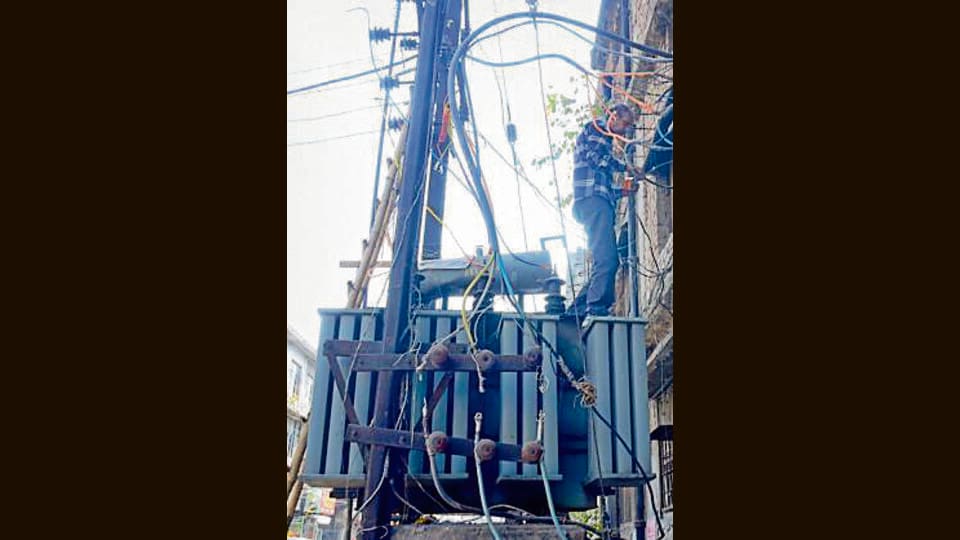
Transformer-related works form the core of the strategy. Between April and September, the PSPCL has lined up 201 new distribution transformer (DT) installations and 349 augmentation works across municipal corporation (MC) and urban local body (ULB) areas. In comparison, 35 feeder bifurcation works have been planned during the same period.
Officials say augmentation is aimed at preventing overheating and voltage drop, common issues during prolonged irrigation usage. Transformer failures during peak paddy months have historically contributed to supply disruptions, particularly in mixed-load areas where agricultural draw overlaps with urban demand.
July alone accounts for 40 new DT installations and 67 augmentation works, alongside 11 feeder bifurcation projects, making it the most intensive month in both financial and physical terms. June would see 44 new installations and 75 augmentations, while August maintained similar momentum with 43 installations and 62 augmentation works.
Though Ludhiana is primarily an urban-industrial centre, its network is closely linked with adjoining rural belts that experience sharp demand spikes during irrigation. The data indicate that while MC areas receive a larger share of works, reinforcement efforts are distributed across both municipal and peripheral jurisdictions.
Feeder bifurcation, which involves splitting overloaded feeders to improve voltage stability and fault isolation, remains comparatively limited in number.
Chief engineer Jagdev Hans said the proposed works would be carried out in a phased manner to strengthen the power infrastructure, particularly keeping in view the increased seasonal demand during the paddy period. “Our focus is to reinforce distribution transformers and feeders in advance to ensure a stable supply,” he said.


