
 E-Paper



Ludhiana: Intense showers trigger lodging in paddy crops, disrupt procurement in mandis
Farmers allege inadequate arrangements at mandis despite advance weather warnings; grain markets congested with limited storage space


Incessant rain showers for the second consecutive day in Ludhiana has left farmers struggling to salvage soaked paddy crops at several grain markets, threatening both yield and quality. Adding to their woes, heavy rains have caused lodging — the toppling of standing crops due to waterlogging or wind — making produce prone to fungal infections and spoilage.
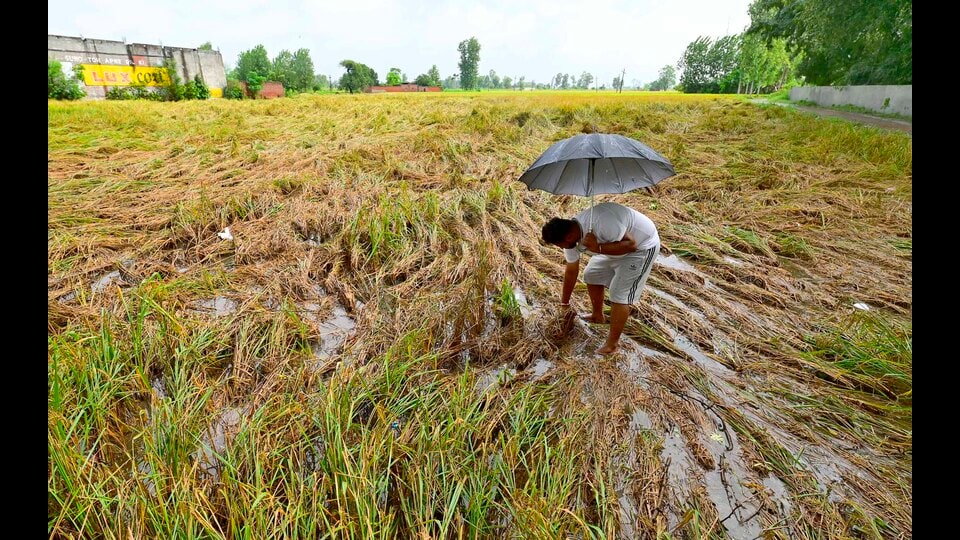
Explaining the phenomenon, agricultural expert Dr Buta Singh Dhillon said, “Lodging affects the crop in two ways: grains lose nutrients from the roots and fallen plants undergo quality deterioration.”
Procurement thrown into chaos
Despite advance weather forecasts, farmers said the district administration failed to make necessary arrangements, pushing them into distress.
Lack of basic arrangements including functional sheds, adequate tarpaulin covers and clean and dry storage space has made it difficult to protect harvested crops.
Farmers allege that while the government appeals for dry paddy at mandis, little has been done to provide infrastructure to protect produce.
At Gill Road grain market, even three weeks into procurement season, cement-laden trucks continued to occupy covered sheds, leaving little space for farmers’ produce, allege farmers.
Heaps of paddy were left exposed to rain and humidity, raising concerns over quality deterioration, they said.
No officials, no space to dry crops
The farmers also pointed to the absence of on-ground procurement staff for days, forcing them to manage the process themselves.
Sukhpal Singh, a farmer from Rania village, said he had been at the Gill Road mandi for three days without seeing procurement officials.
“There is no one from the food and civil supplies department or state procurement agencies here to overlook the procurement. Quality and moisture inspection has been stalled since Sunday,” he said.
Singh added that continuous rain had raised paddy moisture content from the prescribed 17% to 21%, reducing weight and affecting returns.
“There is no proper space to dry produce. The government should provide relief in moisture levels to cover our losses,” he urged.
Official response
District food supplies controller (Ludhiana West) Sartaj Singh Cheema said the department had tied up with arhtiyas (commission agents) to help farmers keep crops dry. “We have requested farmers not to bring wet paddy to mandis and urged them to ensure dryness before arrival,” he said.
Cheema admitted that officials are spread thin across mandis but assured they are monitoring the situation. On moisture-level concerns, he noted that procurement agencies must follow central government norms allowing purchase of paddy with up to 17% moisture. “As per norms, rice millers must provide 67 kg of rice from every 100 kg of paddy. For this ratio, maintaining the 17% moisture limit is crucial,” he added.


