
 E-Paper



Mini-forests planted to mark 50 years of Faridkot as district
About 25,000 saplings of 75 different varieties of trees have been planted on around 25 acres at 50 locations across Faridkot district, with the help of forest department and Roundglass Foundation to create the community forests. The mini-jungles have between 100 to 1,700 saplings at each location


With Faridkot completing 50 years as a district, the administration, along with farmers and village panchayats, planted 50 mini-forests to mark the occasion.
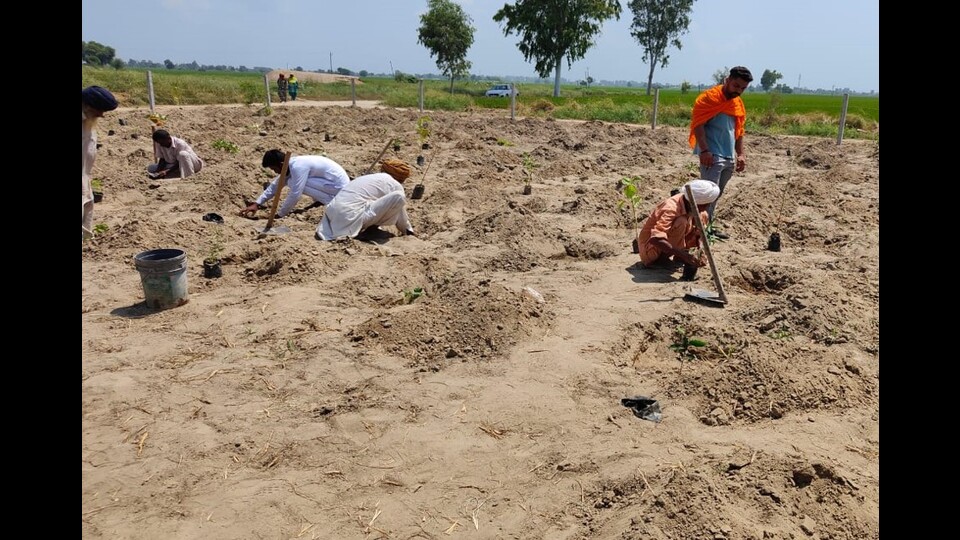
About 25,000 saplings of 75 different varieties of trees have been planted on around 25 acres at 50 locations across the district, with the help of forest department and Roundglass Foundation to create the community forests. The mini-jungles have between 100 to 1,700 saplings at each location. The largest among all is at Khara village where 1,700 saplings have been planted followed by Beehlewala and Middu Maan where 1,600 and 1,500 saplings have been planted.
Faridkot is was named after Sufi saint Baba Farid and was turned into a district on August 7, 1972.
Faridkot deputy commissioner Ruhee Dugg said the project was started with an objective to increase the green cover in the district and save the environment from pollution. “Common places were identified in all the villages for plantation. Mostly, government and panchayat lands have been used, but some people also came forward to plant saplings on their private land. Indigenous species of this region have been planted,” she said.
“Two van (forest) mitras have been appointed to take care of the plants. Regular monitoring would be also done by officer in charge of the forest department and rural development department,” she added.
Amandeep Keshav, project director, Agriculture Technology Management Agency (ATMA), Faridkot, “Plants have been grown in a scientific manner. On the north side windbreaker trees and plants like Bamboo etc have been planted, while on the south side are the fruit trees. Similarly, on the south side of the jungle, small plants of flowers, shrubs and slow-growing trees have been planted, while all the big trees like Pipal, Bohar, Sangwan etc are planted on the West side as that part has a larger period of exposure to sunlight. In the middle of the jungle, spine-bearing trees have been planted,” he said.
“The scientific approach of growing trees would ensure they get adequate sunlight. Before finalising any site, it was surveyed for its feasibility in terms of fertility, water availability, covered from all four sides,” he added.


