E-Paper



Mohali: Amid rapid urbanisation, GMADA puts forest promise on back burner
The latest notification came on July 16, when the Punjab government issued a declaration under the Right to Fair Compensation and Transparency in Land Acquisition, Rehabilitation and Resettlement Act, 2013, to acquire 196.44 acres for GMADA’s proposed commercial hub in Sector 87

 Prefer HTon Google


Even as the Greater Mohali Area Development Authority (GMADA) has been acquiring land for commercial, industrial and township projects, its long-pending plan to develop a 118-acre urban forest in Sector 97 remains on the backburner, raising questions over the pace at which the authority is pursuing the city’s environmental commitments.
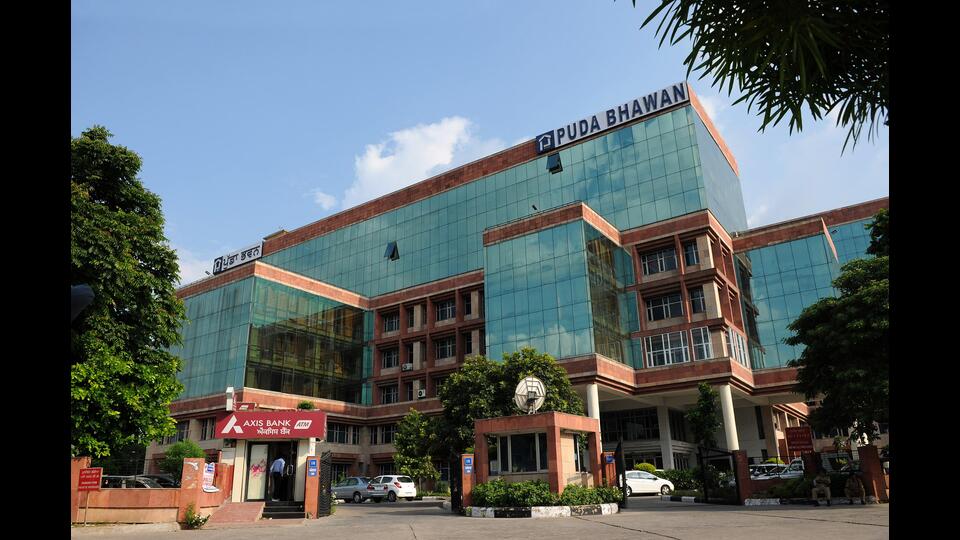
The latest notification came on July 16, when the Punjab government issued a declaration under the Right to Fair Compensation and Transparency in Land Acquisition, Rehabilitation and Resettlement Act, 2013, to acquire 196.44 acres for GMADA’s proposed commercial hub in Sector 87. The land spans Manak Majra, Nanu Majra, Sohana and Sambhalki villages, with over 111 acres in Nanu Majra and nearly 20 acres in Manak Majra. Incidentally, Manak Majra and Nanu Majra are also among the villages from which GMADA is yet to acquire substantial land for the proposed urban forest.
The urban forest, conceptualised in GMADA’s 2009 Master Plan, is one of the city’s two designated “green lungs”, alongside the already developed green space in Sector 62. Planned over nearly 118 acres, the Sector 97 project was conceived as an ecological buffer for the rapidly urbanising Airport Road corridor. Proposed to have dense plantations, biodiversity zones, walking trails and recreational facilities, the last action in this respect was taken between 2015-2017 when 35 acres. There has been no progress since then.
When it comes to revenue generating projects, however, the Mohali administration has been acting swiftly. For instance, it acquired land for industrial development in Sector 103 and simultaneously also reached the final stages of acquiring more than 3,500 acres for the Aerotropolis township, with compensation awards already announced for several villages.
Earlier this month, the Punjab government amended the Land Pooling Policy, 2020, enhancing benefits for landowners in the GMADA area.
Earlier this year, the Punjab and Haryana high court had also sought GMADA’s response in a public interest litigation over the felling of hundreds of trees for a residential project in Sector 69. In another matter concerning the proposed felling of more than 250 trees for road widening, the HC observed that development and environmental protection must go hand in hand, remarking that “human lives are important, but so is the environment”.
Urban planners have long maintained that green belts are an essential component of planned development, helping improve air quality, reduce urban heat and preserve biodiversity.
“Urban forests are not a luxury, they are extremely essential ecological infrastructure. As Mohali expands, green spaces must grow alongside commercial and residential development. At a time when Punjab is facing severe heatwaves, groundwater depletion, and worsening air quality, projects like the 118-acre urban forest in Sector 97 should be treated as a priority, not an afterthought,” said Samita Kaur, an environmentalist. She added,
“Development without adequate urban green cover will have serious ecological, environmental, and public health repercussions. Sustainable urban planning demands that economic growth and environmental protection go hand in hand.”
Rajeev Mahajan, an urban planning expert, said, “While Mohali, Panchkula, and Chandigarh share a contiguous tricity landscape, their ecological profiles diverge significantly due to contrasting topography and urbanisation patterns. Panchkula (42.55%) and Chandigarh (21.92%) lead with high forest coverage, driven by Panchkula’s natural Shivalik foothill terrain and Chandigarh’s intentional urban forestry planning. In contrast, Mohali lags behind at 11.27%, reflecting the ecological cost of rapid industrial and residential expansion across predominantly flat agricultural land. To build regional climate resilience, future development in the tricity must prioritize aggressive greening initiatives in Mohali while strictly conserving the existing forest corridors of Panchkula, Mohali and Chandigarh.”
Responding to concerns over the delay, GMADA chief administrator Sandeep Rishi said the proposed urban forest has not been neglected. “The Sector 97 green belt remains part of GMADA’s approved Mohali Master Plan. Land acquisition and development involve statutory procedures and are being taken up in phases. The project has not been overlooked and will be executed in due time as the required land becomes available,” he said.