
 E-Paper



Nod to integrated management plan for conservation of J&K’s Wular Lake
Under the new integrated management plan, the waterbody, which is surrounded by forests and snowcapped mountains, will be declared a protected wetland and degradation causing activities will be banned in and around the waterbody


With conservation efforts for Asia’s second largest fresh water lake going at full pace, the J&K Wetland Authority has approved an integrated management plan for the waterbody.
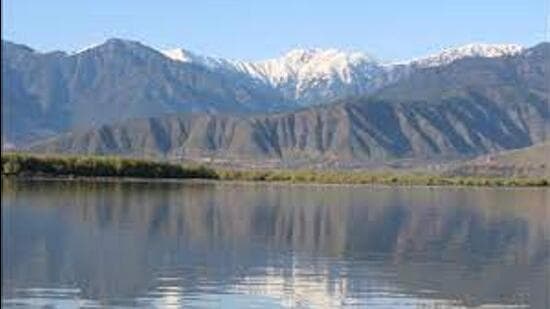
Under the new plan, the waterbody, which is surrounded by forests and snowcapped mountains, will be declared a protected wetland and degradation causing activities will be banned in and around the waterbody.
“We have been waiting for an integrated management plan for years, and now this will help in preservation of the waterbody,” said Waseem Ahmad, who lives close to lake and been witness to the lake’s gradual degradation.
Spread across two north Kashmir districts, the lake provides 60% of Valley’s fish and is the source of livelihood for thousands of people. It is also home to different bird species and migratory birds, which fly in from far off places such as Central Asia and Siberia.
This lake is the only drainage for river Jhelum, Arin and Madhumati. Famous for its water chestnuts and lotus stems, the waterbody was designated as a wetland of international importance under the Ramsar Convention in 1990.
A conservation project undertaken by Wular Conservation and Management Authority (WUCMA), is already underway to safeguard the lake and has reclaimed some beautiful portion of land that was covered with silt and pollution.
J&K chief secretary Arun Mehta during the second meeting of the newly created Wetland Authority for the UT on Wednesday approved the proposal of the forest, ecology and environment department to designate Wular Lake as a wetland in terms of the Environment (Protection) Act, 1986.
“Wular Lake is spread across 13,000 hectares with an additional 486.12 hectares as its zone of influence. On completing the process of declaring the waterbody as a protected wetland, different degradation-causing activities will be prohibited in the area,” Mehta said, while chairing the meeting that was attended by all top officers involved in the lake’s conservation.
“These activities include encroachment of the wetland, setting up of industries, disposal of construction waste, discharge of untreated waste, release of invasive species, feeding of migratory birds. Activities will be regulated within the wetland as well as in its zone of influence, which include withdrawal of water, harvesting of resources, construction of pontoon bridges, aquaculture, agriculture, horticulture and eco-tourism,” he added.
The J&K Wetland Authority has also approved the integrated management plan for the Conservation of Wular Lake to promote an integrated and multidisciplinary approach for conservation and management of the water body. “Under the integrated management plan, different activities worth ₹150 crores will be undertaken for scientific management of the wetland. The proposed activities include extensive survey and demarcation, catchment conservation, water management, biodiversity conservation, sustainable livelihood generation, and institutional development,” Mehta said.
The lake is an important waterbody for Kashmir as it serves as hydrostatic, absorbing moisture during peak months and releasing it in lean winter months. Water from the catchment area of Jhelum also flows into Wular.
In 2018, the UT administration had sanctioned the ₹200-crore Wular Action Plan for the conservation and management of the lake, phase one has almost reached completion, which has increased the capacity of the lake.
Officials say that around ₹1,600 crore will be needed to clear 27 square kilometre of the critically silted lake. The government also plans to construct a big foreshore around the lake with parks, bird watching towers and guest houses to attract tourists towards the area that had hitherto remained unexplored.
Environment expert and filmmaker Jalal Jeelani said also appreciated the plan. “Timely intervention is the need of the hour. Any positive steps taken to reclaim and regenerate Wular will help preserve it for future. Wular being a largest wetland water body is the ultimate source of livelihood of its inhabitants. Besides, it can be turned into an eco-tourism bastion because of its multifaceted avatars,” he said, adding that the broader challenge still remains unexplored – how to tackle the agriculture and horticultural waste entering into the lake.


