
 E-Paper



Punjab clears scientific study amid growing groundwater crisis
Punjab finance minister Harpal Singh Cheema announced the in-principle approval for a micro-level study to be conducted by the Punjab State Farmers’ and Farm Workers’ Commission in collaboration with IIT Ropar

 Prefer HTon Google


At a time when Punjab has emerged as one of the most groundwater-stressed states in the country, the state government has cleared a ₹1.61-crore micro-level scientific study to examine sub-soil water resources and seepage patterns.
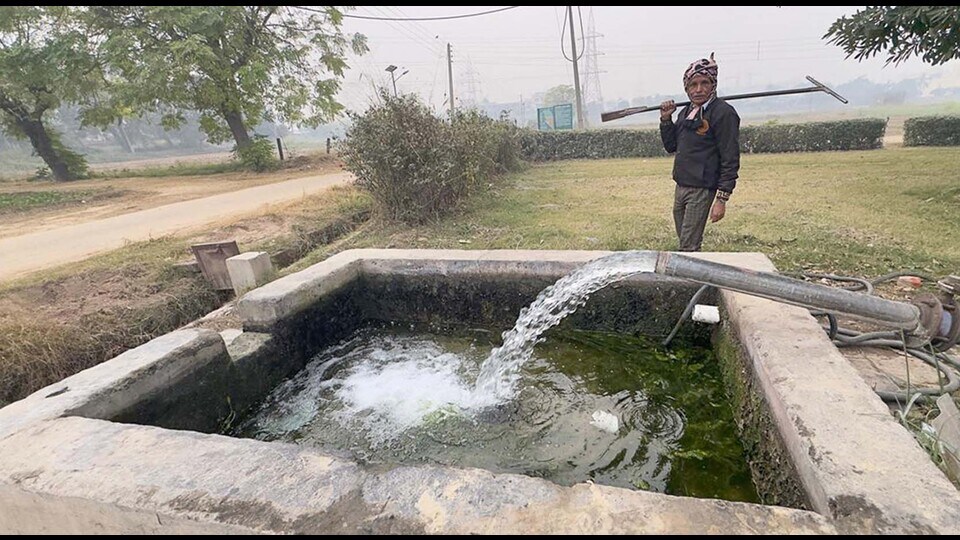
The approval comes in the backdrop of fresh central data revealing Punjab’s extreme groundwater crisis. According to figures presented in the Rajya Sabha earlier this week, Punjab is extracting far more groundwater each year than can be sustainably replenished.
In a written reply to a question by Rajya Sabha member Balbir Singh Seechewal, minister of state for Jal Shakti Raj Bhusan Choudhary cited the latest assessment of the Central Ground Water Board (CGWB), which shows that Punjab’s stage of groundwater extraction has touched 156.36% — the highest among all states.
As per the State-wise Ground Water Resources of India, 2025, Punjab’s total annual groundwater recharge is estimated at 18.60 billion cubic metres (BCM), while the quantity that can be safely extracted each year stands at 16.80 BCM. However, the state is currently extracting about 26.27 BCM annually for irrigation, domestic and industrial use.
In the wake of this, finance minister Harpal Singh Cheema announced the in-principle approval for a micro-level study to be conducted by the Punjab State Farmers’ and Farm Workers’ Commission (PSFFWC) in collaboration with IIT Ropar. The study aims to develop scientific inputs for future policy interventions.
Cheema said as an agrarian state, Punjab faced serious challenges related to water availability and its sustainable use. He emphasised that this project represented a crucial step towards the revival of the state’s agrarian era.
The proposed study follows a macro-level assessment earlier carried out by the PSFFWC with the National Institute of Hydrology (NIH), Roorkee, which was acknowledged by the Punjab Vidhan Sabha committee on agriculture reforms. The committee subsequently recommended a more detailed micro-level investigation.
The study will employ advanced techniques such as carbon dating and isotope analysis of sub-soil and repository water, along with heliborne surveys, aquifer characterisation and district-level analysis of seepage rates.
The project will involve a total outlay of ₹221.65 lakh, of which IIT Ropar will contribute ₹60 lakh from its own resources, while the remaining funds will be provided by the PSFFWC. In return, IIT Ropar will offer technical support, including design and execution expertise, field investigations, sample collection, deployment of portable instruments, infrastructure and laboratory facilities, and technical training and capacity-building initiatives.


