
 E-Paper



Punjab sees 66% jump in farm fires than last: Data
Punjab witnessed another 119 incidents of stubble burning on Monday, taking the total count to 456 as compared to 275 in the corresponding period last year.

 Prefer HTon Google


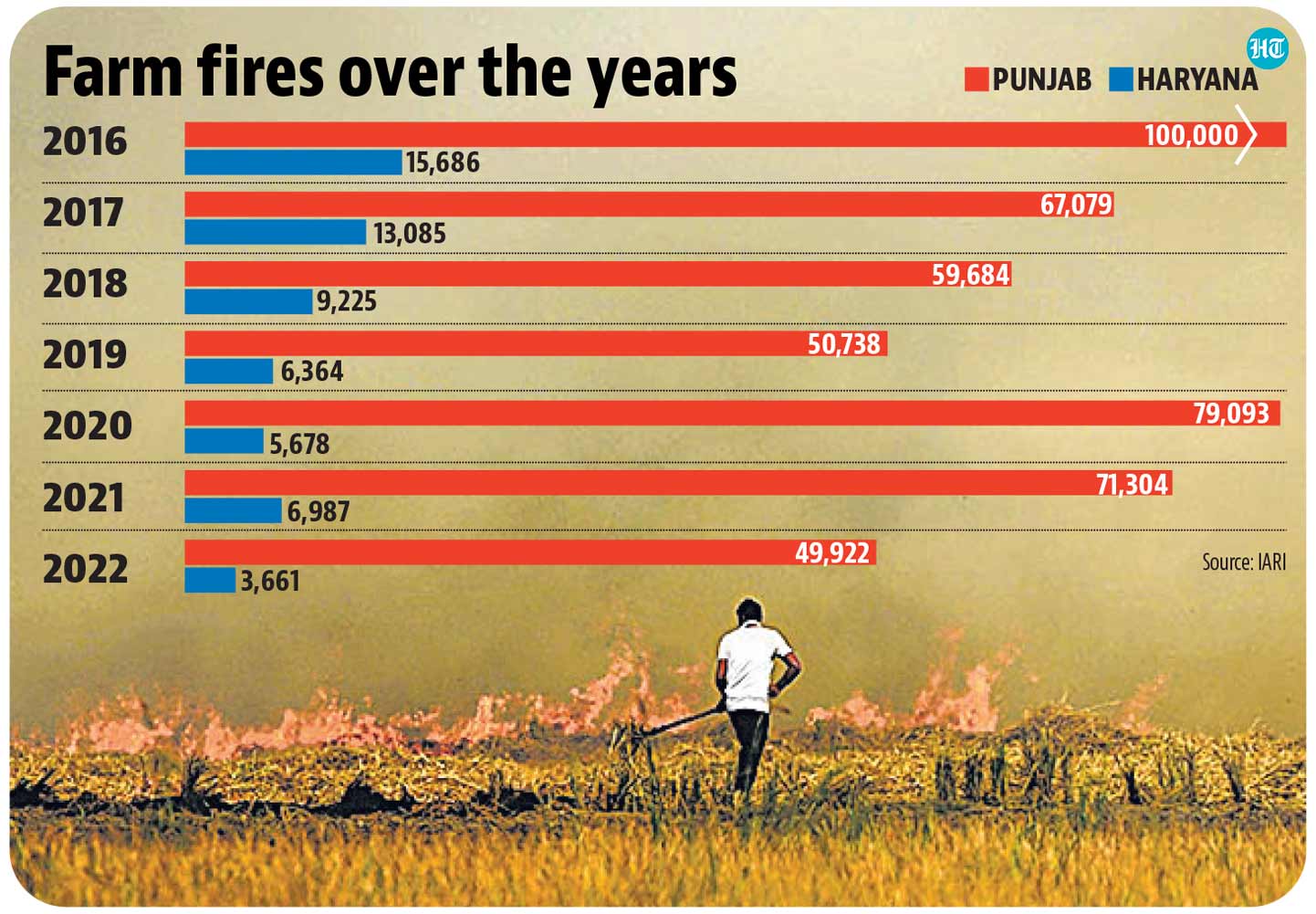
BATHINDA: Despite claims of the Punjab government to curb stubble burning, farm fires from September 15 to October 2 have increased by 66% compared to the same period last year, data from the Punjab Remote Sensing Centre (PRSC) shows.
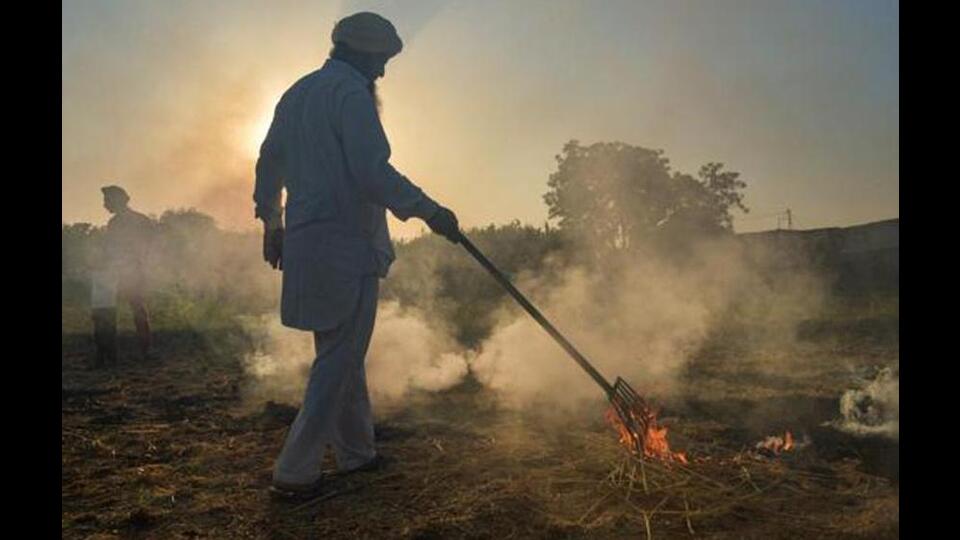
Punjab witnessed another 119 incidents of stubble burning on Monday, taking the total count to 456 as compared to 275 in the corresponding period last year, according to the PRSC data.
Agriculture experts attribute this to delay in harvesting of short-duration paddy varieties after rains in September. Officials said as the sowing of vegetables was delayed, farmers in the Majha belt of the state took to burning even the waste of basmati residue to avoid losses.
Amritsar, Tarn Taran and Gurdaspur districts of the Majha belt contribute 83% of the total 456 farm fire incidents till October 2 this year.
For the 7th consecutive day on Monday, Amritsar continued to top the chart with 71 farm fire incidents, followed by Tarn Taran 10 and Gurdaspur one.
Director of extension education at Punjab Agricultural University (PAU) Gurmeet Singh Buttar said farm fires are largely limited to the Amritsar district where the short-duration varieties like Pusa 1509 basmati and non-basmati PR (parmal) 126 were sown.
He said after harvesting in September, farmers in the Majha region, particularly in Amritsar and Tarn Taran districts, shift to vegetable cultivation by the third week of September. But untimely rains delayed the harvest and farmers resorted to stubble burning to clear fields.
“Farmers in the Majha belt are resorting to stubble burning to prepare their fields for green peas, potatoes and French beans,” said Buttar.
Chief agriculture officer of Amritsar, the worst-hit district, Jatinder Singh Gill said administration has started imposing environment compensation on the defaulting farmers.
“The district administration has imposed penalty on two farmers and the process to identify the erring farmers on the basis of the PRSC data is underway. We were expecting fewer fires this season but showers played a spoilsport. An area of about 35,000 hectares is used to grow vegetables where farmers complete sowing by September 20 before they switch to wheat a little later,” said Gill.
Arrivals up in mandis
According to the Punjab Mandi Board data, 68,000 tonnes of non-basmati varieties has already arrived in the state mandis till October 2 as compared to 42,000 tonnes in the corresponding period last year. The surge of 62% is attributed to the popularity of short-variety paddy, particularly the PR-126, say experts.
“The trend indicates that farmers had shown interest in PR-126 that was aimed at replacing the water-intensive and long-duration variety of PUSA 44,” said an official of the state agriculture department.
On October 2, farmers reached mandis with 26,000 tonnes of paddy in 17 districts. The data says that of the 68,000 tonnes of paddy that arrived in mandis by 8pm on Monday, 26,000 tonnes was purchased by government agencies and private parties. The government agencies procured 16,000 tonnes while the private players purchased 9,500 tonnes.


