
 E-Paper



Punjab to check stubble burning, commits to 50% year-on-year reduction
CAQM said the action plan also targets the complete elimination of farm fires in six districts of Punjab

 Prefer HTon Google


Nearly a week after Haryana submitted a state action plan to tackle stubble burning to the Commission for Air Quality Management, the federal body on Tuesday said that Punjab too has submitted an action plan and has committed to an overall reduction of more than 50% farm fires compared to 2022.
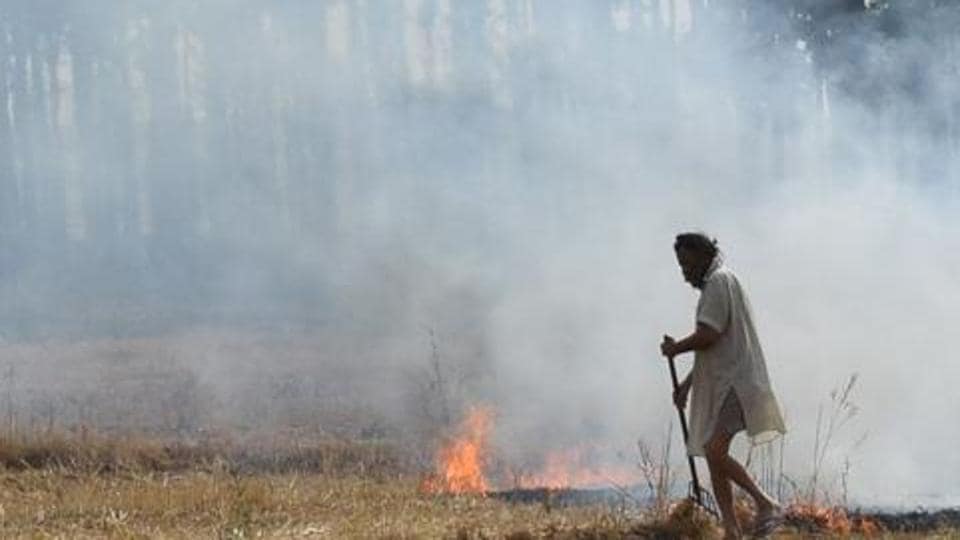
CAQM said the action plan also targets the complete elimination of farm fires in six districts of Punjab. The plan was finalised after four meetings were held with the state government over the past few months, including participation from the state chief secretary and deputy commissioners from all districts.
“The state action plan envisages at least a 50% reduction in fire counts in Punjab during 2023 compared to last year. The plan attempts elimination of paddy stubble burning cases this year in six districts, namely Hoshiarpur, Malerkotla, Pathankot, Rupnagar, SAS Nagar (Mohali) and SBS Nagar,” CAQM said on Tuesday.
The plan said the total area under paddy is estimated to be around 3.1 million hectares this year in Punjab while the paddy straw generation is expected to be around 20 million tonne (MT). Paddy straw generation from non-basmati crops, meanwhile, is estimated to be around 16 MT.
Last year’s data showed between September 15 and November 30, Punjab reported 49,922 fires. Five districts of Punjab — Sangrur, Bathinda, Firozpur, Muktsar, and Moga accounted for around 44% of this total. Meanwhile, experts said farm fire figures will gradually start to increase as the harvest season gathers pace with the daily fire count picking up from October.
“What we tend to observe in September are isolated fires, generally occurring in Amritsar or Tarn Taran in Punjab, since they primarily grow potato and that has a different harvesting cycle compared to paddy. The northern states last year saw a drop in farm fire count compared to 2021, but with high production expected once again, particularly in Punjab this year, more efforts will be needed on the ground to maintain such a trend,” said VK Sehgal, professor and principal scientist at the Indian Agricultural Research Institute (IARI).
In its state action plan, Haryana had identified Fatehabad, Kaithal and Jind as stubble-burning hotspots, since each of the three districts had a fire count of over 500 last winter. The plan had said it would aim to bring down fire counts substantially in the state, which includes near elimination in some districts.


