
 E-Paper



Punjab sets target to double area under DSR technique
According to an official spokesperson, chief minister Bhagwant Mann, who also holds the portfolio of agriculture, directed the department to make concerted efforts to bring around 30 lakh acres under this technique

 Prefer HTon Google


Chandigarh: The Punjab agriculture department has fixed a target to bring 30 lakh acres (12 lakh hectares) of paddy under the direct seeding of rice (DSR) technique during current kharif season, almost double as compared to the previous season.
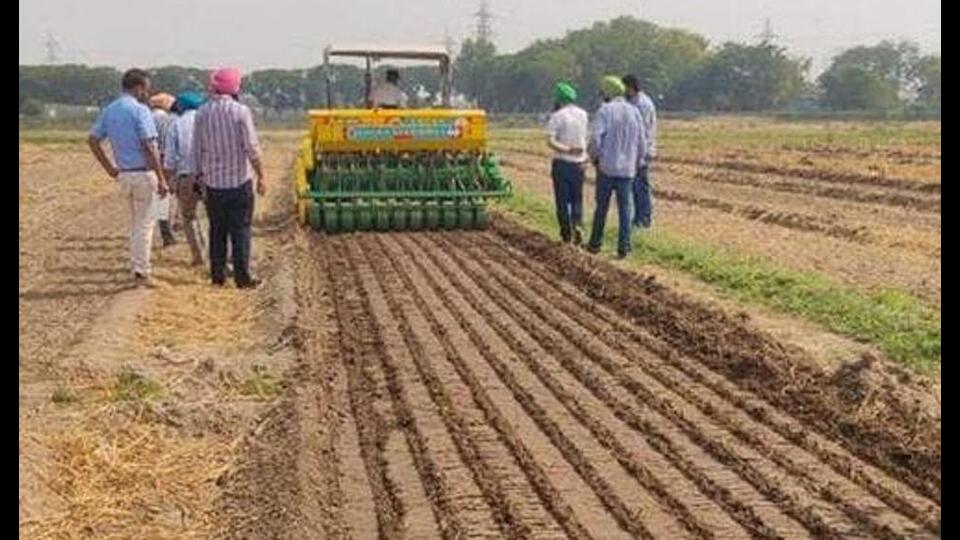
According to an official spokesperson, chief minister Bhagwant Mann, who also holds the portfolio of agriculture, directed the department to make concerted efforts to bring around 30 lakh acres under this technique. The move is aimed at conserving the underground water with this technology. Last year, paddy over 15 lakh acres was sown using DSR technique in the state.
The DSR needs far less water for irrigation, improves percolation, reduces dependence on farm labour and improves soil health, thus enhancing yield of both paddy and wheat by 5-10%.
Under the DSR technique, paddy seeds are drilled into the field with the help of a machine that does seeding of rice and spray of herbicide simultaneously. While in the traditional method, young paddy plants are raised by farmers in nurseries first and then these plants are uprooted and transplanted in a puddled field.
To encourage farmers to sow paddy through the DSR, the state government already decided a ₹1,500 per acre incentive to farmers for the sowing of paddy through this technique. A sum of ₹450 crore has been earmarked to provide incentive to farmers for promotion of less water-consuming and cost-effective DSR technology.
With reports suggesting that rats were damaging direct sown paddy in some areas, the chief minister directed the agriculture department to provide rat-control pesticides to farmers free of cost.
Director, agriculture department, Gurvinder Singh said DSR technique helps in saving nearly about 15-20% water as compared to the conventional puddling method.
The state government deputed nearly 3,000 officers of various departments, agriculture, horticulture, Mandi Board and water and soil conservation to motivate the farmers to adopt this eco-friendly technique.
The Punjab Agricultural University, Ludhiana, also provided the one-day special training to the officers of the agriculture department about DSR technology. Village-level training camps were also being organised by the agriculture department for a cluster of 5-7 villages each, said the spokesperson.
Currently the water table is falling at a rate of 86 cm per year leading to a precarious situation, where no underground water will be available across the state in the coming 15-20 years.


