
 E-Paper



Roundabout: Kabir Bedi still in tune with the Punjabi within
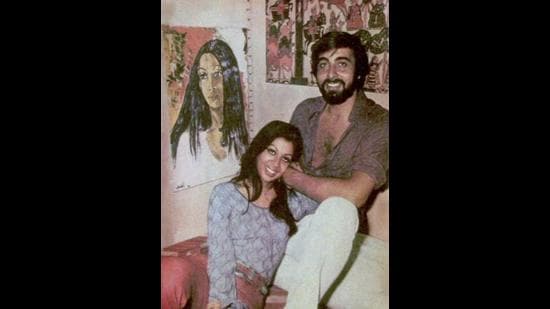
For those in their teens in the 1970s, Kabir Bedi with his roots in Punjab and his partner Protima Gupta, an unusual Ambala girl, were the rebels of the times, they threw convention to the winds and lived life their own way making shock waves


It was while anchoring a session called ‘Punjabi by nature’ at the Jaipur Literature Festival (JLF) back in 2013 that I spotted Kabir Bedi sitting in the audience with his daughter Pooja. Among other things, there was a heated discussion on the pride of patriarchal society, including offensive Punjabi pop music. Listening to it all with a gentle smile, Kabir intervened, saying, “The Punjabi men may have a hard exterior, but actually they are quite soft hearted. To tell you the truth they are like teddy bears.”
The remark brought back the general bonhomie and restored good humour. A few years earlier as wine flowed freely on the eve of the JLF, Kabir had quietly entered the lawn enclosure, as he was on the jury of that year’s literary prize, and a little high on Sula. I stood up and made a loud welcome speech. The actor who had wowed Europe and Hollywood as a star asked politely, “Was I?” When I said “nobody”, it was his turn to chuckle, obviously enjoying the improvisation, and say:“So, it was just like that!”
Not quite just like that
Well, it was not really “just like that” for it was a short story penned by him in the Illustrated Weekly of India, edited by author Khushwant Singh, which had won a 14-year-old girl’s heart in the early sparkling 70s. Called ‘Ramblings on the Beach’, the story is about school races being held on the beach with students in brown uniforms lined up neatly in rows. It has been included in his recent memoirs.
Witness to the race, he is more concerned by the girl who loses and writes: “In her eyes, I see shame. I see fear. I see despair at not knowing what to do next. I see the face of a child who has been bruised and humiliated. I see a soul that is being bruised and brutalised by comparison, by being forced to compete with the physically stronger on the beaches and playgrounds. In the classrooms, the same game will continue. She will be compared to the more intelligent, the ones with better memories and those who can write faster than her…I want to tell her that she is beautiful and sensitive, that this race does not matter, that it’s just a silly system that the grown-ups invented for their own reasons. I want to give her something to feel better. In my hand I have an orange. Impulsively, I reach forward, take the hand of this child and put the orange into it, “Take this,” I say. “It’s for coming second.”
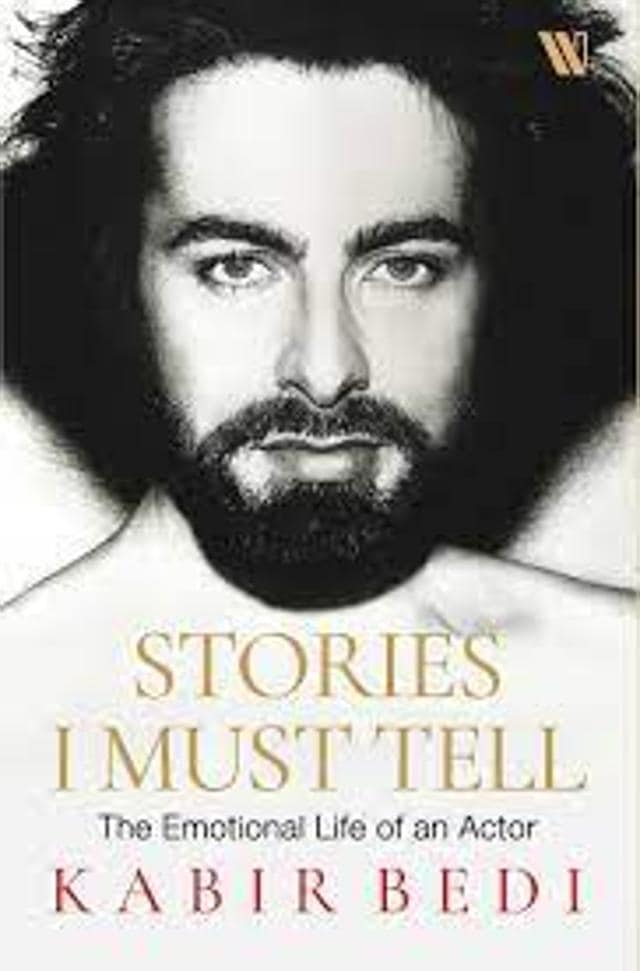
One does not know what the little girl’s reaction was to this act of empathy, but Kabir had found a forever fan in me as I was the hopeless failure in the playground as well as the classroom till then. But somewhere this story had given me a ray of hope and taught me to not wallow in inferiority.
An eventful journey
So as one eagerly reads these tell-all memoirs of a long journey, starting with a scoop interview with the Beatles as a young reporter with the All India Radio, one of the odd jobs Kabir did through his St Stephen College years to support his college education, one moves easily through his Bombay advertising executive years to his theatre performances with Alyque Padamsee and onto the romance and subsequent marriage with yet another illuminated soul, Protima, the tall and dusky model, who shocked everyone with a streaking spree.
Of course, she was to later find her real talent as a leading Odissi dancer of repute, trained by none other than Kelucharan Mohapatra. When I mentioned to a male friend that I was up most of the night reading Kabir’s stories and enjoying them every bit, pat comes the reply: “Kabir Bedi has always been lacking in intelligence and whatever little he had existed in his groin!” A harsh remark indeed but then intelligence is not all, he was never lacking in a generous soul that does a Punjabi proud.
The second son of the idealistic couple Baba Bedi of Lahore and the British scholar Freda, who chose scholarship and philosophy as a way of life rather than wealth, Kabir sure had a stormy life. Married four times and father of three he saw pain, sorrow and the tragic death of his son Siddharth Bedi but took it all with hope and grace, bravely marrying Parveen Dusanj, the British-born Punjab girl, 28 years his junior, a day before he turned 70. In an interview with Preeti Gill of Majha House, Amritsar, he spoke proudly of his being a Punjabi by nature and thus most in tune with his fourth wife.
Recalling his reading of Punjabi scriptures to his bhabhoji (paternal grandmother) for whom he had taken the trouble of learning Gurmukhi, he adds with conviction: “You can take a Punjabi out of Punjab but you can’t take Punjab out of a Punjabi!”


