
 E-Paper



Roundabout | Singing it anew: Song of Malwa’s Rani Rupmati
The 16th century tragic tale of the love of Rani Rupmati and Sultan Baz Bahadur lives on in popular imagination till date in fiction, songs and poetry and now comes a novel in English with the protagonist telling her own story


This fortnight, our journey is to Malwa, but the one in the south-east of Punjab - the volcanic upland beyond the Vindhya Range in Madhya Pradesh.
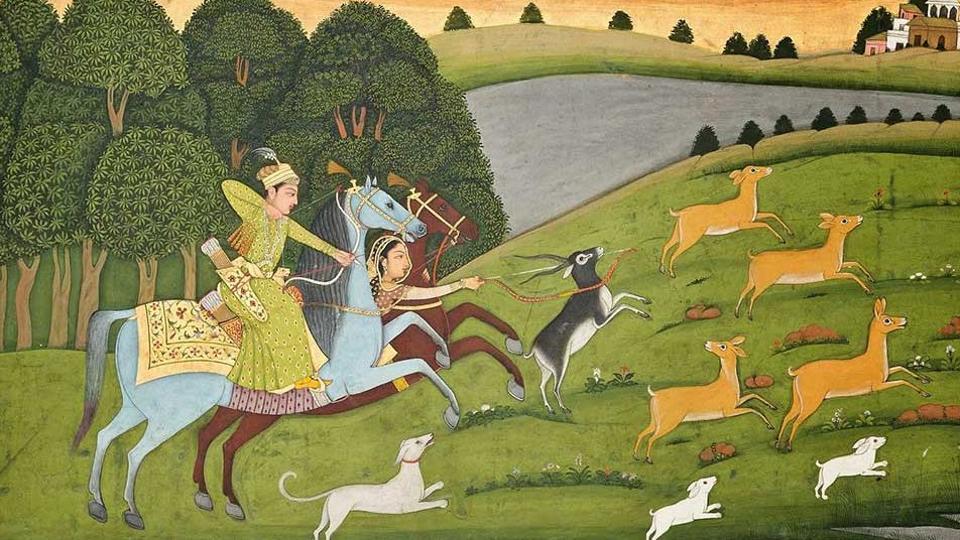
To tell you the truth, one did not know like many other Punjabis that Malwa existed elsewhere other than the one in their own state. One recalls a mushaira at our city’s Tagore Theatre, way back in the 70s, where the late poet, Ali Sardar Jafri, referred to the Malwa region of central India as he recited his famous love couplet: ‘Har ashiq hai Sardar yahan, har mashooqa Sultana hai’. (Here every lover is Sardar and every beloved a Sultana’. He was playing on his own name and that of his wife, but many of us desi folks thought that he was referring to us sardars and our own Malwa region of Bathinda fame. He had to clarify that his intent was to pun on his own name and that of Baz Bahadur, the Sultan of Malwa.
Yes, one is suddenly in the throes of the love legend of Rani Rupmati and Baz Bahadur, which stepped out of history into myth way back in the 16th century. The reason being that the Rani, famed for her beauty and often referred to as the lotus lady, has returned to retell her story.
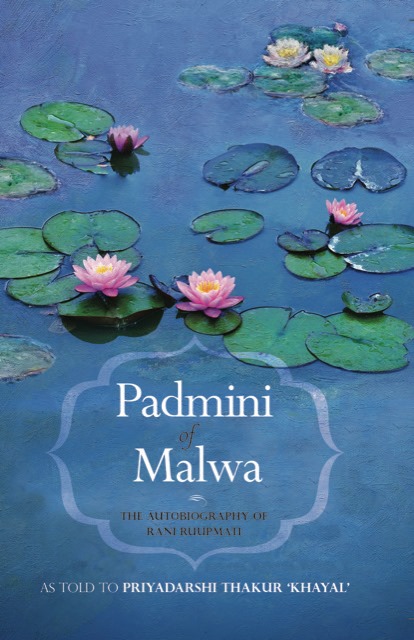
Believe it or not, but this is what poet and scholar Priyadarshi Thakur ‘Khayal’ says of his debut novel in English titled ‘Padmini of Malwa: The Autobiography Of Rani Ruupmati’. The extra ‘u’ in the name is to get the phonetics right. Doing research on this tragic story of love, for we in India enjoy our love tragedies just as much as the western world does its love comedies, the author almost gave up till Rupmati appeared in person to dictate her story to him. Believe me, such things do happen to writers for their imagination is more vivid than the rest. So, the author humbly affirms that it is the Rani telling her story and he is merely her scribe. He adds, “Love and marriage between individuals from different faiths and communities not entirely at peace with each other was an extremely sensitive subject in the Rani’s time, and continues to be so, to this day. On behalf of Rani Rupmati, this scribe therefore asks his readers for the humanity and understanding that this story deserves.”
A riveting tale
Baz Bahadur was the last independent sultan of Malwa and a musician to boot. Rupmati was poet, singer and musician with Raag Bhoop Kalyan to her credit, besides being an exceptional beauty. These star-crossed lovers of the times of Mughal emperor Akbar lost each other with the Rupmati taking her life at the age of 21, after six years of a passionate union, and Baz fleeing Mandu after being defeated by Adham Khan, who had been sent by the emperor to conquer Mandu.
Priyadarshi tells the story so well that one cannot put down the novel, once one starts reading it - right from Rupmati’s childhood to her last breath. Fact and fable come together with such appeal and creativity that one is almost transported to those times in the forest of Malwa and the building of the palace of Mandu with its Reva-kund because his love wants to catch a view of the Narmada River for it was on its banks that she grew up and in local parlance it is called Reva. What is interesting is the handling of the condition of women in the feudal times when battles were fought over their bodies.
Rupmati, like other women of her times, are mere objects for the men who own them by birth or abduction. Here the courageous young Rupmati chooses her own path and follows the heart’s desire. Even the great love between the two has to deal with this contradiction.
Rupmati, like other women of her times, are mere objects for the men who own them by birth or abduction. Here the courageous young Rupmati chooses her own path and follows the heart’s desire. Even the great love between the two has to deal with this contradiction. Referring to the self-immolation by Rani Padmini of Chittor, Baz, says: “I have got my Padmini without much ado…” The era with its mood and frailties is captured with finesse
Legends never die
Fact or fiction, legends never die and more so those of love. The story of Rupmati and Baz Bahadur has been told over and again in folk songs, ballads and poems over the centuries. In 1975, SN Tripathi made a feature film Rani Rupmati with yesteryear stars Nirupa Roy, goddess of the mythological films of yore, playing Rupmati and Bharat Bhushan, Baz. A song from the film composed by Tripathi and written by Bharat Vyas and sung by Lata Mangeshkar and Mukesh, respectively, is evergreen even today: ‘Aaa laut ke aaja mere meet, tujhe mere geet bulate hain’ (Return to me my love, My songs call out to you). Madhya Pradesh tourism thrives in Mandu as a holiday destination for lovers and bards still sing ballads to the tragic lovers. This year, it has started its own cultural festival.
nirudutt@gmail.com


