
 E-Paper



Roundabout | Utterly butterly times dawn on translators
Cutting across language barriers, Indian books in translation are all the rage these days after the self-deprecating colonial and post-colonial times as English too emerges as yet another Indian language

 Prefer HTon Google


Wooing and wowing audience for 56 long years, a young girl has emerged as a pop culture phenomenon like none other. She flits from subject to subject with alacrity, finesse, and a great deal of confidence. Sometimes she sashays down the red carpet singing, ‘Gori tera gown barha pyara’ and other times, sits sadly on rubble, the aftermath of riots that rocked the capital city, exclaiming, ‘Dilli aisa kisi ne mera torha’. She never fails to turn heads and touch hearts and strike the right chords.
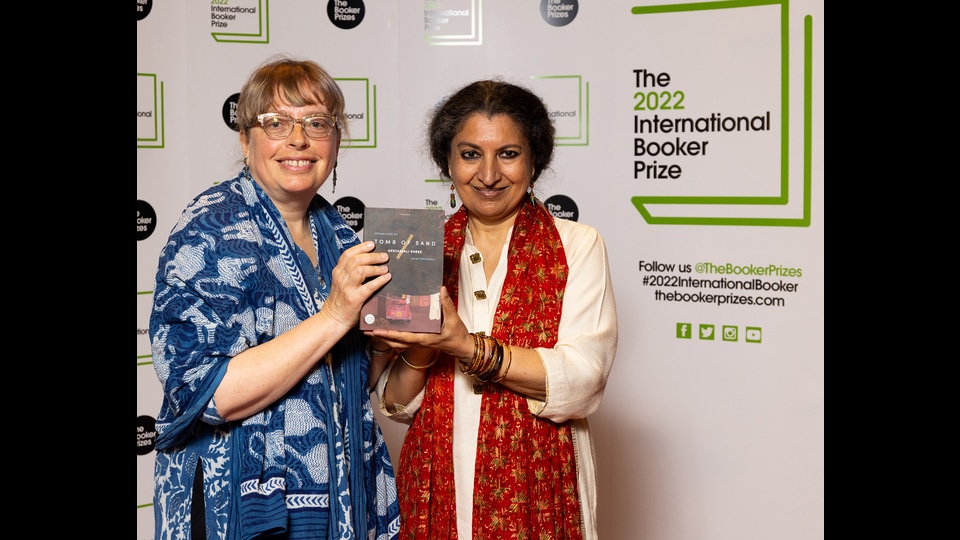
Guess what she did most recently? She multiplied into two! Two identical girls sat side by side with victory smiles, their favourite butter in their hands, exclaiming ‘Jeetanjali’. Not just that, the cheeky glutens added: ‘Your Bhookh ka Prize!’. The precocious pop icon was congratulating author Geetanjali Shree and translator Daisy Rockwell for together bringing home the International Booker Prize for the first time in her unique style. Geetanjali Shree’s Hindi novel ‘Ret Samadhi’ translated as ‘The Sand Tomb’ had won the prestigious award, and here the two were seen equally sharing the spoils, with the translator getting as much as the writer.
Good tidings
These are certainly good tidings for literature being written across our multilingual country. A translation into English can catapult these masterpieces to the global platform. Translations have been looking up over the past few decades, and this international validation makes all the difference. The all-round joy and celebration is reminiscent of when Arundhati Roy brought home the Man Booker Prize for her debut novel ‘The God of Small Things’ nearly a a quarter century ago in 1997. There was such jubilation all around, and those who calculate the returns of everything in the moolah realised that it may not be a bad idea to take up writing as a profession. Of course, the truth is that a writer will always continue to writer: money or no money. And money will not be able to make a writer of one who is not. The same is true of translations as well.
That was also the year I moved to Delhi to work in the same daily I worked in Chandigarh to fulfil my dream of being a metropolis journalist. My first home was a colleague’s empty flat and after that a first-floor flat in Jangpura. I stayed there in the refugee settlement for a few months, and do not remember much of it, except an interesting vegetable vendor. The man would call out: ‘Do rupaiye kilo, lelo’ late in the evening. One night, I went down to find out, which vegetable was being sold at a throwaway rate. To my surprise nothing was available at the price. Irritated, I asked the thele wala, why was he claiming to sell vegetables for ₹2. He grinned, saying: “To bring people out of their homes.”
To cut the long story short, I relate this episode to relate the mood on the street. Most of the homes belonged to small but well-to-do tradesmen who took turns to organise a grand ‘Mata da jagran.’ However, no one was interested in literature or literary activity. But the day the news broke that Roy had won the Man Booker Prize and the monetary award it had accompanied, the young son of my landlord came up the stairs to ask me if I was a writer. A journalist, I corrected him. Not interested, he smiled and said, “ I want to be a writer like Arundhati Roy!” Well, this award had made this the profession of writing attractive to so many. So let this be the fate of translation too.
Words travel worlds
“Words travel worlds.” So goes the famous quote and it is the translators who do the driving. Phenomenal translator Arun Sinha who won the distinguished translator award at the Jaipur Literature Festival this year, is credited with translating the best of Bangla literature. A professor of creative writing at Ashoka University, he has translated around 70 books. Taking his prolific work in his stride, he says “Every Indian can translate!” Yes, Indians as rule are fluent in two or three languages and moving from one to the other is easy for them.
But that is not all, the translation has to be good or the purpose is lost: Thus opines Antara Dev Sen, who is editing Indian Literature, the journal of the national Sahitya Akademi. I was working with Antara in Delhi when she brought out The Little Magazine. Working for the magazine one lost self-consciousness and translated fiction, drama and poetry from Punjabi, Hindi and Urdu. Then came notice and offers to publish a book or two translated from the Punjabi. The road may be long and difficult but rewarding, except for the remuneration. With traction surging ahead and being introduced as serious courses in some university, one hopes the next generation of Indian translators will be able to make a career of it.
nirudutt@gmail.com


