
 E-Paper



Roundabout: Who is afraid of Punjab’s mediaeval folk heroine Heer Sial?
The answer to this ticklish question would be all of the patriarchal society of Punjab including many of the women who have become upholder of the societal values upheld


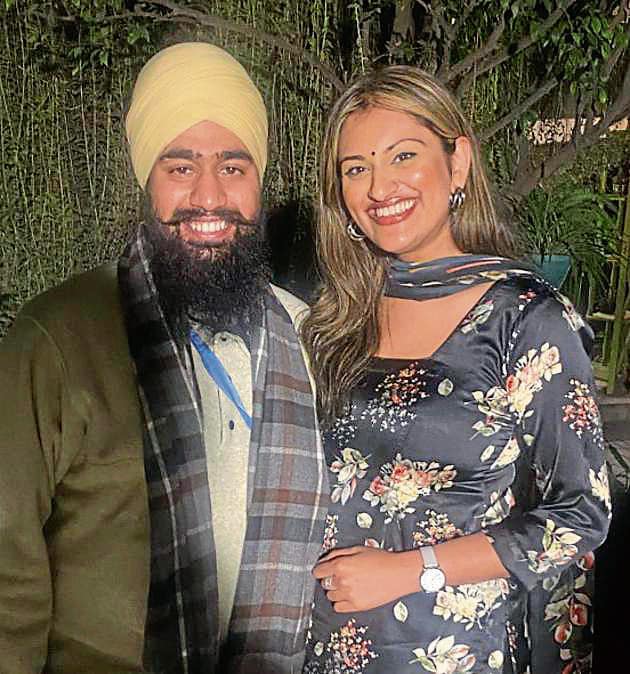
A charming evening of conversation interlaced with poems around a bonfire with young poet Rupinder Waraich of Birmingham and The Lost Heer Project enthusiast Harleen Sandhu from Toronto at Majha House courtyard in Amritsar turned into unending patriarchal debate at the very mention of Punjab’s folk legend, one immortalised by poet Waris Shah over 300 ago. The legend continues to capture the hearts and souls of many, but its detractors even in these changed times when the right to love is considered fundamental, are ready to raise hackles.

Before we go further, it becomes necessary to look back at the famous-yet-tragic love legends of the land through which five rivers once gushed. Atop the list remains Heer-Ranjha of course. Then we have Sohni-Mahiwal, Mirza-Sahiban and Sassi-Punnu.
Interestingly, for centuries no one named their daughters Heer fearing that they would rebel, fall in love and meet a sad end. It was in the 20th century that one began to come across girls named Sohni and the likes, but Heer was a no-no even as a few ultra-left couples did dare to name their daughters that in defiance. The trend, however, never quite caught up!
A rebel daughter
The title was given to Heer by contemporary historian Ishwar Dayal Gaur, who uses folklore as a source for writing history and has published a very interesting study in his book ‘Society, Religion and Patriarchy: Exploring mediaeval Punjab through Hir-Waris’. He rewrites her name with an ‘i’ instead of the popular double ‘e’ — perhaps finding it more authentic, thus from the phonetic point of view.
Gaur writes of the creation of the heroine by Warish Shah: “The description of the glamour and beauty of Hir and her body image by Waris Shah, with the aid of a variety of metaphors and similes, may look to some readers like a sensual exposure of the female soma. However, his intention was to convey a deeper meaning to his readers. His Hir confronts the community elders who are physically, socially and theologically stronger.”
Gaur goes on to point out luscious similes — brows like the arches of Lahore, cheeks that pulsate like rose petals, a neck like a swan and lips like red rubies and so on. He adds that her social rebellion is against her own father, her community and her priest. This indeed is not something that a patriarchal society will bear.
The Lost Heer Project
The Friday evening featured jugalbandi with Rupinder and Harleen at Amritsar, which the likes of me watched eagerly online, with the former reciting her poems.
Significantly she chose to recite a rather daring poem inspired by the first painting by Amrita Shergil made in Amritsar in 1935, a year after her return from Paris. It is considered a classic and while she named it ‘A group of three girls’, it was later referred to as ‘Three Girls’. Her models were the Majithia sisters, daughters of her paternal uncle Umrao Singh Shergil Majithia.
For our young poet here, to meet her extended family in India, it spelled poetic couplets as she said: “Do you remember, when I threw my salwar kameez in river Beas/and danced naked into another life. You ‘promising better--’. ” There was no mic but a gentleman recited it louder in courtesy and the closing line poignantly, but surely defining her stance: “If Rup is seen first, why did you send me here? Take me back/away from being a daughter or a wife feeling better.”
Then came the turn of this amazing engineer, storyteller and photographer, Harleen who has been working on a social media initiative since 2018 focussed on forgotten women of colonial Punjab.
He says: “The history of colonial India, and its partition is dominated by the narratives of women. This is an attempt to see it through the eyes of a woman.”
The project is now nearing completion and the Penguin publishers will be publishing the book.
But no one seemed to pay heed to his narrative and the Majhail men seemed to have just one concern, loud and aggressive: “Why was the project named after Heer?” Then, a woman lecturer burst out indignant
questioning why had Amrita Pritam addressed her poem to Waris Shah? The same old story from 75 years ago. And then angrily she dropped the name of poet Amarjit Chandan of London out of context for a form of testimony. One senior woman commented: “All I want is that girls should not break their homes!”
On being asked how the experience was, Harleen replied, “It was very valuable. I learned much from it. But for it, I would never have got the live and real experience of what patriarchy is!”


