
 E-Paper



Spice of Life | Fact or fiction: Reading Rushdie in art, reality
Salman Rushdie was first great and then controversial and not the other way round. If the genius had been missing, the threat would not have mattered at all; the threat to his life always formed the backdrop against which his works were consumed whether in the classroom or outside

 Prefer HTon Google


I was in the middle of a book by Salman Rushdie when TV broke the news of an attack on him. The news stirred up a multitude of emotions. I was reminded of a literary principle related to the separation between the man who suffers and the mind that creates.
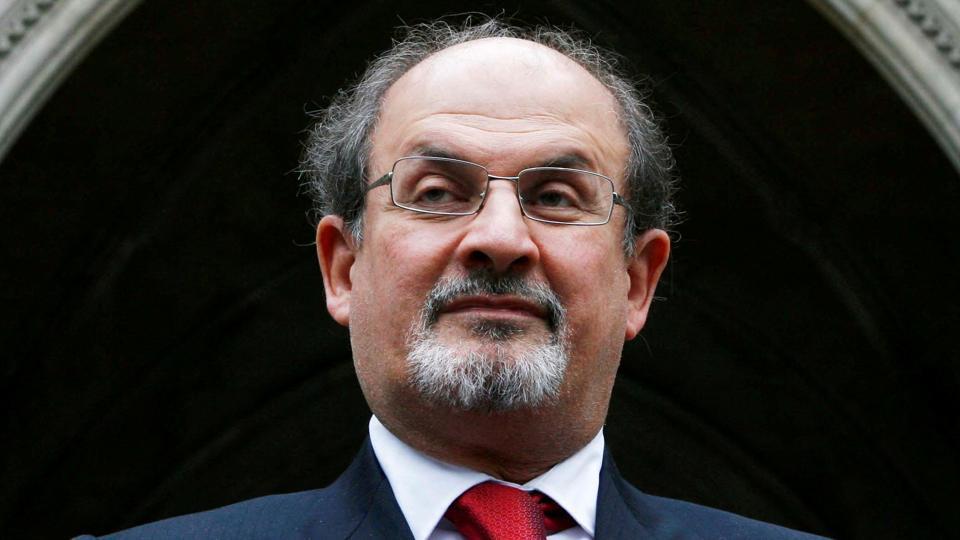
There has always been a debate in literature whether there is a direct correspondence between personal experiences of writers, the circumstances of their lives and the works they produce. In the most common literary approaches, it is convention to maintain a discrete distinction between the man who suffers and the mind that creates, thereby driving a creative wedge between fact and fiction or art and life. Art borrows from life but not without claiming a relative autonomy for itself. It is for this reason that art and literature cannot be shut inside the clamshell of hard facts.
If the creative process were nothing else but a re-inscription of the author’s or artist’s own experiences and feelings, the task of interpretation would become banal, literal and reductive and rob the work of art of a major part of its appeal. In Rushdie’s case, however, the principle seems to be getting turned on its head as the facts pertaining to the author’s life are weighing upon the autonomy of his art with an inexorable force. To begin with, as a teacher of English literature, I am used to reading Rushdie critically but it requires great pluck to go on reading him dispassionately when he is lying critically injured in a hospital.
One is struck by the cruel irony that the person who had so many stories to tell has himself turned into a story today. Rushdie always had a unique place among writers because whenever you taught him or read him you always thought about the threat to his life. The threat to his life always formed the backdrop against which his works were consumed whether in the classroom or outside.
However, it is equally true that the threat neither enhanced nor diminished his genius. He was first great and then controversial and not the other way round. If the genius had been missing, the threat would not have mattered at all. For most of his life, his inimitable talent had an upper hand over the harsh facts manifesting themselves as the looming danger to his personal safety. Not only did he continue to write, regaling us as a raconteur par excellence, but was also read in universities and colleges all over the world. Now that the assault has taken place, life seems to have relegated art to a less important place, the man who suffers is more important than the mind that creates.
Taken in a broader sense, the assault on Rushdie the writer is also an assault of implacable reality on make believe. The intractable facts of life are overtaking art and usurping its independence. However, like always, the pursuit of arts and literature must remain a life affirming and not life negating exercise.
Believers in the value of literature are praying that the spinner of yarns will not only overcome his personal suffering and but once again reclaim the place of pride that belongs to the mind that creates.
The writer teaches at Punjabi University Regional Centre, Bathinda. He can be reached at ajayverma71patiala@gmail.com


