
 E-Paper



Spice of Life | Op Cactus: Indian troops to rescue of Maldives, minister’s mother-in-law
At its request, the ATC switches its runway lights ‘on’ and then ‘off’. Are we in luck? When Friendly One closes in and is only 200m above sea level, the runway lights are switched ‘on’ again. Inside the aircraft, the tension and silence is palpable.

 Prefer HTon Google


The new president of Maldives, Mohamed Muizzu, is demanding that Indian soldiers maintaining defence equipment given by India leave his country forthwith.
Thirty-five years ago, his country was in serious trouble. Eighty armed rebels and mercenaries had managed to gain control of Maldives’ capital Male, including major government buildings, the port and TV and radio station. They had surrounded the national security headquarters to make a forced entry. The then president, Abdul Gayoom, went into hiding to escape capture. Early on November 3, 1988, his foreign secretary contacted foreign nations, including India, seeking urgent assistance. Maldives was in panic.
Let me narrate subsequent events and how we carried out Operation Cactus.
9am: While rushing to the cabinet secretariat for a meeting, then army vice-chief Lt Gen SF Rodrigues summons me (I was a Brigadier in the military operations directorate) to the operations room to discuss the Maldives situation and to send a military force. We have no maps. I put up naval charts on the map board and start reading available material on Maldives. 50 Para Brigade at Agra is told to prepare for a short notice contingency task.
10.30am: The operations room starts receiving visitors for the cabinet meeting with service chiefs and vice-chiefs, secretaries, intelligence chiefs and our high commissioner in Maldives, who is on leave in New Delhi.
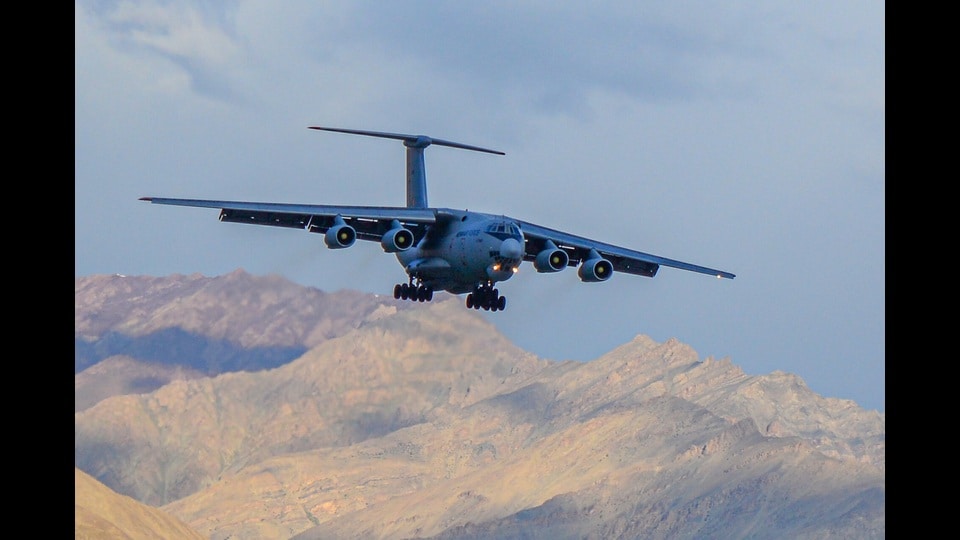
11am: The cabinet meeting starts with the arrival of then Prime Minister Rajiv Gandhi. All possible geo-political, strategic and military scenarios, implications and risks involved in launching an operation are discussed over the next two hours. No other nation is willing to send troops to Maldives. Our PM approves the plan for immediate airlift of the Para Brigade in a long-distance, high-speed IL-76 aircraft from Agra. If this force cannot land at Halule (airport for Male), it will return to Trivandrum, Kerala. The next morning, it will attempt a para landing in a smaller AN-32 aircraft.
1pm: The army and air force vice-chiefs ask Group Captain Ashok Goel and me to leave for Agra immediately. We will brief contingency force commanders and accompany the force till it lands in Maldives. Any change in situation will be intimated at Agra or before leaving Indian airspace.
5.45pm: The contingency force leaves Agra for a non-stop 3,000-km flight. The Para Brigade team is led by its commander, Brigadier Bulsara. The IL-76 team, comprising Friendly One and Friendly Two, is led by commanding officer, 44 Squadron, Gp Capt Anant Bewoor.
8.45pm: While flying over Trivandrum at 37,000ft, we are informed, “No message from New Delhi.” The flight continues. At 9pm, having missed lunch and feeling hungry, I take my packet out of the brief case and share it with a Para officer. In Delhi, my wife is informed that I have gone to Agra for an urgent work.
9.50pm: Friendly One raises ATC Halule on radio. At its request, the ATC switches its runway lights ‘on’ and then ‘off’. Are we in luck? When Friendly One closes in and is only 200m above sea level, the runway lights are switched ‘on’ again. Inside the aircraft, the tension and silence is palpable. ‘Friendly’ pilots land their heavy IL-76; switch off lights but keep the engines on. Cargo doors are opened. Soldiers jump off to take position on both sides of the runway. Male is only 500m across a sea channel. Its lights are visible. In 20 minutes, the runway is fully secured. Brig Bulsara and commanding officer, 6 Para, start work on troop movement in civil boats to Male. A vessel, MV Progress Light, with rebels on board, is noticed rushing out of Male harbour. A rocket is fired. The vessel is damaged but continues to chug along and gets lost in the darkness.
11.45pm: Friendly One and Two, with me on board, start the flight back to Trivandrum. Paratroopers spread out in Male to take control and look for President Gayoom.
November 4, 3.30am: Male is fully under control of Indian paratroopers. Gayoom is located and his security ensured. He rings up Prime Minister Gandhi to thank him for the prompt assistance in saving him and his country.
Over the next 36 hours, MV Progress Light with rebels on board and carrying hostages, including the mother-in-law of a Maldives minister, is intercepted by Indian Navy ships. It is forced to surrender with crew, rebels and hostages.
In Parliament, Gandhi states, “I am proud to report that our troops have carried out their assigned task in an exemplary fashion in the highest traditions of the Indian armed forces.”
While shaking hands with the navy chief, he tells him: “Good job Admiral! But I doubt if the Maldives’ minister of education, Ahmad Mujuthaba, will forgive the Indian Navy for rescuing his mother-in-law.”
The writer is Panchkula-based former chief of the Indian Army and can be reached at vedmalik@gmail.com.


