
 E-Paper



Guest Column: Of staying on tiptoes during morning walks
The rising incidents of unprovoked attacks from stray dogs have left Chandigarh residents, senior citizens in particular, feeling increasingly unsafe in their own city


I was going through the final round of packing for my trip to the US, trying to make the last-minute adjustment to the luggage. I topped my things with my short walking stick. Speaking to my daughter over the phone, I told her about this unmissable item. She was amused and remarked: “Mom, you don’t need any kind of stick here. Rest assured, the dogs on streets are never unattended, and don’t bark or growl”.
This was true to a “T”, as my experience later on would bear out. There are dedicated walking tracks and beautiful trails in the forest lands. The dogs accompanying their masters are always on the leash. I was later told that most of the pets are neutered, explaining their lack of ferocity.
In Singapore, things get even more interesting. The dogs are usually small-sized, but never unattended. In addition, the caretaker always carries a plastic bag, which to my amazement, I discovered was a “poop bag” to keep them from littering the streets and parks. It is the owner’s duty to pick up the waste.
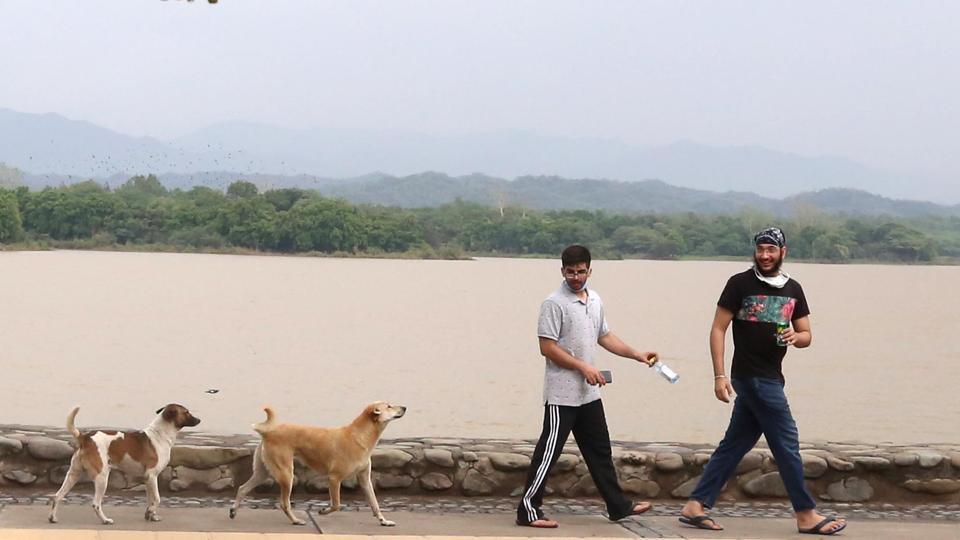
Coming to the home scenario, strays in Chandigarh have a free run. Unprovoked attacks and bite cases have discouraged many senior citizens from going for morning or evening walks. Speaking for myself, I always go with a stick, which I believe is more a deterrent than an asset, because if it came to it, if I was actually being attacked by the dogs, I am sure I would freeze out of fear. If I spot a stray at a distance, I change my route subtly, without letting the canine become aware of it.
The increasing number of dog bite cases is not restricted to any particular area. We often hear and watch on television, cases of hapless children and elderly being attacked and being grievously injured by the strays. Of late, pets have also been increasingly aggressive. The municipal corporation, meanwhile, seems to hardly bat an eye.
The same comes at a time when the opinion on management of strays is the most divided. While most of the people would feel safe without the presence of strays on roads and parks, animal lovers would ferret out the question of animal rights, which may be true, but not at the cost of human rights. And then there are the wilder, more interesting reasons to feed strays — to ward off the malefic influence of planets on the advice of astrologers.
And if all of that was not enough, we now have cases of monkey bites and cattle injuries. It is indeed true that rapid and unplanned colonisation and concretisation of cities has led to this unfortunate state of affairs. The resulting deforestation has forced the wild animals to stray into cities in search of food or otherwise.
The solution to the problem may not be straightforward, but it’s not unattainable. The municipal corporation must take responsibility to keep the roads, parks, and other public places free of these animals. We often hear of sterilisation campaigns of these animals, but these are few and far between. The framework to tackle the menace is in place, all we seem to be lacking in is implementation.
By not provoking these animals, walking at a safe distance, staying calm in case one encounters an aggressive stray and walking with company, we can ensure our own safety somewhat better. Unfortunately, that’s the best we can do as we wait for the administration to get tighten its leash.
(The writer is a former head of the ophthalmology department at GMSH, Sector 16)


