
 E-Paper



The power battle between Punjab and Himachal Pradesh
The two northern states are fighting over control of operations of a 90-year-old hydroelectric power plant

 Prefer HTon Google


Punjab and Himachal Pradesh are gearing up for a face-off over the Shanan Power Project. In the latest standoff between the two states, the Sukhvinder Singh Sukhu government in Himachal Pradesh has decided not to renew the 99-year lease with Punjab for the 110-MW Shanan hydel project in Jogindernagar.
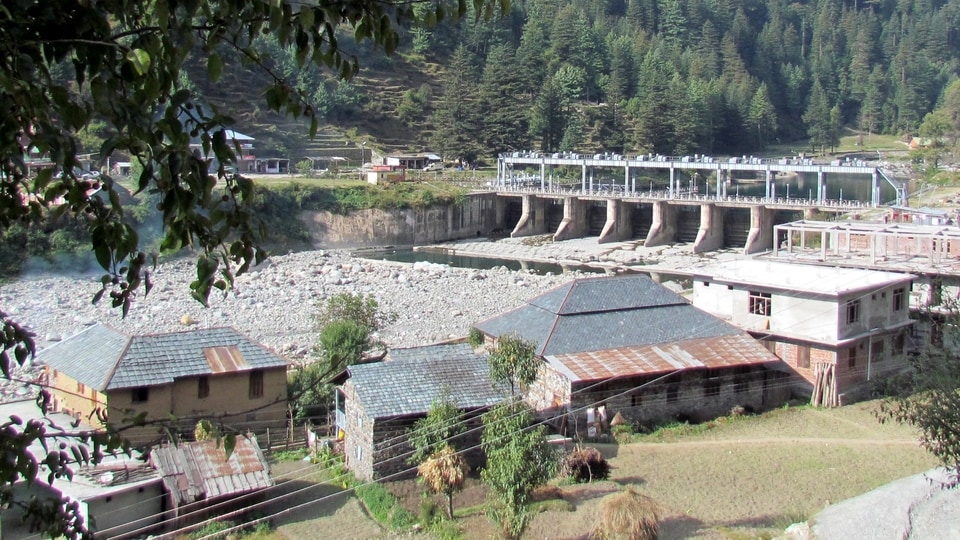
What is the Shanan Project?
The Shanan hydroelectric plant, commissioned in 1932, was built under a 99-year lease deed signed in 1925 between Jogendra Sen Bahadur, the then ruler of Mandi state, and Colonel BC Batty, the chief engineer of the government of Punjab. As per the agreement, Mandi state provided the land and water of the Uhl River, a tributary of the Beas River, in exchange for 500KW of free electricity. The Stage-I project, with a capacity of 48 MW, was officially inaugurated by the viceroy of India at the Shalimar receiving station in Lahore on March 10, 1933. The capacity was later increased to 60 MW in 1982 and subsequently to 110 MW by the Punjab government.
Why is it significant?
The Shanan powerhouse was constructed amidst dense Deodar forests, with a four-stage haulage rail network connecting Jogindernagar to Barot. During the British era, a narrow-gauge rail line was laid between Pathankot and Jogindernagar to transport heavy machinery for the Shanan complex. Even today, British-era poles carrying transmission lines can be found in the Majha region, made of high-quality steel imported during the British empire. It’s the cheapest source of energy for Punjab — almost a rupee per unit — where on average, the cost of power purchase is almost Rs. 4.75 per unit from other solar, thermal, and wind power projects. The state is set to witness a peak demand of 15000 MW power this summer.
Why is Himachal Pradesh interested in the project?
During his recent visit to Delhi, Himachal Pradesh Chief Minister (CM) Sukhvinder Singh Sukhu handed over legal documents related to the Shanan Powerhouse to the Union power ministry. The project has the potential to generate an annual income of ₹200 crore, significant for the state that generates revenue by selling power in the grid and the centre pool.
Sukhu recently informed the Punjab CM Bhagwant Mann that his government had decided not to renew the lease. In response, a senior official from the Punjab power department stated that Punjab's claim over the Shanan project is “genuine and strong” and that the matter will be taken up at the appropriate level when necessary.
Reports in 2021 also suggested that Himachal Pradesh intends to take control of the Shanan Project from Punjab once the lease expires. On May 29, Sukhu met Union minister for power R. K. Singh and sought the Centre's intervention, indicating the seriousness of Himachal Pradesh's pursuit of the matter. Sukhu requested the Union minister to issue necessary directions to the Punjab government to hand over the project to the state before the lease period expires in March 2024. BJP leader and former Himachal CM Shanta Kumar has also backed the demand of Himachal Pradesh.
Punjab’s stance
Punjab State Power Corporation Limited (PSPCL) stated that as per the Punjab Re-organisation Act, 1966, which facilitated the reorganisation of states, the Shanan powerhouse in Jogindernagar, Himachal Pradesh, was allocated to Punjab by the ministry of irrigation and power.
The objection raised by Himachal Pradesh has been clarified by the Government of India through a letter dated March 2, 1972, reaffirming the allotment of the Shanan power house to Punjab. The PSPCL website also provides information about the project, stating that the initial plan for harnessing a power potential of 4X12 MW (48 MW) was conceived by Col. Battye, the then chief engineer of the Punjab government, in 1922. The Stage-I project, costing ₹2.53 lakh, was commissioned in 1932 and officially opened by the Viceroy of India at the Shalimar Receiving Station in Lahore on March 10, 1933.
Punjab maintains that it is in continuous ownership and possession of the project and, if necessary, may resort to legal action. “Our stand is totally clear that it’s a project given to Punjab during reorganisation of the state. We have invested in it and upgraded it. It’s one of the finest projects, as our engineers have maintained it. The Himachal CM is creating unnecessary controversy”, said Harbhajan Singh, Minister of Power, Punjab.
What next?
Himachal has put the ball in the court of Centre to take control after March 2024, when the lease will end. However, Punjab is known for being assertive on issues of water and its reservoirs. Experts say a legal battle is in the offing as both states will battle for the project. Given that both Himachal and Punjab are being run by opposition parties, the Centre may not play a proactive role in resolving the issue, state officials said.


