
 E-Paper



Two months on, NIA takes over Bathinda blasts case
Around two months after two high-intensity blasts rocked a house at Jeeda village in Bathinda, when a radicalised law student was allegedly preparing a “fidayeen” attack on a sensitive establishment, the National Investigation Agency (NIA) has taken over the probe from the Punjab Police


BATHINDA: Around two months after two high-intensity blasts rocked a house at Jeeda village in Bathinda, when a radicalised law student was allegedly preparing a “fidayeen” attack on a sensitive establishment, the National Investigation Agency (NIA) has taken over the probe from the Punjab Police.
Bathinda senior superintendent of police (SSP) Amneet Kondal confirmed the development on Wednesday but declined to comment further.
Officials familiar with the investigation said that the central counter-terrorism law enforcement agency was handed over the case last week.
“Case files have been given to the NIA and the federal agency will now take the matter to the special NIA court in Mohali. The agency will now analyse the entire findings of the Bathinda district police and reports of the forensic experts about the evidence to carry out its own probe,” said an official, who wished not to be named.
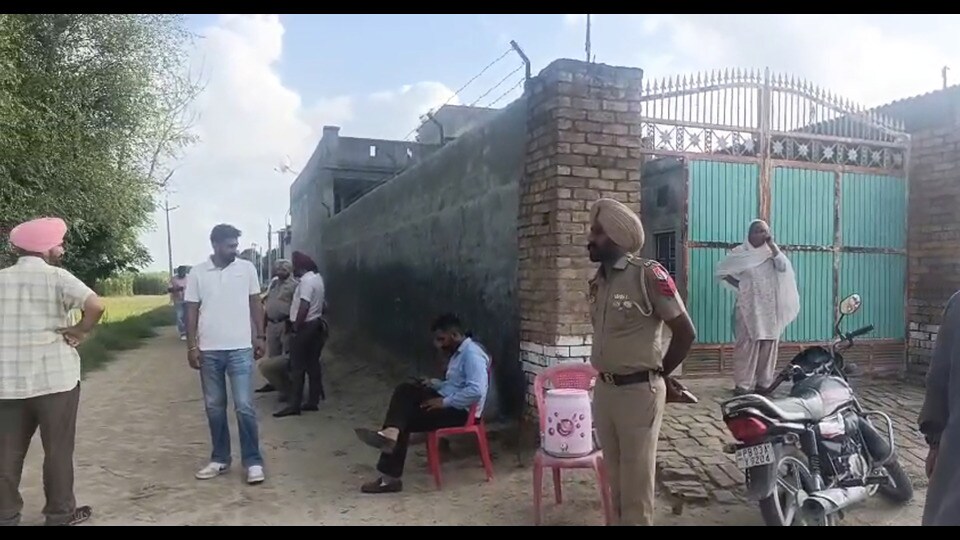
Explosions took place at Jeeda village on September 10, leaving accused Gurpreet Singh (19) and his father Jagtar Singh injured. The Bathinda police learnt about explosions a day after a private hospital alerted the police about the nature of injuries.
While Gurpreet’s right hand had to be amputated due to the explosion, his father, a farmer, suffered severe injuries in the second blast.
According to the police, Gurpreet, a law student, was allegedly influenced by radical Islamic ideologies on social media platforms.
On September 11, a case was registered against Gurpreet at Nehianwala under various sections of the Explosives Act, Section 287 (negligent conduct with respect to combustible matter), and 326 (f) (causing damage to property by explosive substance) of the Bharatiya Nyaya Sanhita (BNS).
Until recently, the Bathinda police were investigating the case where Gurpreet was subjected to custodial interrogation and the investigators stated that the accused allegedly confessed to targeting a defence establishment in Kathua.
But the state police did not get an organised terror angle behind the incident. Police said that though Gurpreet had planned a suicide attack, but mishandled explosives.
District police have not filed a chargesheet in the matter.
Investigation by the district police stated that Gurpreet was self-radicalised and his digital habits showed that he was an ardent follower of the videos showing how to make bombs using a cocktail of chemicals.
Soon after the twin explosions, various central agencies swung into action and a DSP-rank officer from the NIA’s Chandigarh office visited the crime scene on September 16.
Before that, sleuths of the Intelligence Bureau (IB) came to Bathinda for investigation.
Police sources said that a probe by the district police, spanning nearly two months, did not lead to any conclusive evidence linking Gurpreet To’s association with any terrorist organisation or radical individual.
However, official sources said that the recovery of chemicals which were sourced to make bombs and the alleged confession of the accused to carry out a suicide attack made the matter serious from a national security attack.
As per an earlier official statement of the police, Gurpreet was found to be an ardent follower of the Pakistan-based terrorist Azhar Masood, head of the banned Jaish-e-Mohammed.
SSP Amneet Kondal had earlier said that Gurpreet’s mobile phone had several videos and a search history for links to Islamic radicals and assembling explosives.
She had told HT earlier that Gurpeet created a fake social media user identity to follow various handles containing extremists’ content, including Masood.
Police sources stated that the investigation had revealed Gurpreet sourced chemicals online and was collecting them from different parts of the village via couriers.
“There was still no clarity on the types of chemicals used as the forensic experts did not submit an analysis report to the police. But the explosives were so aggressive that it took the bomb disposal teams from the Punjab police and the army 10 days. The chemicals were exploding when efforts were made to wash the house with water, and experts had a tough time, even as they were using robots for the operation to clean up the explosion site,” said an official.


