
 E-Paper



Wildbuzz: Ants on an isle of irises
I indulged in a bit of phonetics by repeatedly letting the lovely word, irises, roll over my tongue with a ballerina’s grace before it sailed into Leh’s rarefied air, then I saw three ants crawl out of iris stalks.

 Prefer HTon Google


Hotels in tourist-oriented Leh are seeking recourse to artificial turf that stays evergreen and is easier to maintain. However, in the resort we were putting up, I was surprised to see lush alpine grasses brimming with sap and seeds in terraced gardens. These were grasses that one typically encounters in alpine meadows in the flush of spring to the accompaniment of the soulful music of glacial melts. I plucked wild irises and placed them in a tumbler of water on the room’s balcony. It commanded a vista of snowy peaks peeping over Leh, sparking the romantic imagination of the “Far Pavilions”.
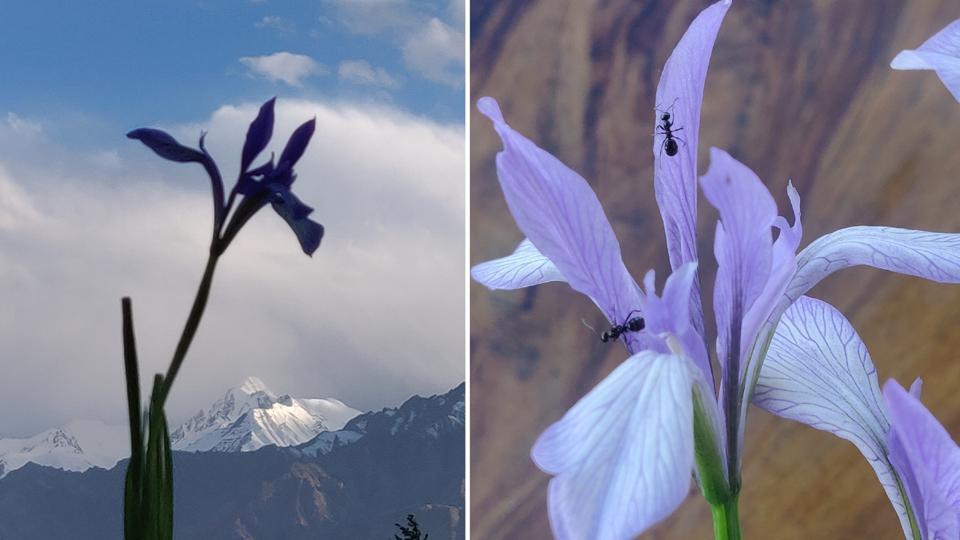
I indulged in a bit of phonetics by repeatedly letting the lovely word, irises, roll over my tongue with a ballerina’s grace before it sailed into Leh’s rarefied air. Then I saw three ants crawl out of iris stalks. The trio had been taking in sap, but when displaced with the cut flowers had found themselves marooned in the tumbler’s deep waters. The three musketeers ran hither and thither to escape the doomed iris isle. One outlier ant climbed down the tumbler onto the table but scampered back. The barren table had no solace to offer, the guillotined irises still bore a semblance of familiarity. The desperate ants were by now clinging on to the edge of petals and peering down, like hope ebbing on a cliffhanger. Sensing their agony, I took the ants and freed them in the garden’s iris clumps.
The gardens were alive with fountains and sparrows, finches, serins, redstarts, choughs, magpies. Then came a shocker. The resort’s suave manager, Wangchuk, informed me that the gardens would be bulldozed and replaced with rooms to make extra bucks from the tourist surge. The chirping, singing, foraging birds and doughty ants were on the verge of a brutal check out time.
The garden’s impending doom epitomises the transformation Leh is undergoing at a terrifying speed. Concretisation is wiping out wild spaces lush with flowers and birds. They, the original natives, have emerged since time immemorial as rainbows in the blizzards’ wane.
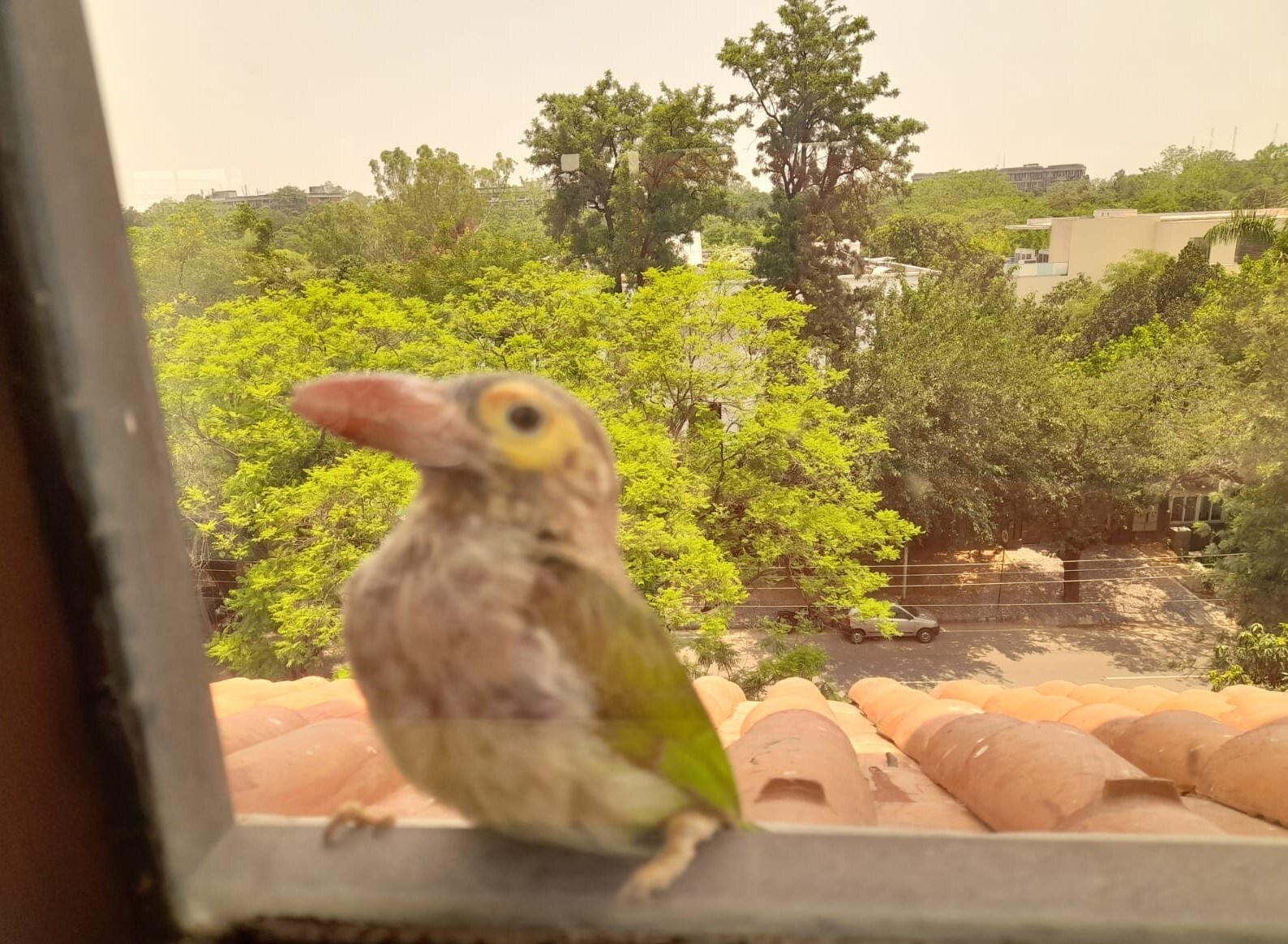
Bird at the hotel window
The catering and service staff at the fine dining restaurant, Magic Wok, Hotel Mountview, Chandigarh, are habituated to a bewitching brown and green bird that “inspects” the windows. The bird, a Brown-headed barbet, seems to be peering in at the sumptuous proceedings while taking some hard and seemingly futile pecks at the reinforced glass. The staff has stopped bothering about the bird’s efforts to “break in”, assuming perhaps it was one of those harmless fellows seeking “salvation in window salivation”. A case of having not a sufficient credit card balance but doomed to ogle obsessively at goodies on offer. So close, yet so far!
In came for lunch, author and sociology teacher at the Government Model Senior Secondary School, Sector 16, Amarinder Sandhu Gill, with her family and they got talking about the hotel’s avian mascot. Her son, Dilshan, a Class 5 student at St Kabir Public School, was intrigued as his mother had been nurturing his interest in nature from a very young age. The bird would peck at the window pane repeatedly and did not seem wary of the Gills seated just beyond the glass. That got Dilshan curious and thoughtful.
“I think the barbet was pecking at its reflection because it thought that it could fly right through the glass. The barbet must have been surprised when it could not and, therefore, tried pecking at the window to try and get inside. Just like a housefly trying to get inside my room through the glass,” Dilshan told this writer.
His learned mother disagreed over the barbet, whom she described as a “lonesome avian”, adding, “I assumed the barbet was pecking at its own beautiful reflection. Maybe it thought it was another bird.”
Gill sought my advice on the bird’s identity and window behaviour. Well, Gill was closer to the truth than her son. Barbets and other avian species are known to peck hard at their reflections because they mistake it for a rival male or female. Reflection-pecking is evidenced vividly in breeding season when rivalries over selection of mates and nesting sites assume a violent note.
vjswild1@gmail.com


