
 E-Paper



Wildbuzz | The south Asia celebrity again!
The Roopnagar Barnacle is the second instance when this species has been recorded in South Asia after three specimens were observed at Mote Majra in January-February 2024


Just over a year after the Barnacle goose was recorded for the first time in south Asia at the Mote Majra wetland near Banur, sharp-eyed birders have secured another record of the rarest-of-rare species for this part of the world. Ludhiana hotelier, Rishik Thapar, and Dr Vivek Saggar observed a lone Barnacle in a small flock of Bar-headed geese at the Roopnagar headworks on the river Satluj on Monday last. Thapar and Saggar were at Roopnagar as part of the Great Backyard Bird Count.
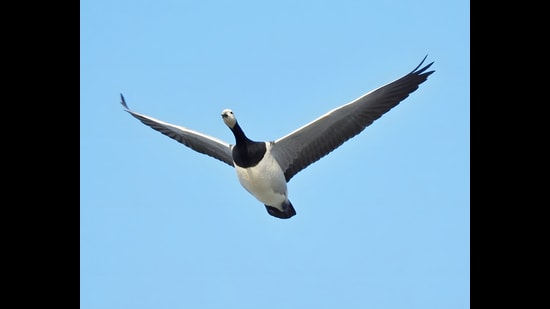
The Roopnagar Barnacle is the second instance when this species has been recorded in South Asia after three specimens were observed at Mote Majra in January-February 2024. The trio at Mote Majra was also with a carrier group of Bar-headed geese. It is possible that the single specimen at Roopnagar was part of the Barnacle trio recorded last year at Mote Majra.
This species has a geographic range across Greenland, northern Europe, Russia, Baltic Sea, North Sea etc. The nearest records of wild Barnacle geese to south Asia are China and Israel. Due to an expanding global population, Barnacles have been observed in the 21st century migrating to new wintering grounds, such as north-eastern North America, invariably in the company of carrier flocks of Canada geese. Something similar seems to have happened with the Barnacles recorded in Punjab 2024 and 2025 during the return migration of early spring.
“The Punjab records are not just the only ones for south Asia but underline a new aspect of this species: using Bar-headed geese as carrier flocks for migration. It seems that the Barnacles recorded in Punjab were in the process of finding new migration flyways and wintering grounds in south Asia. They could be part of an expanding range of the species into the eastern hemisphere,” Praveen J, an authority on Indian rare species and migratory vagrants, told this writer.
Meanwhile, the meticulous sifting and evaluation of new records of bird species for India by Praveen and his learned associates has resulted in the recent addition of three new species: European greenfinch from Srinagar along with the Band-bellied crake and Grey-streaked flycatcher from south Andaman islands. That makes the grand total for India as: 1,210 regularly-occurring species, 137 vagrants and 29 historical species.
The great miss at the Sukhna
For those desirous of observing migratory birds at the Sukhna lake, the fall in numbers and species diversity due to an unfavourable habitat has resulted in an enhanced focus on hyperactive Great cormorants and dazzling Ruddy shelducks.
While shelducks enchant us with their personality and cultural resonance, the cormorants are fascinating to observe as they duck into the waters and emerge dozens of feet away from the entry point with oft a writhing fish. The cormorants have made good use of the anchored bamboo rafts to rest, dry their wings and indulge in squabbling and courtship behaviour.
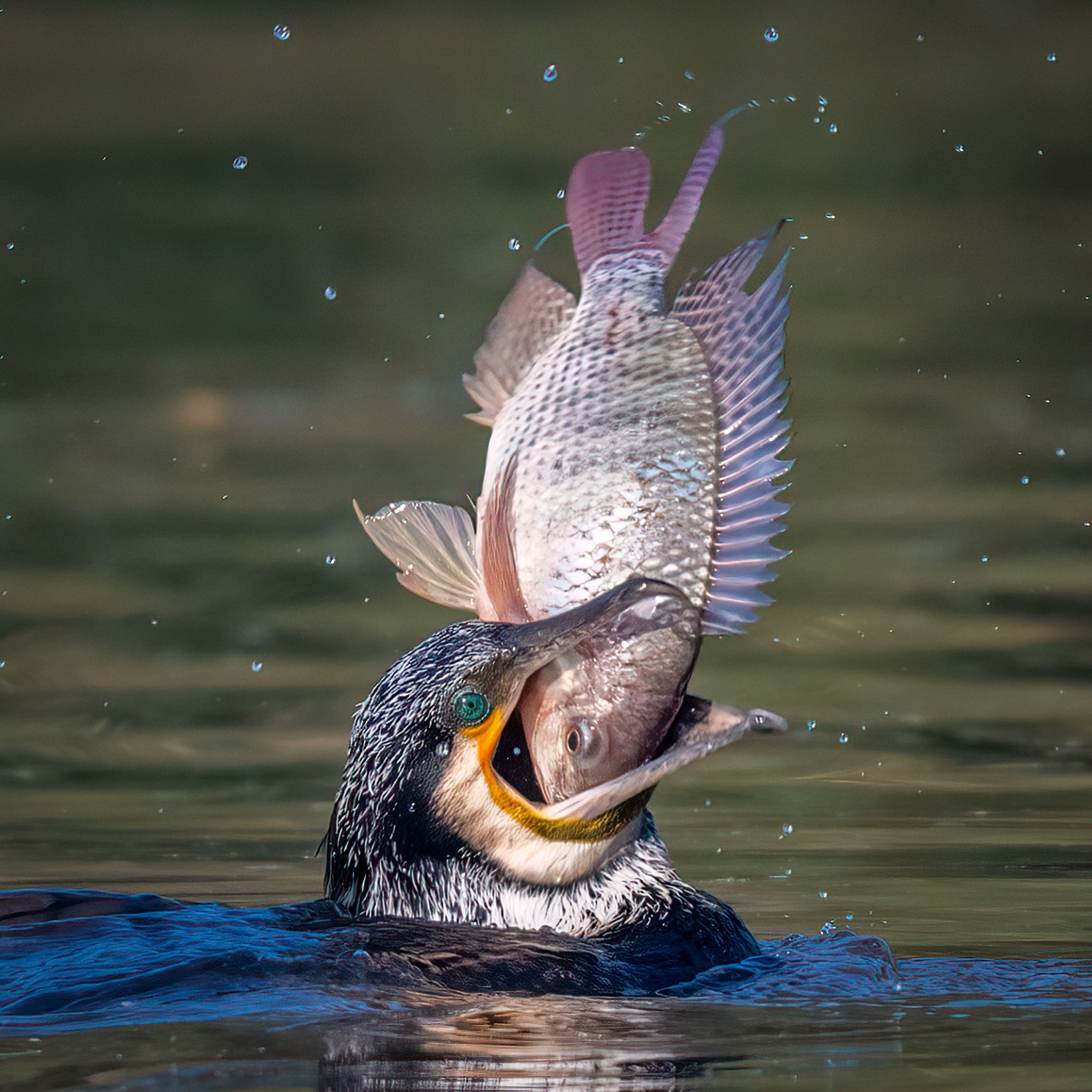
An apparel retailer in Sector 17 and an accomplished wildlife photographer, Anuj Jain, has been capturing cormorant moments at the Sukhna over winters past. His photographs of crystal clarity have assisted fisheries experts in identifying new species in the Sukhna waters after they were scooped out from murky depths and brought to light dangling from cormorant beaks.
Though cormorants are proficient enough to swallow fish above 500 g, a recent, mesmerising photograph by Jain told the tale of a hunter who had taken on something too big to handle. “This cormorant caught a huge fish but found it difficult to gulp down. Since it was taking time at the arduous task, other cormorants noticed and approached the struggling hunter so as to pirate the gleaming catch. In this commotion and anxiety, the hunter dropped the fish. The strange thing was that it did not search for it again. The cormorant had probably realised it was too big to swallow,” Jain told this writer.
vjswild2@gmail.com


