
 E-Paper



Women-oriented schemes get ₹4,727 crore, nearly half of Himachal’s development budget
Himachal government has allocated ₹4,727 crore women-oriented schemes, around 80% more than the previous year’s allocation


Looking to address gender-sensitive vulnerabilities and achieve gender equality, the state government hasallocated ₹4,727 crore women-oriented schemes, as per the gender budget statement (GBS) for the financial year 2024-2025.
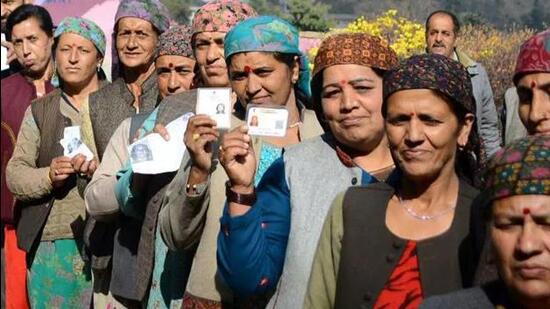
This constitutes 45.17% of the total development budget of the nearly ₹9,900 crore and is around 80% more than the previous year’s allocation. Chief minister (CM) Sukhvinder Singh Sukhu presented a ₹58,444 crore annual budget in the assembly on Saturday.
Of the total outlays for implementing women-oriented schemes, a provision of ₹528 crore (17.25%) is for 100% women-oriented schemes, ₹2,535 crore (82.75%) is for those falling under the less than 100% women-oriented schemes.
To capture the actual status of participation of women and benefits provided to women through departmental schemes, the statements of gender responsive budgeting have been divided into two sections — financial and physical.
Schemes targeting only women beneficiaries, or 100% women-oriented schemes, have been placed in Category 1 and schemes with less than 100% of women beneficiaries are and other gender beneficiaries in Category 2. Another category of the scheme ,Category 3, has been identified which intends to benefit all genders equally without discrimination and it is almost impossible to know the exact number of individuals belonging to different genders who stand benefitted from this scheme.
The road, water supply scheme, and irrigation schemes. provisions of veterinary services, provisions of agriculture inputs (either partially subsidised or fully subsidised), and health and education infrastructure may extend direct and indirect benefits to all genders. Thus, it is not possible to quantify the beneficiaries of all these schemes based on gender.
The financial statements aim at undertaking expenditure analysis of women’s welfare-oriented schemes whereas Physical Progress Statements relate financial allocations with physical output
Since quantification of beneficiaries of Category-3, based on gender is not possible, no related statement indicating the number of beneficiaries, finds a place in this document.
Gender budgeting is described as a tool that can be used to address gender-sensitive vulnerabilities. It uses the budget as an entry point to apply a gender lens to the entire policy of the government. It also recognizes that the budget is a powerful tool that can reduce the vulnerabilities of women and girls and transform their position and life.
Gender budgeting further recognises that if gender disparities are to be addressed, it is not enough to formulate gender sensitive legislation, programmes and schemes, but also provide adequate monetary allocations.
This year’s budget document contains information regarding 32 schemes from nine departments that are 100% women-specific. Another 100 schemes from 19 departments thathave other gender beneficiaries less than 100% also form a part of it.
The document also contains information related to 45 schemes from 11 departments where it is not feasible to quantify the beneficiaries by gender.


