
 E-Paper


Char Dham row: Yamunotri weighs non-Hindu entry ban, sparks legal debate
Yamunotri Dham Temple Committee secretary Sunil Uniyal said the matter will be discussed and a decision will be taken during the committee meeting in March.

 Prefer HTon Google


After Kedarnath, Badrinath and Gangotri temples, the Yamunotri Dham in Uttarakhand on Friday announced that it will consider whether or not to allow non-Hindus into the temple, an idea legal experts said could be in violation of the Constitution.
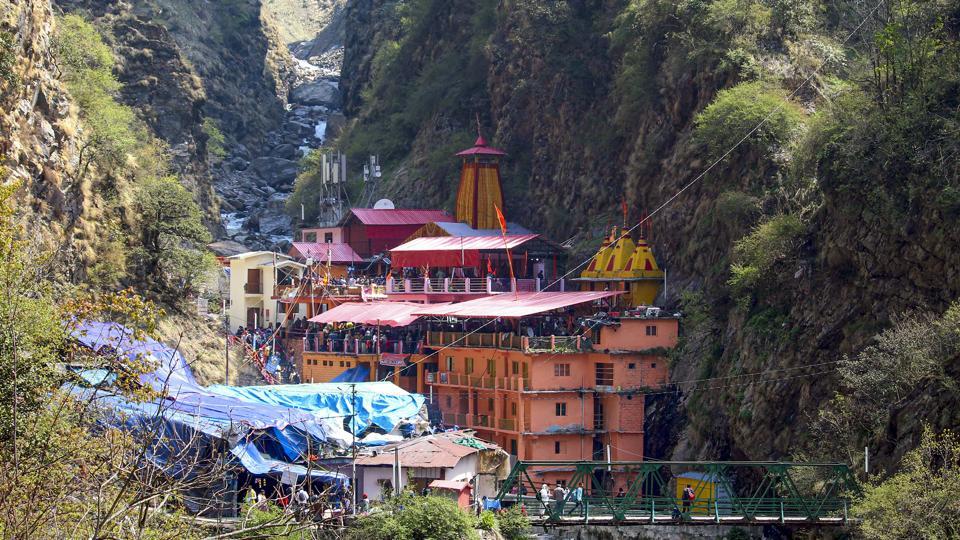
Yamunotri Dham Temple Committee secretary Sunil Uniyal said no meeting had yet been held on the issue. “We have come to know about the move to ban non-Hindus in Kedarnath, Badrinath and Gangotri. The matter will be discussed and a decision will be taken during the committee meeting in March,” he said.
The development follows a proposal by the Shri Badrinath Kedarnath Temple Committee (BKTC) to prohibit the entry of non-Hindus into 47 temples under its jurisdiction, including the Kedarnath and Badrinath shrines. Taking a cue from this, the Gangotri Dham Temple Committee said it had unanimously decided to bar Christians and Muslims from entering the temple premises.
Gangotri Dham Temple Committee secretary Suresh Semwal said, “Those who consume beef will not be allowed to enter the Dham. Muslims and Christians do that.”
Earlier, BKTC chairman Hemant Dwivedi had said that non-Hindus would be barred from entering Shri Badrinath Dham, Shri Kedarnath Dham and all other temples managed by the committee. He said the proposal would be placed for approval before the board in a meeting scheduled for early February.
On Tuesday, Dwivedi clarified that the proposal would “exempt Jains, Sikhs and Buddhists, and would apply only to Muslims and Christians”.
“Under Article 25 of the Constitution, the definition of Hindus includes people professing Sikhism, Jainism and Buddhism,” Dwivedi said, indicating that the proposed restriction would not apply to these communities.
The proposed move has triggered sharp political reactions. The Opposition Congress described it as a “diversionary tactic” by the ruling dispensation.
“It is merely a tactic by the Dhami government to divert attention from the fundamental issues faced by the state,” Uttarakhand Congress chief Ganesh Godiyal said.
BJP leader Ajendra Ajay rejected the criticism and defended the proposal. “This is Devbhoomi, and whatever is necessary to protect its sanctity must be done. Such steps are justified, and the Congress should refrain from indulging in politics over the issue,” he said.
Political analyst SMA Kazmi termed the development “clearly political” and linked it to the upcoming Assembly elections.
“First, signboards barring non-Hindus were put up at Har Ki Pauri in Haridwar. Then the discussion on the Char Dham temples began. It is nothing but a political move ahead of next year’s Assembly elections to divert voters’ attention from the burning issues,” Kazmi said.
Legal experts, however, raised serious objections. High court lawyer Kartikeya Hari Gupta said restricting entry to a place solely on the basis of religion was “unconstitutional” and “unlawful”.
“No such law exists. Even if such a law is enacted, it would have to withstand scrutiny by constitutional courts. The only exception is that, in the interest of the general public, the state may impose reasonable restrictions on the right to free movement guaranteed under Article 19 of the Constitution of India,” he said.


