
 E-Paper



Dharali tragedy: Uttarakhand starts issuing death certificates for missing people
Only two bodies have been recovered so far, while 67 others, including 25 Nepali citizens, remain missing.

 Prefer HTon Google


The Uttarakhand government has begun the process to issue death certificates for those still missing from the Dharali tragedy so that compensation can be distributed to their families without delay.
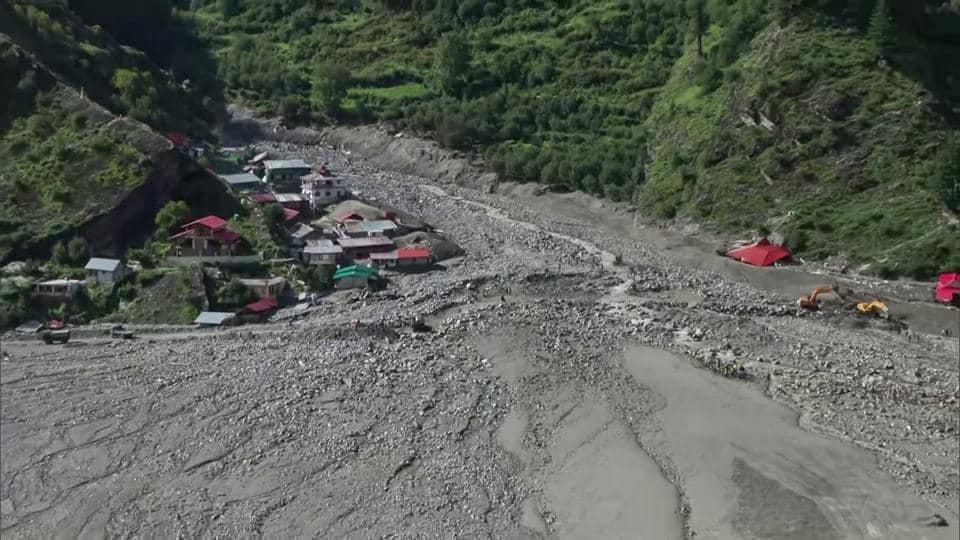
On August 5, flash floods tore through Dharali village in Uttarkashi district. Only two bodies have been recovered so far, while 67 others, including 25 Nepali citizens, remain missing. Rescuers are still engaged in search operations since the incident.
In a letter issued on September 25, state health secretary R Rajesh Kumar invoked the Registration of Births and Deaths Act, 1969, under which the designated government officer (SDM) will issue death certificates for the missing people to their family or relatives following a due process. The designated officer will conduct a detailed inquiry regarding the missing person before issuing a death certificate. An appellate officer (DM/ADM) will also be nominated to deal with objections.
The state government on August 28 asked the Office of Registrar General of India to provide guidelines and instructions for the registration of death of the missing people in the tragedy. In the letter to Kumar, the Office of Registrar General of India on September 22 asked the state government to follow the guidelines issued in February 2021, when a glacial lake outburst killed over 200 people in Chamoli district of Uttarakhand.
“ln case of missing persons, who in all likelihood have died but the dead,body is not traceable, all reasonable efforts should be made to determine that the person has in all likelihood died in the natural calamity that occurred in Uttarakhand,” Kumar stated in his letter to all district magistrates (DMs).
The missing persons will be categorised into three categories: permanent residents of the affected areas, and permanent residents of nearby areas of Uttarakhand who were present in the affected areas during the catastrophe; residents of other districts of Uttarakhand who were present in the affected areas during the catastrophe; tourists or persons from other states who were present in the affected areas during the catastrophe.
“It will help us to plan the next steps and make sure the families who lost their loved ones get support and compensation,” Kumar said.
Bhupendra Panwar, a resident of Dharali, said, “My three maternal relatives — Mukesh Panwar, his wife Vijeta Panwar, and their three-year-old son — were buried in the Dharali disaster and are still missing. With little hope of them being alive, the government has done a good thing by issuing death certificates, which is an important document for the remaining families so that they can get the due financial help.”
A scientific panel, constituted by the Uttarakhand government to ascertain the possible reasons for the tragedy, said in its preliminary report in August that the Dharali flash floods were not caused by a glacial lake outburst flood (GLOF), but intense heavy localised rainfall at high altitude.
A senior state government official, who did not wish to be named, said the panel found that unusually heavy rainfall at high altitudes on the night of August 4 triggered the disaster.
“This was not a glacial lake outburst flood as we were expecting. The intense rain (climate-induced) in high altitudes, which usually receive snowfall, destabilised moraines and boulders, sending massive amounts of debris crashing downhill in the Kheer Ganga stream. Locals recalled the force was so strong that the ground seemed to shake. Nearly 15–20 lakh tonnes of muck rushed through natural channels, overwhelming fans downstream,” the official said.


