E-Paper



Uttarakhand’s Cryptogamic garden of plants from Jurassic era opens to public
Uttarakhand Forest department has dedicated a Cryptogamic garden of ancient plants/organisms, existing since the Jurassic era, that grow without seeds and flowers, to the public on Sunday

 Prefer HTon Google


Uttarakhand Forest department has dedicated a Cryptogamic garden of ancient plants/organisms, existing since the Jurassic era, that grow without seeds and flowers, to the public on Sunday. It was built in the Deoban area of Dehradun district at a height of 2,700 metres. Cryptogam are plants or plant-like organisms that reproduce by spores, without producing flowers or seeds.
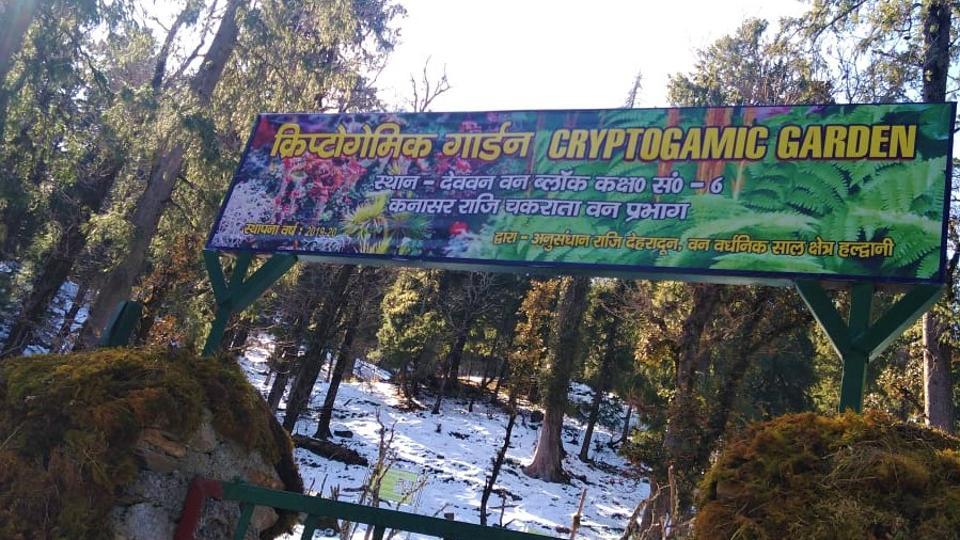
Uttarakhand forest department’s research wing developed the Cryptogamic garden over three acres of land with 75 species of such plants and plant-like organisms (in case of fungi) belonging to six different groups. The forest officials said the aim of developing the garden was to create awareness and display the diversity of ancient Himalayan flora in the state. The garden was dedicated to the public by Anoop Nautiyal, founder of Dehradun-based think tank Social Development for Communities.
Sanjiv Chaturvedi, chief conservator of forests and in-charge (research wing) said such ancient plants need pollution-free area and moisture to grow. “After searching for the right area, we finally found Deoban, which is pollution-free and has pristine forests of Deodar and Oak”, he said
He said Cryptogam, which comes from Greek, means hidden reproduction as these ancient plants need no seeds, nor flowers to reproduce. “Cryptogamic plants include Algae, mosses, liverworts, lichens, ferns and fungi and they reproduce by spores”, he said.
Chaturvedi said these plants have various commercial uses about which most people know very little. “Algae, being rich in vitamins and minerals are also used as a food ingredient in many countries. It is also used as a liquid fertilizer as it helps in repairing the level of nitrogen present in the soil. Many algae species are used in making medicines. Brown algae like Laminaria, Sargassum are good sources of iodine”, he said.
He added that Bryophytes which include liverworts and mosses are reliable indicators and monitors of air pollution and help in the prevention of soil erosion as they bind to the rocky surfaces. “In the case of lichens, some are used as ingredients in dishes like Hyderabadi biryani. They are also used in making medicines, dyes and perfumes and cosmetics”, he said
“Fungi species are used in many household and industrial processes, like the making of bread, wine, beer, and certain cheeses”, he said.
Chaturvedi said Uttarakhand was very rich in such plants with 539 species of lichens, 346 species of algae, 478 species of bryophytes and 365 species of pteridophytes found in the state.
Earlier this year, in its initiative to protect Himalayan flora, Uttarakhand forest department also created a repository of 1,576 plant species including 73 threatened, rare and vulnerable species, aimed at their germplasm conservation, so that these species remain conserved in case they disappear from the wild due to any reason.