
 E-Paper



65% of Delhi’s PM2.5 from nearby towns: Data
Other NCR towns to the west, north and northwest of Delhi also recorded substantial contributions

 Prefer HTon Google


A significant share of Delhi’s pollution – even after the stubble-burning season has ended – continues to come from outside the city, with Jhajjar in Haryana contributing a sixth (16.5%) of the Capital’s total PM2.5 load on Wednesday, according to data from the Centre’s Decision Support System (DSS). This was higher than the contribution of Delhi’s own transport sector, pegged at 16.32%.
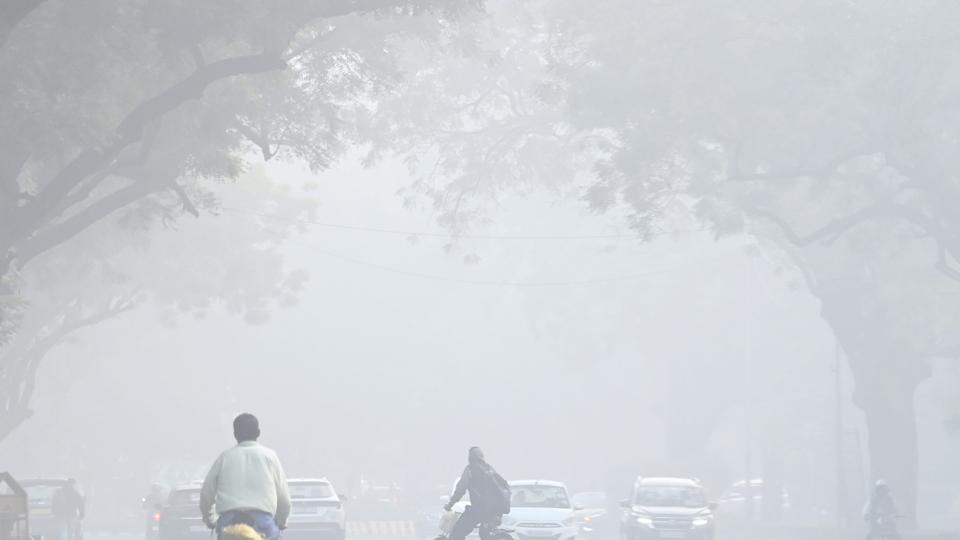
In fact, close to two-thirds (65%) of Delhi’s pollution originated out of the city, DSS data showed.
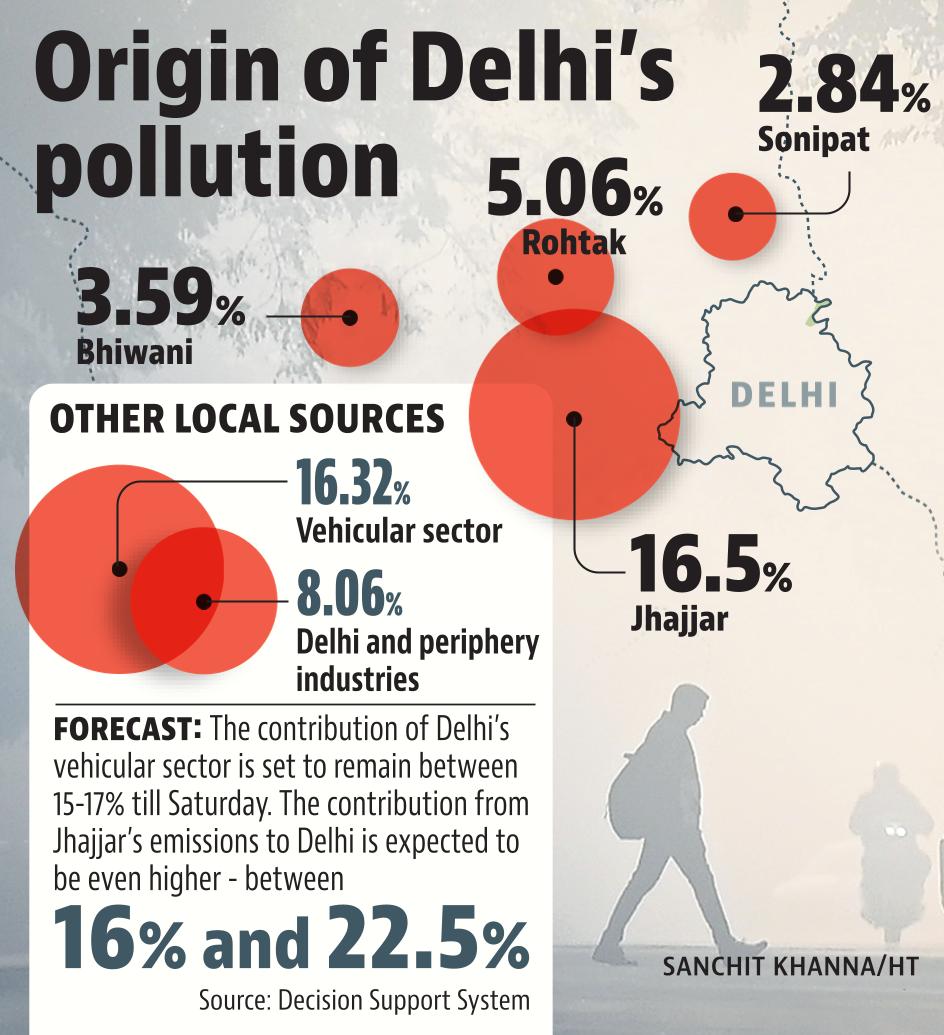
Other NCR towns to the west, north and northwest of Delhi also recorded substantial contributions, underscoring the persistent impact of cross-boundary pollution. Rohtak accounted for 5.06% of Delhi’s PM2.5 load, Bhiwani 3.59% and Sonipat 2.84%. In all, nearly 30% of Delhi’s pollution load on Wednesday originated from neighbouring NCR towns, the DSS data showed.
Another 34%, meanwhile, was attributed to “others”, which constitutes unattributed sources of pollution from outside of Delhi. Smoke from stubble fires, contributed only 0.17% on Wednesday.
Experts said Jhajjar’s high contribution could largely be attributed to two coal-based thermal power plants in the district. “We know Rohtak, Bhiwani and Sonipat have small industrial clusters, mostly medium and small-scale industries, but with a high pollution load. In Jhajjar, the coal-based thermal power plants are a major source. When winds are strong and westerly to northwesterly, pollutants and smoke from these areas can easily reach Delhi,” said Sunil Dahiya, founder and lead analyst at think tank Envirocatalysts.
The DSS, which estimates pollution contributions from within Delhi and 19 neighbouring NCR towns, runs on a 2021 emissions inventory. While outdated, experts said the data still offers valuable insights. “Some minor sources may have changed or shifted to cleaner technology, but major sources like thermal power plants still exist and continue to impact Delhi’s air quality,” Dahiya said.
Meanwhile, DSS has forecast Jhajjar’s contribution to rise further in the coming days – from about 16.2% on Thursday to 18.2% on Friday and 22.5% on Saturday. By contrast, Delhi’s transport sector is expected to contribute between 15% and 17% through Saturday. Industries within Delhi and its immediate periphery contributed about 8% on Wednesday, highlighting the role of industrial emissions in the pollution mix.
Union environment minister Bhupender Yadav has been chairing a series of high-level meetings to identify and tackle pollution sources across the NCR. He has sought focused action on local hotspots, road dust and solid waste management. In a meeting on Tuesday with officials from Gurugram and Faridabad, Yadav also called for action against deregistered vehicles and industries violating norms, particularly those burning waste tyres.
Dipankar Saha, former head of the Central Pollution Control Board’s air laboratory, said transboundary pollution affects Delhi year-round but becomes more severe in winter. “Unfavourable meteorological conditions trap emissions and smoke, especially during fog, when moisture makes pollutants heavier. While emissions reach Delhi in summer as well, they disperse more easily then,” he said.


Stay updated with all top Cities including, Bengaluru, Delhi, Mumbai and more across India. Stay informed on the latest happenings in World News along with Delhi Election 2025 and Delhi Election Result 2025 Live, New Delhi Election Result Live, Kalkaji Election Result Live at Hindustan Times.


