E-Paper



Amid rise in Lok Sabha electorate size, New Delhi sole segment to shrink
For the 2019 Lok Sabha polls, the New Delhi Lok Sabha constituency had 1,615,994 voters, which has shrunk by 90,923 to 1,525,071 for the 2024 iteration. With this, it has also replaced Chandni Chowk, which had 1,561,828 voters for the 2019 polls, as the smallest constituency in terms of the size of the electorate


The sanitisation of electoral rolls, large-scale demolition of government accommodations for redevelopment, and demolition of slum clusters, have led to a decline in the number of voters in the New Delhi Lok Sabha constituency, making it an outlier among the seven seats in the Capital, officials said.
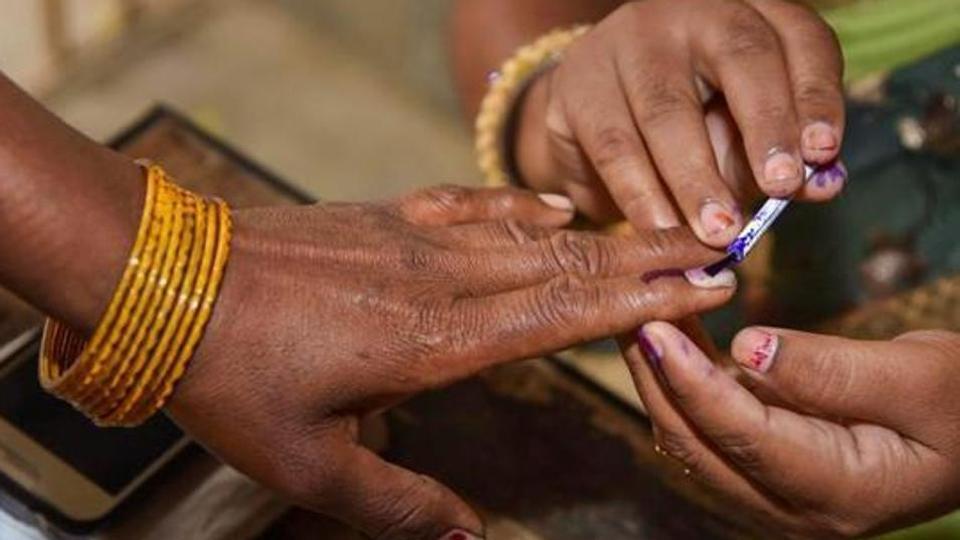
The number of voters for the 2024 Lok Sabha polls across the seven constituencies has seen an overall growth of 6.18%, of which only the New Delhi constituency logged a net decline in the number of voters, by 5.62%, according to data released by the Election Commission of India (ECI) on Tuesday.
For the 2019 Lok Sabha polls, the New Delhi Lok Sabha constituency had 1,615,994 voters, which has shrunk by 90,923 to 1,525,071 for the 2024 iteration. With this, it has also replaced Chandni Chowk, which had 1,561,828 voters for the 2019 polls, as the smallest constituency in terms of the size of the electorate.
A government official, on the condition of anonymity, said that sanitisation of electoral rolls is a continuous process and names of voters are removed when people shift out, die or a duplicity is noted. The official also cited large-scale demolition of government accommodations and GPRA (general pool residential accommodation) as a reason for the same. “Many voters from these colonies moved out due to redevelopment projects. It might be one of the reasons behind the drop. Other reasons could be rectification due to deaths and people shifting out. The city is growing towards its peripheries, with the core becoming increasingly commercial,” the official said.
The rest six Lok Sabha seats, meanwhile, have seen a jump of up to 10.9% in the electorate, with a net addition of 885,000 voters. Chandni Chowk Lok Sabha constituency has added 84,130 voters, taking the number of eligible voters to 1,645,958.
The New Delhi Lok Sabha constituency has undergone multiple changes over the years due to delimitation exercises through the decades, but remains one of the oldest constituencies, having come into existence in 1951. It currently comprises assembly segments of New Delhi, Kasturba Nagar, Malviya Nagar, RK Puram, Greater Kailash, Karol Bagh, Patel Nagar, Moti Nagar, Delhi Cantonment and Rajinder Nagar.
Close contest
The Bharatiya Janata Party is fielding Bansuri Swaraj, daughter of the late Sushma Swaraj, against INDIA bloc’s Somnath Bharti, who is the Aam Aadmi Party’s (AAP) Malviya Nagar MLA.
In the last two Lok Sabha elections, BJP’ Meenakshi Lekhi swept the New Delhi Lok Sabha seat, but historically, this seat has seen close contests, with winning margins as low as around 1,500, according to ECI data.
The closest contest the New Delhi Lok Sabha seat has witnessed was in 1991, when BJP’s Lal Krishna Advani beat out Congress’s Rajesh Khanna by 1,589 votes to the 10th Lok Sabha. In the 1992 bye-election, Congress’s Rajesh Khanna defeated BJP’s Shatrughan Sinha by 28,256 votes.
In the 1998 general elections, BJP’s Jagmohan defeated Congress’s RK Dhawan by 32,647 votes. In the 1999 elections, Jagmohan defeated Dhawan by 27,893 votes.
In the 2004 elections, Congress’s Ajay Maken defeated BJP’s Jagmohan by 12,786 votes.
Besides Advani and Khanna, other notable parliamentarians to have won the New Delhi Lok Sabha seat include former PM Atal Bihari Vajpayee.
Drop in numbers
Gopal Krishan, head of the Federation of New Delhi Residents’ Welfare Associations said that old, single-storey government residential quarters in Sarojini Nagar and Kidwai Nagar were demolished and the employees moved out, while construction of new multi-storey towers is still ongoing.
“Moreover, the past three to four years have also seen several slum clusters and jhuggis being cleared out by the civic agencies in areas, such as Race Course and Dhobi Ghat. All these combined factors might have led to the decline. The deaths in the region averages out with other areas, even during the Covid-19 pandemic,” he said.
Changes in other constituencies
According to the ECI data, the West Delhi Lok Sabha constituency currently has the largest electorate, at 2,587,977 voters, beating out North West Delhi, which has 2,567,423 voters.
In terms of net increase due to summary revisions, the South Delhi Lok Sabha electorate has seen the largest jump, with a 10.9% rise, followed by West Delhi, at 9.3%, North West Delhi, at 7.9%, North East Delhi, at 7.5%, and Chandni Chowk, at 5.3%.