
 E-Paper



Supreme Court: Charity is welcome but not for purpose of conversion
On November 14, the court said that such instances, if true, are serious and pose a threat to national security.


Charity with the ulterior motive of religious conversion is undesirable, the Supreme Court said on Monday, as it directed the Centre to provide details of forcible conversion reported in states with anti-conversion laws by December 12.
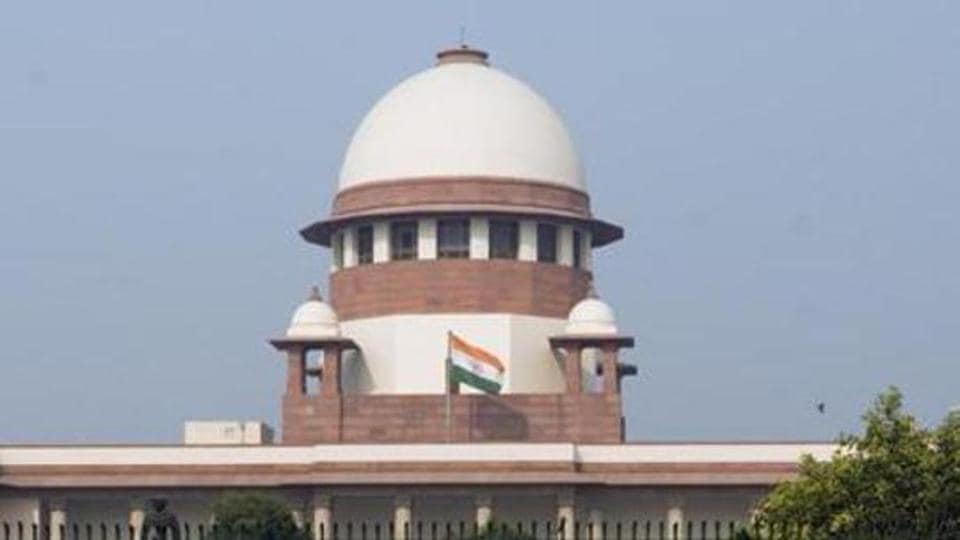
“It is a serious issue, which is ultimately against the basic feature of the Constitution,” said a bench of justices MR Shah and CT Ravikumar while hearing a public interest litigation (PIL) filed by Delhi Bharatiya Janata Party (BJP) leader Ashwini Kumar Upadhyay.
“Charity is welcome but what is important is to see the intention. Everybody has a right to choose religion, but not by luring them,” the bench said. “If you want to help a particular community, you may do it for charity. That is welcome. But not for any other purpose.”
The petition by Upadhyay had claimed that forcible conversion taking place on grounds of fear, threat, allurement should be checked as it violates an individual’s liberty under Article 21 of the Constitution and right to practice religion under Article 25.
On November 14, the court said that such instances, if true, are serious and pose a threat to national security. The Centre had responded to the PIL by listing out nine states with anti-conversion laws. The court on Monday directed the central government to collect details of these laws and instances of forcible conversion, if any, reported in these states.
Solicitor general Tushar Mehta, who appeared for the Centre, backed the anti-conversion laws enacted by the nine states of Odisha, Madhya Pradesh, Gujarat, Chhattisgarh, Jharkhand, Uttarakhand, Uttar Pradesh, Karnataka and Haryana. He said that a 1977 Constitution Bench decision had held that right to propagate religion does not include right to convert a person to one’s own religion.
The affidavit filed by the Centre last month said: “Such enactments (to curb the menace of organized, sophisticated, large scale illegal conversion) are necessary for protecting cherished rights of vulnerable sections of society including women and economically and socially backward classes.”
The Gujarat government last week informed the court that the Gujarat Freedom of Religion Act, 2003, which seeks to prevent forcible conversions, has been stayed by the Gujarat high court in August last year. The state’s appeal was pending before the top court, where an application was filed on December 2 to lift the stay.
A slew of applications filed by rationalist organizations and individuals opposed the PIL filed by Upadhyay pointing out that the petition did not spell out any instances of forcible conversion. The bench agreed to hear all sides on Monday and said: “We will not entertain challenge to the maintainability of the petition...you can propagate, help, do charity but within the framework. Intention is to be checked.”
“We are here to set things right. Do not take it adversarial. It is a very serious issue. Everybody who stays in India are required to stay as per the culture of India. This also harms communal harmony in the country,” the court said.
Mehta lent his support to the court’s concerns and said: “A neutral authority should decide whether it is for grain, medicines, etc., for which a person is converting, or there is a genuine change of heart.”
The Gujarat Act of 2003 had a provision which requires anybody converting in the state to take prior permission from the district magistrate.


