
 E-Paper



Call on hold: 2 phones stuck in inmate’s stomach since March
The prisoner told jail officers he had swallowed four cell phones 6-7 months ago to smuggle them into the prison, but had not been able to take them out.

 Prefer HTon Google


Some time in June-July, warders in Tihar jail number 1 raised doubts about Raman Saini (28), a “notorious robber” in police records, since the handheld metal detector beeped every time Saini was checked on his return from a court appearance though a general body search revealed nothing.
In the last week of August, it became clear that the metal triggering the detector was, in fact, lodged in Saini’s stomach.
The prisoner told jail officers he had swallowed four cell phones 6-7 months ago to smuggle them into the prison, but had not been able to take them out.
Though prohibited, cell phones are one of the most sought-after items by prisoners.
On August 29, he was taken to the DDU hospital, but the X-Ray did not reveal any foreign object in his body. “Doctors at DDU referred him to GB Pant hospital for a CT scan. Around the first week of September, the CT scan and endoscopy did reveal the cell phones inside,” said a prison officer, aware of Saini’s case.
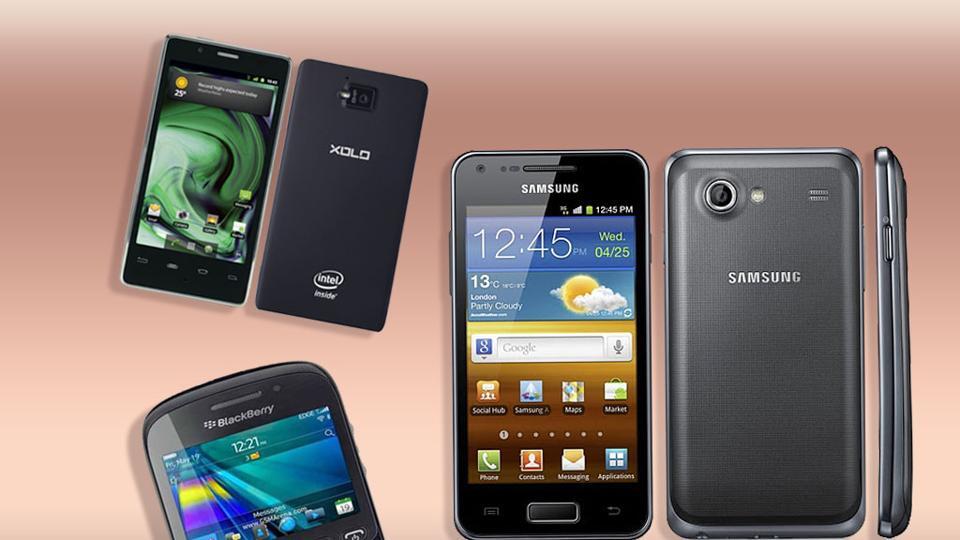
A body scan showed four Kechoada mini cell phones roughly measuring 0.6 inches each in Saini’s stomach. Doctors prescribed an endoscopic surgery. On September 7, doctors at the GB Pant hospital operated on Saini and removed two cell phones. The other two are still there since they need an invasive surgery.
Doctors said the two remaining phones are stuck in Saini’s pylorus, a muscular valve that holds food in the stomach until it goes to the next stage of digestion.
A doctor, who removed the two phones from Saini’s body, wrote to the Tihar prison administration about the need to remove the other phones surgically.
Officials aware of Saini’s case said there was no immediate threat to his health but as the phones would get corroded by stomach acid over a period of time, the phone batteries could prove fatal.
“He told us he swallowed the phones 6-7 months ago. He told some prisoners inside that he did it about a year ago,” said a prison officer, who asked not to be named.
A prison spokesperson said, “After advice from doctors, his date for a CT scan was fixed at DDU hospital but he (Saini) refused to undergo the scan. We have counselled him and will again get a new date for the scan. His condition is reported to be fine. He is not in pain, so he is not cooperating. We are regularly monitoring his health and counselling him.”
NOT A FIRST TIMER, SAYS DOCTOR
Dr Ashok Dalal, a gastroenterologist at GB Pant hospital, who handled Saini’s case, suggested it may not be the first time that the 28-year-old man swallowed a phone or some other such item.
“This particular prisoner’s check-up showed he was habitually swallowing larger objects such as cell phones. If a person accidentally swallows a cell phone, it will be difficult for him to spew it out because the food pipe will not allow him to vomit an article as large as a cell phone. The walls of the lower oesophagus or the food pipe, in cases like his, become lax because of the person often forcefully ingesting and vomiting large objects. In Saini’s case, we conducted an endoscopy and removed the two phones with ease,” said Dalal, who has written two research papers on how prisoners swallow prohibited items such as cell phones, drug packets and surgical blades.
Dalal said when an “inexperienced” person swallows an object such as a phone, there are three points where it might get stuck -- the upper oesophagus sphincter, the lower oesophagus sphincter and the pylorus. Sphincters are circular muscles that open and close passages in the body to regulate the flow of substances, such as bile, urine, and faeces.
“In Raman’s case, two phones had entered the stomach which we took out endoscopically. However, two other were stuck in his pylorus which cannot be taken out through an endoscopy procedure. We have referred him for an open surgery,” said a resident doctor who treated Saini.
HOW IT IS INGESTED
Dr Dalal explained that items such as cell phones are packed in a specific manner before they are ingested by smugglers. An object such as a phone, if ingested directly, will get corroded by the acids present in the digestive tract and pose a danger to the carrier’s life. This is why articles such as a phone are first laced with methylene blue—a blue dye that is used to stain cells—and then packed in thick plastic, rubber or balloon-like material, including condoms, he said.
This process proves to be the life saver for a carrier, he added, because if the object stays inside the body for long, and the outer plastic layer gets corroded, the person’s urine turns blue due to the dye.
“This is the alarm that leads most carriers to decide that it is time to tell authorities and get the ingested articles removed medically,” Dalal said.
In Saini’s case, the phones were found to be intact.
THE PRISONER’S WIFE
In a slum in northwest Delhi’s Shalimar garden, Saini’s wife, Pooja, is waiting for her husband to come out on parole. “My husband does not tell me everything because he knows I worry. He told me about the cell phones only after the first two were removed by the doctors. During our meeting in prison, he tells me that he is fine. Maybe he is lying so that I do not worry. The two cell phones could explode and prove fatal,” she said.
Pooja said she does not know why her husband swallowed the four phones.
Saini and Pooja got married when the former had come out on parole in May last year. “But we were in a relationship (over the phone) for over five years before that,” Pooja said.
Sometime in 2015, Pooja walked out of her first marriage because her husband abused her physically and mentally. “My friend asked me to speak to a man named Raman Saini. I did not know then that he was in jail. He called from a cell phone. We spoke regularly and by the time I learnt he was in jail, I had already fallen in love. In fact, our first meeting was in the visitors’ room of Tihar jail. All criminal cases against him, except one, are over. We have a life ahead of us. I request authorities to help remove the phones from his body before it is too late,” she said.
A LOVER OF GOOD FOOD
The police dossier on Saini notes “eating good food” as a peculiar habit. The man with at least 11 criminal cases was first jail jailed in 2011 in an alleged snatching case and was also involved in a 2015 murder of a gangster in prison.
A police officer, who prepared the dossier, said, “He is a hardened criminal and needs cell phones to talk to his wife or run the gang’s operations. We had last arrested him on August 31, 2021 with a stolen motorcycle. He did not mend his ways even after coming out on parole. He was arrested within three months. It is ironic that Saini, who told us he is fond of eating good food, ended up swallowing something as unpalatable as phones.”


