
 E-Paper



CAQM reviews toll plaza congestion, calls for multi-lane systems to curb pollution
The CAQM also reviewed regional air quality trends and measures to strengthen monitoring and enforcement. It approved the expansion of the Continuous Ambient Air Quality Monitoring Station (CAAQMS) network, with 46 additional stations planned across Delhi (14), Haryana (16), Rajasthan (1) and Uttar Pradesh (15).


New Delhi: The Commission for Air Quality Management (CAQM) on Friday reviewed congestion at municipal toll plazas and emphasised the need for barrier-free multi-lane free flow (MLFF) systems integrated with radio frequency identification (RFID) and automatic number plate recognition (ANPR) technologies to reduce vehicular congestion and emissions across Delhi-NCR border points.
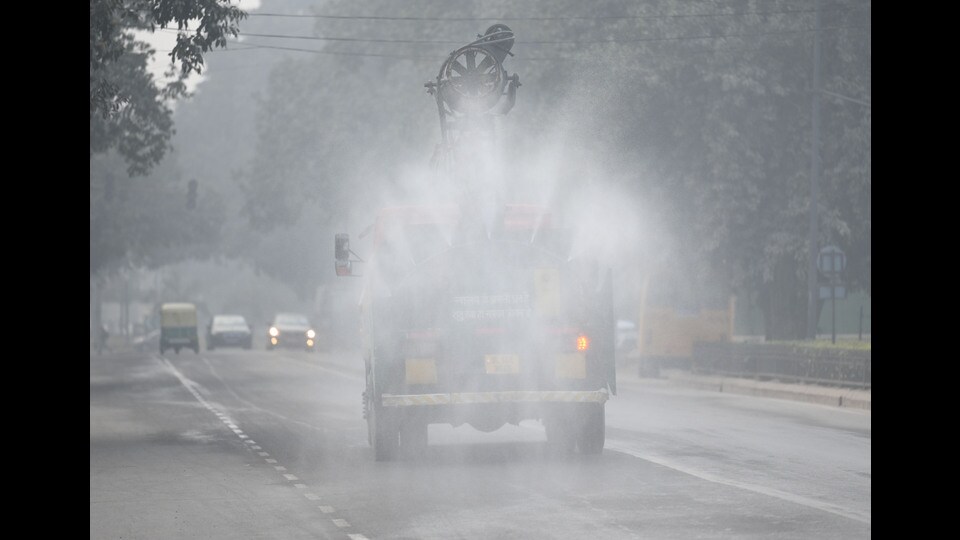
Rajesh Verma, chairperson of CAQM, discussed the matter at the commission’s 27th meeting.
The commission discussed a report submitted to the Supreme Court regarding congestion at Municipal Corporation of Delhi (MCD) toll plazas, noting that smoother traffic flow through MLFF systems could help reduce idling time and associated vehicular emissions.
“The MLFF system enables vehicles to pass through toll points without stopping, using automated identification and electronic toll collection technologies. Faster implementation of such systems is important to address pollution caused by congestion at entry points to the Capital,” said an official.
The CAQM also reviewed regional air quality trends and measures to strengthen monitoring and enforcement. It approved the expansion of the Continuous Ambient Air Quality Monitoring Station (CAAQMS) network, with 46 additional stations planned across Delhi (14), Haryana (16), Rajasthan (1) and Uttar Pradesh (15). With this addition, the total number of monitoring stations in Delhi-NCR will increase to 157.
Officials said that the CAQM also discussed findings from a meta-analysis of source apportionment studies, which identified PM2.5 as the dominant pollutant affecting air quality in Delhi, with contributions from transport, dust, biomass burning and industry. Seasonal variations showed secondary particulates and transport as key contributors during winter, and dust as the dominant source during summer.
“The analysis indicates that during winter months, major contributors to PM2.5 include secondary particulates (27%), transport (23%), biomass burning (20%), dust (15%) and industry, including thermal power plants (9%). Further, during summer months, Dust (27%) emerges as the dominant contributor, followed by transport (19%), secondary particulates (17%), industry (14%) and biomass burning (12%). Public suggestions received on the report are under consideration,” CAQM stated
The Commission also approved draft directions for stricter industrial emission standards, dust mitigation measures, and coordinated action plans to prevent stubble burning. It said implementation of air pollution control measures across sectors will continue to be monitored through coordinated enforcement and periodic review.
Stay updated with all top Cities including, Bengaluru, Delhi, Mumbai and more across India. Stay informed on the latest happenings in World News along with Delhi Election 2025 and Delhi Election Result 2025 Live, New Delhi Election Result Live, Kalkaji Election Result Live at Hindustan Times.


