
 E-Paper



Day after phase 2 of DU admissions begins, students get access to dashboard
The second phase of the CSAS requires students to opt for course and college combinations according to their preference -- a crucial phase since the order of preference will be the deciding factor for where they will be admitted.


A day after the Delhi University’s undergraduate admission process failed to take off due to technical glitches, the second phase of the common seat allocation system (CSAS) finally kick-started on Tuesday, with students getting access to the dashboard to fill course and college preferences.
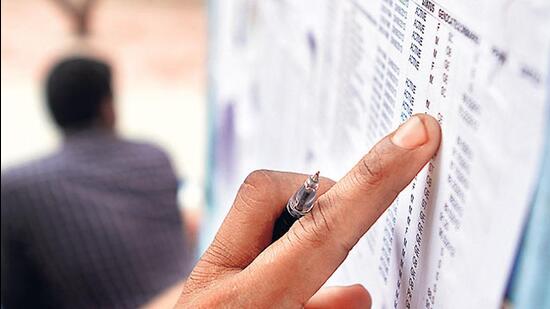
The second phase of the CSAS requires students to opt for course and college combinations according to their preference -- a crucial phase since the order of preference will be the deciding factor for where they will be admitted.
However, on Monday, students said that they were unable to access the portal for registering their course and college preferences, while DU officials said that the portal was undergoing a mapping exercise.
Once the technical glitches were sorted out, however, students were able to fill out their preferred course and college combinations.
Zakaria Khan, a DU aspirant who wishes to pursue a bachelor’s in physics, filled out his course preferences on Tuesday on the portal. Khan said that while he couldn’t opt for preferences on Monday, the portal was working on Tuesday. “The second phase of the portal outlined the normalised CUET score for different courses. We were asked to map the CUET subjects and board subjects. There was some confusion about this but I was able to understand it eventually,” he said.
DU registrar Vikas Gupta said, “The second phase of the process entails mapping of subjects in which the student appeared for in boards and CUET. The admission portal automatically tells students about their CUET score and eligibility for all 79 UG courses. It tells the candidate all the course-college options available for admission. This could range from 1,000 to 5,000 for anyone based on the choices of students.”
According to Gupta, it is in the students’ best interest to opt for all available preferences. He said that the system has been made in a student-friendly manner and leaves little scope for ambiguity. “Let’s say a student has 1,420 course-college combinations. If the student decides to opt for 20 courses, the portal will tell the candidate that 1,400 choices are still available for selection. Students should fill all preferences and read the information blurbs on the system,” said Gupta.
Work on the CSAS began in February, soon after the academic council of the varsity approved a proposal for the introduction of a common entrance test.
Dean (admissions) Haneet Gandhi said the university worked towards creating a system that could tackle over 5,000 course-college combinations available to candidates. Further, the admission process through CSAS was broken down in three phrases to avoid burdening students who were tackling a new system.
“We started working on the platform in February itself since the academic council had decided that DU will hold an entrance-based admission process whether DU conducts the exam or the central government does it. We have 79 programmes spread across 67 colleges and then there is BA programme which has 206 combinations. If we put these numbers together, we will find that there are around 5,000 unique course-college combinations where students could apply for. Keeping in mind this volume, we created the admission system,” said Gandhi.
In the past, DU used the aggregate of the best of four scores of students for admission to courses, with caveats for different streams. Under the new admission system, the university is carrying forward its policy but without any penalty deductions for students switching streams.
“We wanted to continue with the spirit of best of four to avoid any confusion. With respect to the ethos of the National Education Policy (NEP), we did not want students to be penalised for switching streams. Earlier, we used to deduct 2.5% if students switched streams. This time there is no disadvantage to students,” explained Gandhi.

Stay updated with all top Cities including, Bengaluru, Delhi, Mumbai and more across India. Stay informed on the latest happenings in World News along with Delhi Election 2025 and Delhi Election Result 2025 Live, New Delhi Election Result Live, Kalkaji Election Result Live at Hindustan Times.


