E-Paper



Delhi govt explores tech to check tree-felling
Officials in the forest department said in light of the top court’s order, they are planning to utilise LiDaR


The Delhi forest and wildlife department is set to incorporate technology to track the possible felling of trees, people aware of the matter said.
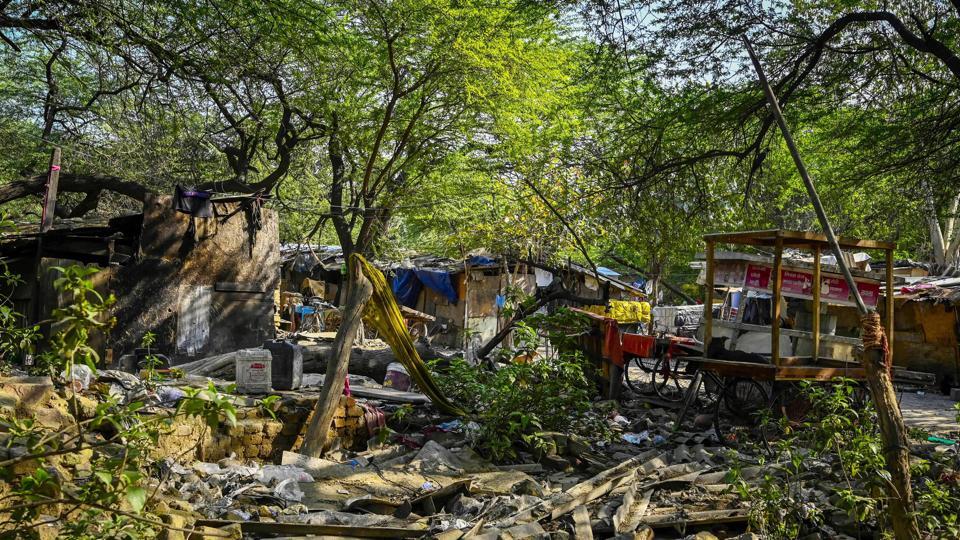
The development comes even as the Supreme Court has been hearing a contempt plea over the illegal felling of over 1,100 trees in a notified forest of the southern Ridge by the Delhi Development Authority (DDA). While hearing the plea, the apex court had asked the forest department and Delhi’s Tree Authority (DTA) to keep a constant vigil on felling of trees in the future.
ALSO READ- Excise case: Probe against Arvind Kejriwal, AAP complete, says ED
Officials in the forest department said in light of the top court’s order, they are planning to utilise LiDaR (Light Detection and Ranging) — a remote sensing method that uses lasers to measure distances and create 3D maps of objects — to map out Delhi’s green areas and track tree felling over a period of time. The same technology is currently being utilised to map out Delhi’s geo-morphological Ridge.
“In theory, it is possible to map out all green cover, as LiDaR technology shows all features in an area, complete with its shape and elevation change. If a tree gets cut, it can tell us in which area trees were felled,” a senior forest official said, on condition of anonymity.
The official said that a management plan for the Asola Bhatti Wildlife Sanctuary is already being formulated by Wildlife Institute of India (WII). “Another option is to geo-tag all trees, but this will again require significant time and money,” the official said.
ALSO READ- Arvind Kejriwal lost 8.5 kg weight since his arrest in March, says AAP
A second forest official said that the plan is to look at a method that will alert the authorities immediately when a tree is felled.
“A real-time mechanism exists with the Forest Survey of India (FSI), where they get an alert if a tree is felled or if there is a fire in a fixed area. This is done using satellite technology. For a real-time model, something similar may have to be explored,” the second official said, also requesting anonymity.
The department is currently looking at the cost of different technologies before finalising on one, the officials said.
In 2000-01, the Delhi government deployed the territorial army ETF to restore and rehabilitate over 2,100 acres of the southern Ridge. For this, 132 Infantry Battalion (TA) ECO Rajput was deployed.
ALSO READ- BJP flays AAP govt over power bill hike in Delhi: ‘Money illegally collected…’
The department also has plans to increase the number of eco task force (ETF) personnel currently deployed in the southern Ridge from 200 staffers to around 400-450, the official said.
“These additional ETF members will be deployed in other forest areas of Delhi too, as well as along the Yamuna floodplains,” the second forest official said.
Environmental activist Bhavreen Kandhari said the forest department needs to be more vigilant on the ground and be more transparent, though the move to incorporate technology is welcome. “Despite multiple court orders in the past, the forest department still does not display any data on the number of tree felling permissions given for any forest division in Delhi. Similarly, there is no data on tree pruning. Until there is transparency and a robust mechanism where people can complain, such technology will not help,” she said.