
 E-Paper



Delhi govt outlines 2026 agenda, focuses on infra, air pollution and Yamuna
Calling air pollution one of the “most serious challenges” facing the Capital, the lieutenant governor said clean air is a fundamental right.

 Prefer HTon Google


The Bharatiya Janata Party-led Delhi government, during its 10 months in power, prioritised infrastructure development, pollution control and administrative reforms, even as it worked to overcome years of “inertia and negativity” in governance, lieutenant governor VK Saxena said on Monday while addressing the inaugural sitting of the winter session of the Delhi Legislative Assembly. The session later saw four Aam Aadmi Party (AAP) MLAs suspended for disrupting proceedings.
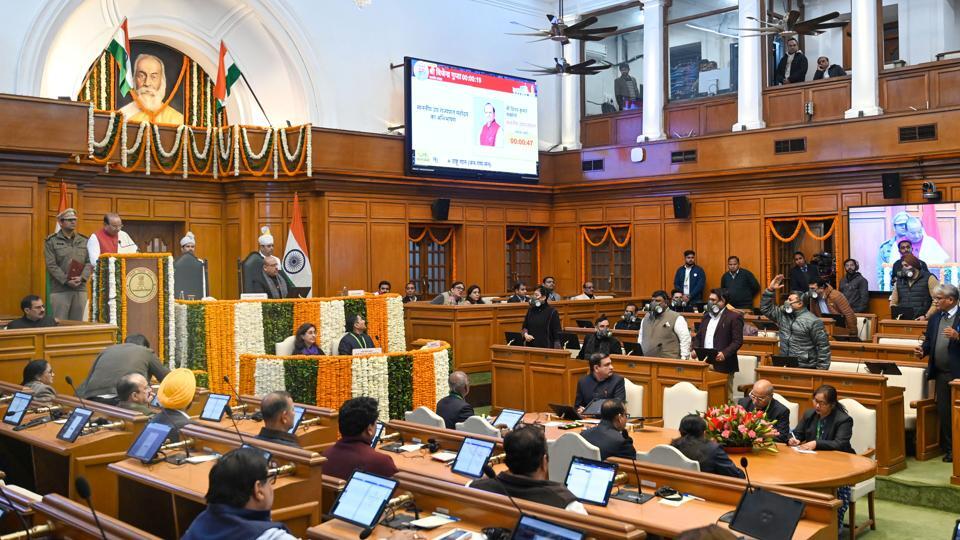
Outlining the government’s agenda for 2026, Saxena said the focus would be on completing long-pending infrastructure projects, improving civic service delivery, cleaning the Yamuna and addressing air pollution.
Among the key initiatives targeted for completion are the Barapullah Phase-3 flyover, construction of new flyovers and the launch of the Delhi Mitra app, a unified platform for citizens to lodge civic complaints across agencies, aimed at quicker resolution through direct monitoring and alerts.
“Tackling air pollution, infrastructure development and cleaning the Yamuna are among the top priorities of the government. Despite challenges posed by entrenched administrative inertia, several public welfare measures have been undertaken during the government’s 10-month tenure,” Saxena said.
Detailing major infrastructure projects scheduled for completion in 2026, the lieutenant governor said construction and redevelopment of 400km of roads would be completed by March 2026, while renovation of another 600km of roads is planned during the year. “Work on the Barapullah flyover, which had remained stalled for years, has been resumed and, after obtaining all necessary approvals, will be completed by May 2026,” he said.
To address waterlogging, Saxena said 22 lakh metric tonnes of silt has been removed from drains so far. He added that smart drainage systems with real-time monitoring would be developed in vulnerable areas, The government plans to implement the drainage master plan at an estimated cost of ₹56,000 crore in the coming years.
On the Yamuna front, Saxena said the “highest priority” has been accorded to reducing the river’s pollution. He listed measures including construction of new sewage treatment plants (STPs), upgrade of existing facilities and the setting up of decentralised STPs along drains. “Owing to years of neglect and pollution, the condition of the Yamuna has remained deplorable,” he said.
Calling air pollution one of the “most serious challenges” facing the Capital, the lieutenant governor said clean air is a fundamental right. He said the government launched a comprehensive, year-round and time-bound air pollution mitigation plan in June 2025, moving beyond only seasonal measures adopted in the past. The plan includes setting up new air quality monitoring stations and automated testing centres, and adding 70 mechanical road-sweeping machines and 1,000 litter picker machines over the next 10 years.
Saxena also said the government aims to flatten Delhi’s three landfill sites by 2027 using trommel machines under the public-private partnership (PPP) model.
Listing steps taken during the last 10 months, Saxena referred to the “historic” ₹1 lakh crore budget, reduction of regulatory and licensing hurdles, enactment of the Delhi School Education (Transparency in Fixation and Regulation of Fees) Act, 2025, induction of 1,150 DEVI electric buses, setting up of 13 Atal canteens to provide subsidised food, notification of 13 districts for administrative reform and establishment of 383 Ayushman Arogya Mandirs.
He added that a bill would be introduced to amend the Delhi Shops and Establishments Act, and that procedures for obtaining fire safety certificates, land use change approvals, factory and trade licences have been simplified.
The winter session of the Delhi Legislative Assembly will continue until January 8. Chief minister Rekha Gupta said both the treasury benches and the opposition should act responsibly. “There should be constructive discussion on the important issues facing Delhi. All MLAs should raise concerns from their constituencies, and effective policy delivery should be the aim of this session,” she said.

Stay updated with all top Cities including, Bengaluru, Delhi, Mumbai and more across India. Stay informed on the latest happenings in World News along with Delhi Election 2025 and Delhi Election Result 2025 Live, New Delhi Election Result Live, Kalkaji Election Result Live at Hindustan Times.


