
 E-Paper



Delhi govt to facilitate RWA-like bodies for slums
The move is aimed at coordinating efforts towards addressing various civic problems such as cleaning of community toilet, cleaning of drains, sweeping of streets and management of community water points, officials said.

 Prefer HTon Google


New Delhi: The Delhi Urban Shelter Improvement Body (DUSIB), the Delhi government’s slum management agency, is planning to facilitate formation of residents bodies in the jhuggi jhopri (JJ) clusters across the city to coordinate efforts aimed at addressing various civic problems such as cleaning of community toilet, cleaning of drains, sweeping of streets and management of community water points, DUSIB officials aware of the plan details said on Thursday.
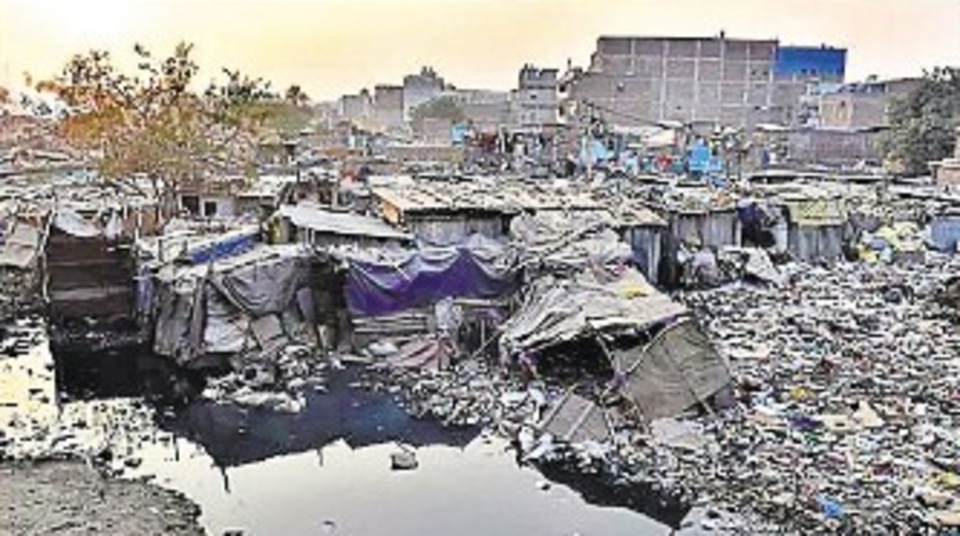
If implemented, the plan will bring these unauthorised settlements under the same local governance framework as their planned colonies where residents are made partners in the development of their area. So far, no slum cluster in Delhi has ever had an RWA.
The officials said that initially Bhagidari committees will be set up, members to which will be nominated by eminent persons to be chosen by the government. Later, the urban shelter board will facilitate formation of full fledged RWAs in the slums. The officials added that the plan is in its nascent stage and will be soon sent to the Delhi government for its approval.
A Delhi government spokesperson did not comment on the matter.
DUSIB chief executive officer K Mahesh said, “Slum dwellers have every right to get proper civic amenities and services. The concept of Bhagidari will empower them and they will be able to contribute in the overall welfare and development in the slums.”
According to the proposal, DUSIB officials said, the RWAs in slums will be “informal groups” and function like associations of people. Under Section 13 of DUSIB Act, 2010 the board is allowed to constitute a Basti Vikas Samiti at any slum to assist and advice the board on all matters relating to the activities taken up the agency in that slum, they added.
According to DUSIB data, Delhi has 675 slums where more than two million people lived in 2021. DUSIB was formed in 2010 after which slum management, which was part of MCD duties, was transferred to the board. The board is headed by the chief minister of Delhi.
Over the years, slums in Delhi have witnessed chaotic developments with dwellers constructing semi-pucca and mortar and concrete structures, despite absence of basic civic infrastructure. “Among the primary concerns are absence of ration cards and lack of access to benefits available under welfare schemes,” said a Delhi University student currently engaged in a social survey in the slums.
Mahesh said the details of the scheme are being worked out for clarity on selection of the members, eligibility, functions, tenure, etc. “It is proposed that initially the groups will be formed by the DUSIB. If the people want to form an association, we will explore that as well. The idea is to empower the slum dwellers which will help us to overcome the problems that residents are facing and also ensure rehabilitation and relocation,” said Mahesh.
DUSIB is also planning to establish five creches in five different slums as a pilot project to working parents who have to leave their kids behind when they go to work. “Around 45% of the families staying in the slums are nuclear families, where both parents are working. Such parents need creche facilities to ensure the safety of their kids. The creches will provide security to young kids particularly girl child who are vulnerable,” said Mahesh.
Atul Goyal, President of United Residents Joint Action, an advocacy group that connects a network of RWAs in the capital, said it is the right step towards empowering the underprivileged residents of the city. “Some of the slums already have Mohalla Sudhar Samiti that is led by community leaders but many such groups are functioning only in papers. The consultative mechanism being planned may revive them as well. The government may utilize their capabilities for direct monitoring of the development and welfare activities at the micro level in the slums. It will work as a micro level governance and the groups can better represent the interests of the local residents,” Goyal said.
Mukta Naik, fellow at Centre for Policy Research, said, “Jhuggi jhopri clusters in Delhi have not had a formal mechanism for grievance redressal, unlike planned colonies, which have RWAs for internal management and as an interface with the government. In this sense, this is a welcome move. Odisha seems to have had fair success in utilising Slum Dweller Associations in the process of granting land rights and subsequently appointing them as “implementation partners” for government schemes and infrastructure projects in slum settlements. However, the effectiveness of these SDAs derives from the government’s efforts to build capacities and systemically create participatory interfaces for governance. Delhi government must also adequately invest in capacity building as well as ensure sensitization and accountability of officials that interface with these committees.”


