E-Paper



Delhi’s wetland authority looks to create health card for city’s water bodies
Delhi State Wetland Authority plans to create health cards for all water bodies in the capital to assess their existing condition and the changes they undergo based on steps undertaken aimed at their rejuvenation. The body has sought expertise from individuals, NGOs and expert organisations to help create action plans and environment management plans for each water body. The health cards will include visual cues in the list of parameters for the health cards of these water bodies, along with readings collected from each water body.

 Prefer HTon Google


The Delhi State Wetland Authority (SWA) is looking to create health cards for all water bodies in the Capital to assess their existing condition and the changes they undergo based on steps undertaken aimed at their rejuvenation, officials aware of the matter said on Monday.
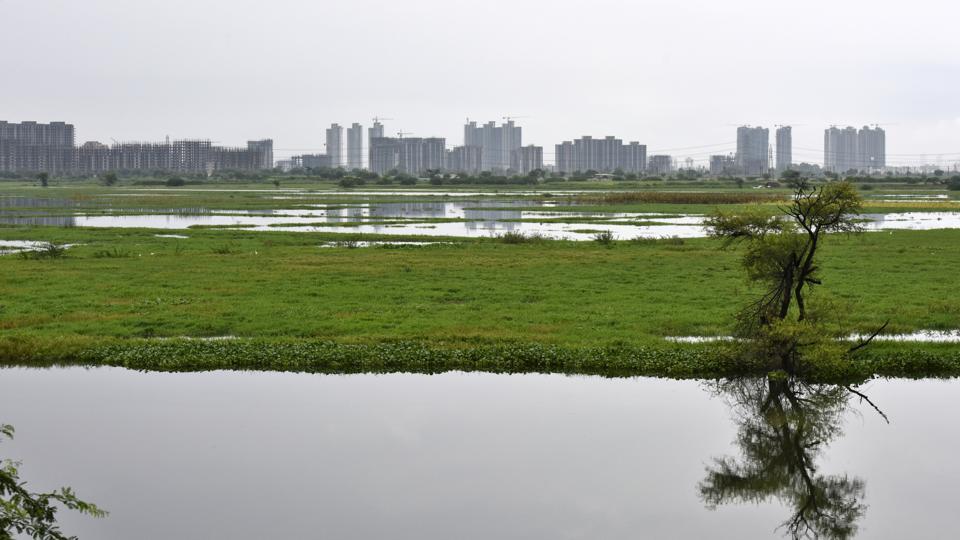
For this, the body has sought expertise from individuals, NGOs and expert organisations, which can also help create action plans and environment management plans (EMPs) for each water body, the officials added. The Delhi SWA has floated an expression of interest, looking to bring such experts on board for a period of five years.
These experts will join a panel comprising all landowning agencies under which the city’s water bodies fall, along with the member secretary of SWA, who will head the panel.
“The role of these experts will be to prepare brief documents and health cards for each water body, along with action plans for their rejuvenation and restoration. Drawing out EMPs will be the next step, with a separate study to be launched on the threatened wetlands. Further, they will be required to carry out community awareness programmes on the ground, around these water bodies,” an SWA official said, stating that the five-year-period will allow the expert panel to track progress of each individual water body.
There are 1,045 water bodies in Delhi, according to a Delhi SWA data of 2022.
SWA plans to use both visual cues in the list of parameters for the health cards of these water bodies, along with readings collected from each water body, which can analyse factors like biological oxygen (BO), dissolved oxygen (DO), faecal coliform count or the PH level.
“For the health card, the brief document will mention the source of water of each waterbody, whether it is visibly clean, presence of any foul odour around it, if sewage is entering it and whether there is any encroachment around the waterbody,” said the official, wishing not to named. This checklist will then be used to give the waterbody a health rating, the official added.
The health card will exist in a digital form for which a database will be maintained to facilitate easy tracking of the status of the waterbody, officials said.
“No physical card will be created, but rather a database will be maintained. Once a base health rating is established, it is easy to track progress over time. If the rating dips further, then that means more action is needed on the ground, whereas an improvement will show that the action plan is working,” the official cited above said .
Paras Tyagi, an activist and member of Delhi-based NGO Centre for Youth Culture Law and Environment (Cycle India), had developed a similar health card of waterbodies in 2021, with a total of 1,009 water bodies being mapped through geo-coordinates provided by the Delhi Parks and Gardens Society (DPGS). Each water body was then given a score from 0 to 7, the healthiest being seven.
“The first thing any health card should look at is how much life is present in a waterbody. While dissolved oxygen is a good indicator, the presence of plants and microorganisms also matter. If it has sewage entering it, then the water body will be completely dead. Another factor that we looked at was encroachments, as some waterbodies were partially encroached upon after they dried up,” he said.