
 E-Paper



Cops list 64 snarl points in Delhi, to draw plans to ease traffic, pollution
A traffic official said these 64 places are most prone to congestion, and the traffic police, in coordination with the city’s environment department, will now identify reasons behind these hold-ups and make individual plans to ease the jams

 Prefer HTon Google


The Delhi traffic police have identified 64 congestion points from where long tailbacks and regular snarls are being reported, resulting in increased vehicular emissions that worsen the overall pollution levels in the national capital.
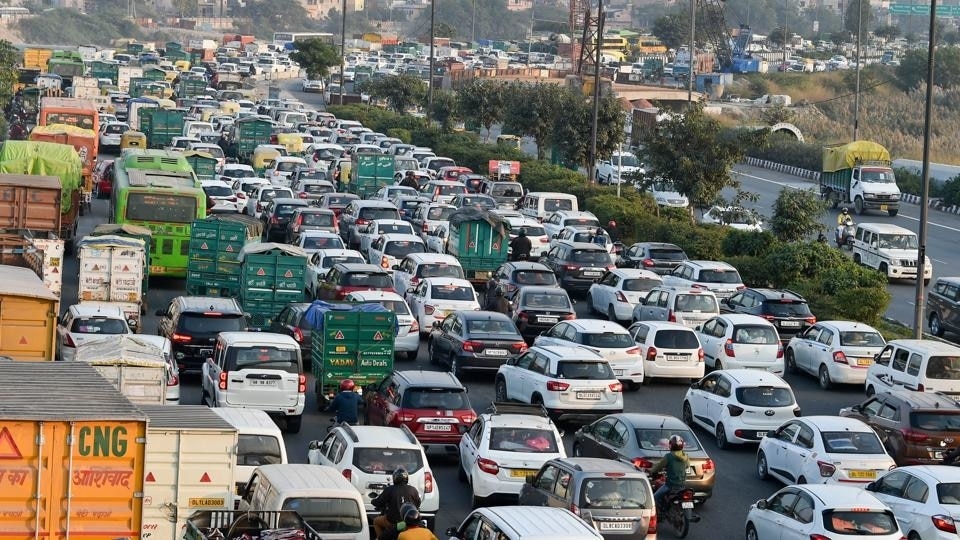
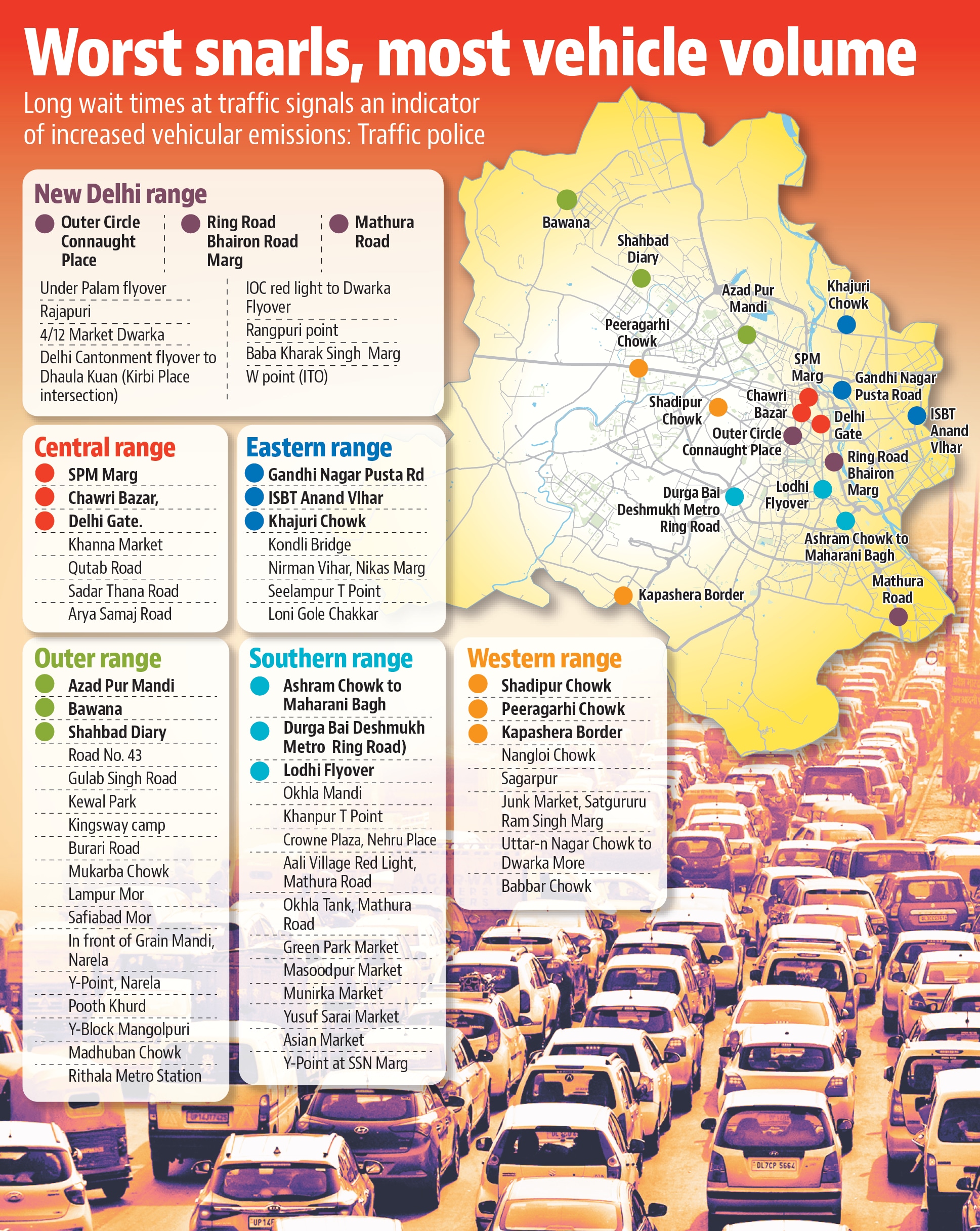
A senior officer said the department has drawn up a list of 64 places that are most prone to congestion, and the traffic police, in coordination with the city’s environment department, will now identify reasons behind these traffic hold-ups and make individual plans to ease the jams.
The need for urgent solutions couldn’t have been more evident than it was on Monday, when Delhi’s air quality was back in the ”very poor“category, with an air quality index (AQI) reading of 331, according to the Central Pollution Control Board’s 4pm bulletin. In comparison, the air was much better on Sunday, when the AQI was 254, in the “poor” category.
“In September, we first identified a list of 30 congestion points when the Delhi Pollution Control Committee (DPCC) held the first meeting with all agencies in the Capital, before the onset of the pollution season. But now we have identified more stretches and junctions where jams are reported on a regular basis,” the Delhi traffic police officer cited above said.
Some of the areas that have been included in the new list are Qutub Road, Delhi Gate, Nirman Vihar (Vikas Marg), Anand Vihar interstate bus terminal, Khajuri Chowk, Palam flyover, Delhi Cantonment flyover to Dhaula Kuan, Outer Circle Connaught Place, Bhairon Marg (Ring Road), Gulab Singh Road, Azadpur Mandi, Madhuban Chowk, Ashram Chowk to Maharani Bagh, Khanpur T-point, Okhla Mandi, Lodhi flyover, Uttam Nagar Chowk to Dwarka Mor, Kapashera Chowk, Shadipur Chowk and Peeragarhi Chowk.
Officials said each of the six traffic ranges identified the most congested stretches in their respective jurisdictions. The criteria for inclusion on the list were consistent traffic jams and increased vehicular volume. The long waiting time at traffic signals was also treated as an indicator of increased vehicular emissions, the officer said.
Senior officials of DPCC also said the identification of these congestion points was important to control vehicular pollution, which is the biggest source of local pollution in the national capital.
Action on these stretches will provide a dual benefit — reducing commuter distress while also bringing down the local pollution, the officials said.
“After the Covid-19 pandemic, vehicular emissions have become a bigger problem. A lot of commuters, who were earlier travelling via public transport modes, have now switched to private vehicles. Many from economically weaker backgrounds have purchased two-wheelers or second hand cars for their commute, fearing contraction of infection on mass transit systems. The negative impact of this can be seen in the form of increased jams and its effect on pollution,” a DPCC official said.
The official added that each of these stretches will be inspected and the reason behind the snarls will be assessed and solutions worked out accordingly.
“For instance, if broken roads are causing a traffic hold-up, then we will forward the complaint to the public works department (PWD) or the National Highways Authority of India (NHAI) so that the necessary action is taken. The solutions could be either short or long term, but we will try to resolve the maximum number of issues and reduce the list,” the DPCC official said.
A study by the Centre for Science and Environment (CSE), released in November, showed that vehicular emissions contributed the highest share to Delhi’s PM 2.5 levels (particulate matter with diameter less than 2.5 micrometres), in terms of local sources of pollution.


