E-Paper



Centre starts land acquisition process for Delhi-Ambala rail line project
The special railway project worth ₹5,983 crore will reduce traffic congestion on one of the busiest routes, improve connectivity and promote tourism, officials said

 Prefer HTon Google


Strap: The ₹5,983-cr project will reduce traffic and improve connectivity on one of the busisiest routes, say officials
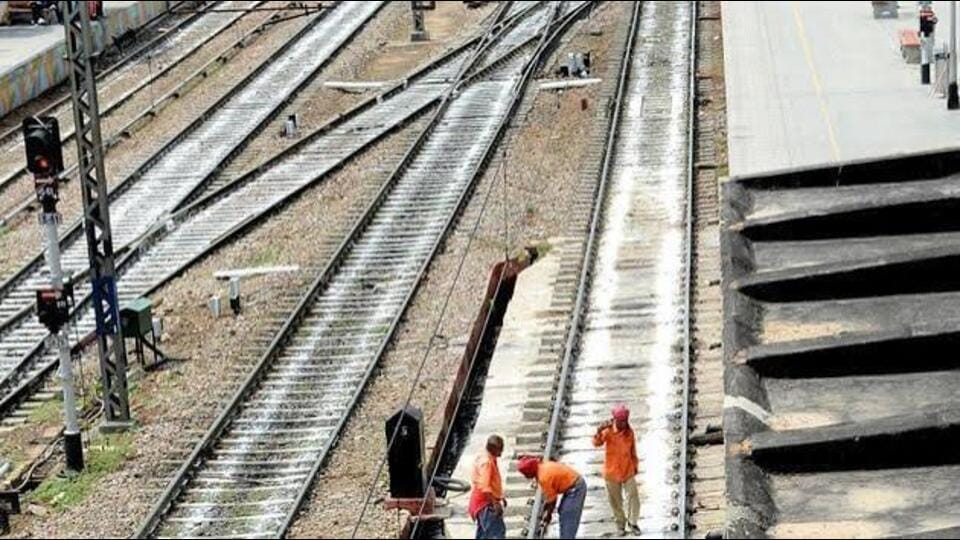
The union government has initiated the acquisition process of nearly 8.5 hectares of land in Panipat district of Haryana, for the proposed 198-km long Delhi-Ambala third and fourth railway line project.
The special railway project worth ₹5,983 crore will reduce traffic congestion on one of the busiest routes, improve connectivity and promote tourism, officials said.
In an official notification issued by the ministry of railways’ construction organisation, in exercise of the powers under Section 20A(1) of the Railways Act, 1989, announced the government’s intent to acquire land for the execution, maintenance, management, and operation of the special railway project.
The notification for the special railway project, dated September 29 was published in the gazette of India on October 1.
According to the proposal, the railways intent to acquire 6.1 hectares of land in seven villages of Samalkha tehsil and 2.3 hectare land in six villages of Panipat tehsil. The notification provides khasra-wise details and the proposed area for acquisition in each village.
Accordingly, the land identified for the rail track falls in Bhodwal Majri, Chulkana, Kiwana, Manana, Karhans, Machhroli, and Jhattipur villages of Samalkha tehsil. Similarly in Panipat tehsil, the land has been notified in Diwana, Sewah, Kabri, Sarai Bachhra, Nizampur, and Taraf Insaar villages.
“Any person interested in the said land may, within a period of thirty days from the date of publication of this notification in the official gazette, raise objection to the acquisition and use of such land for the aforesaid purpose under sub-section (1) of section 20 D of the said Act,” the notification read.
The authorities have asked to file objections before the district revenue officer (DRO), Panipat in writing, which will give people an opportunity of being heard, either in person or by legal practitioner and may, after hearing all such objections and after making enquiry, issue an order.
Any order allowing the objection or not, made by the DRO under sub-section (2) of section 20 D of the said Act shall be final, it stated.
The special railway project worth ₹5,983 crore was approved by the union cabinet in February this year and is scheduled for completion within four years.
The Delhi–Ambala section is among the busiest rail corridors in the country, handling substantial passenger and freight traffic with both stations being major interchange in the northern India.
It will pass through the Haryana districts of Sonipat, Panipat, Karnal, Kurukshetra, and Ambala, as well as Central, North West, and North Delhi.
Officials said that this significant project forms part of the broader initiative to quadruple the highly utilised Delhi–Jammu corridor, a crucial arterial route linking the national capital region (NCR) with northern states. They believe that the enhanced capacity will allow for the introduction of additional passenger and freight trains, improving punctuality and service reliability.
Railway minister Ashwani Vaishnav said that the new lines will strengthen connectivity between Delhi, Haryana, Punjab, and northern India.
“It also includes construction and rehabilitation of major and minor bridges and is now entering the construction phase. The project will add about 24 million tonnes of freight capacity, improve movement of Vande Bharat and passenger trains, save ₹952 crore in logistics costs, generate 132 lakh human-days of employment, and reduce carbon emissions by 43 crore kilograms,” the minister said.
The major works for the project include building two railway over bridges, 79 rail under bridges, civil work, track laying, signalling, telecommunication and others.
Regional railway officials said that the corridor connects key economic nodes, including thermal power plants at Ropar, Panipat, and Rajpura, in addition to agriculture warehouses and industrial hubs.
The upgraded corridor will also improve connectivity to major pilgrimage and tourist destinations such as Shri Mata Vaishno Devi Katra, Amritsar, Beas, Srinagar and Shimla, boosting tourism and regional development.