
 E-Paper



Delhi’s AQI turns ‘poor’ ahead of Diwali, first since June 11
Forecasts by the Early Warning System for Delhi shows no relief ahead, with ‘very poor’ AQI also likely around or after Diwali.

 Prefer HTon Google


The air quality in Delhi deteriorated to the ‘poor’ category for the first time this season on Tuesday, barely a week ahead of Diwali. The average air quality index (AQI) in the city stood at 202 (poor) at 11 am – the first in this range since June 11, when the air quality was 245 (poor), data from the Central Pollution Control Board (CPCB) showed.
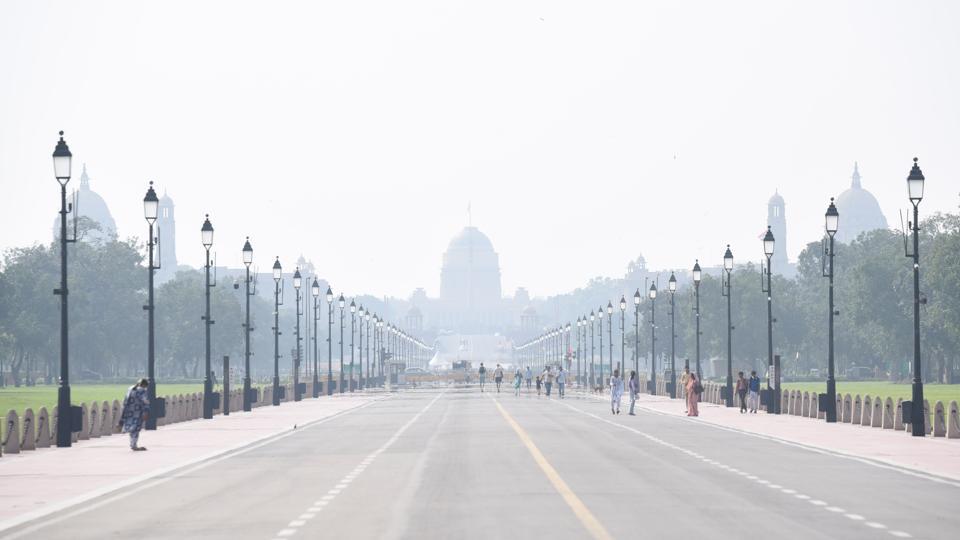
A dip in wind speed and cooler nights is gradually leading to a spike in pollution, experts said.
Forecasts by the Centre’s Air Quality Early Warning System (EWS) for Delhi shows no relief ahead, with ‘very poor’ AQI also likely around or after Diwali.
“Delhi’s air quality is very likely to be in the ‘poor’ category from October 14 till October 16. The outlook for the subsequent six days shows the air quality is likely to be between the ‘poor’ to ‘very poor’ category,” the EWS said in its last bulletin on Monday.
The CPCB classifies air quality on a scale where 0-50 is ‘good’, 51-100 ‘satisfactory’, 101-200 ‘moderate’, 201-300 ‘poor’, 301-400 ‘very poor’, and 401-500 ‘severe’.
Mahesh Palawat, vice president at Skymet meteorology, said winds were fairly low, oscillating between 6-10 km/hr through Monday. “The wind direction is westerly to northwesterly and there will be marginal stubble intrusion. We don’t expect significant change in terms of weather, with similar wind direction and low wind speed to persist,” Palawat added.
The Decision Support System (DSS) – a model which calculates the estimated contribution of sources of pollution to Delhi’s PM 2.5 – said the contribution of stubble burning was only around 0.62% on Monday, marginally up from a contribution of 0.24% on Sunday. It has forecast stubble burning to contribute 0.49% to the total PM 2.5 load in Delhi on Tuesday.
The top contribution to Delhi’s PM 2.5 on Monday was from the city’s transport sector (19.6%), followed by Jhajjar (9.8%) and Sonipat (6.1%), data showed.
The AQI generally starts worsening in October following the withdrawal of the southwest monsoon and a dip in air temperature. This is coupled with both the start of stubble burning in northwest India, combining with the festival season when firecrackers are burst, and a drop in the temperature or wind speed.


Stay updated with all top Cities including, Bengaluru, Delhi, Mumbai and more across India. Stay informed on the latest happenings in World News along with Delhi Election 2025 and Delhi Election Result 2025 Live, New Delhi Election Result Live, Kalkaji Election Result Live at Hindustan Times.


