E-Paper



Delhi’s February air cleanest in the last seven years
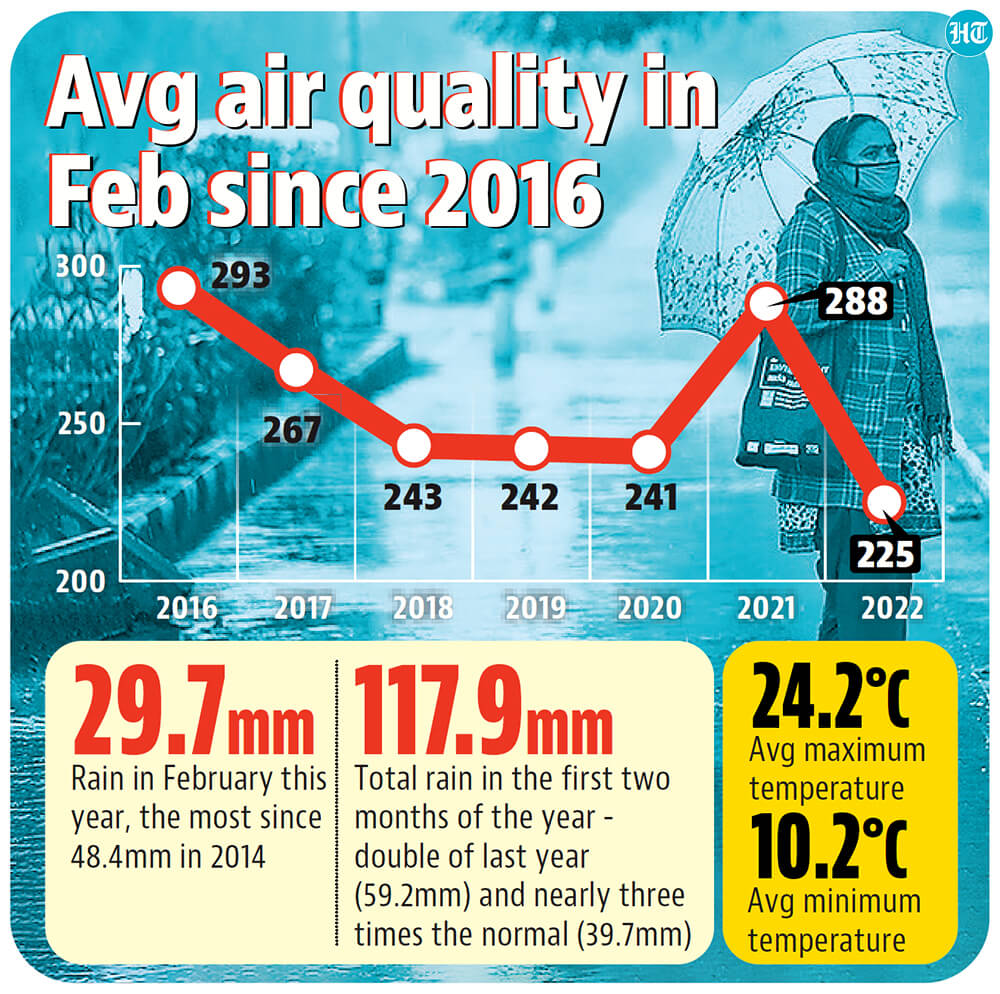
Delhi logged an average AQI of 225 throughout February, cleaner than previous low of 241 recorded in February 2020, records maintained by the pollution watchdog showed.

 Prefer HTon Google


Seven western disturbances in February kept the temperature in check and brought Delhi nearly 30mm of rain all month, giving the city its cleanest month since the Air Quality Index (AQI) was launched in 2016, showed data from the Central Pollution Control Board (CPCB), as another lot of weather records tumbled for yet another month.
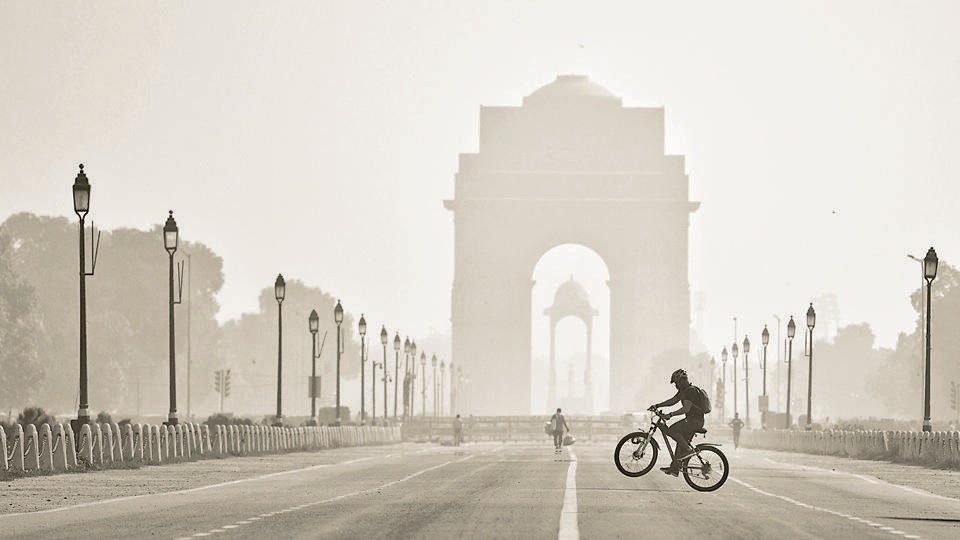
Delhi logged an average AQI of 225 throughout February, cleaner than previous low of 241 recorded in February 2020, records maintained by the pollution watchdog showed.
The city also logged 29.7mm of rain in the month, the most since 48.8mm in 2014, and over 10 times the 2.6mm of precipitation in February last year.
The city has already received 117.9mm of rain in the first two months of the year now — double what it received in the same time last year (59.2mm) and nearly three times more than normal (39.7mm). In January, Delhi recorded 88.2m of rainfall, making it the highest ever for January in the last 121 years, beating a 1989 record (79.7mm).
The trends show that the weather in 2022 has picked up exactly where 2021 left off -- breaking weather records every month.
Not only did Delhi see extreme cold waves at the start and end of last year, it witnessed an intense summer, with a “severe heatwave” recorded in June, while Delhi recorded its second warmest February in the last 120 years. March was little different, bringing the hottest day that month in the last 76 years, data from the India Meteorological Department (IMD) shows.
Last year was similar for the Capital in terms of irregular rainfall patterns, which saw it receive 1,512.4mm of annual rainfall all year, making it the second-wettest year ever, behind only 1933 (1,534.3mm).
“Delhi has consistently seen good spells of rain for the last 14 months and this has led to multiple months where the air quality has been the cleanest in the last several years. This is a mixture of meteorological conditions combining with bold implementation and strict monitoring of pollution-related activities and sectors,” said Dipankar Saha, former head of CPCB’s air laboratory.
IMD data showed that February generally averages three or four western disturbances.
“Even when there was no rain, we saw cloudy skies and this generally leads to a higher night time temperature and a cooler day, which halted the spike in mercury and did not allow the maximum to touch 29 degrees even,” said RK Jenamani, scientist at IMD.