
 E-Paper



Delhi’s houses: The subconscious of a Capital, chronicled in its residences
Delhi's architecture reflects its people's history, resilience, and climate. As modernity reshapes homes, the essence of Dilliwallah risks being lost.

 Prefer HTon Google


A city builds itself around its people. Its most intimate architecture is residential, the house speaks through its people and their connection with land, climate, history, habits – both mental and physical. Delhi, is composed of many lives at once. Who is the Dilliwallah and how do they live? To understand the subconscious behind this life, one must understand the city and its becoming. There is an ancient Delhi around Purana Qila, where settlements dating back to 1500 BCE speak solemnly of ordinary lives through utensils, tools, and fragments of craft. There is an early medieval Delhi and a visibly medieval Delhi, still standing, peaking through the gaps of urbanism.
To call Delhi a city of ruins is both an honour and a burden. It is an honour to live alongside deep time, to negotiate daily through the djinns of history. It is also a burden because living with history is rarely made easy. Houses in older quarters are expected to remain frozen, denied adaptation without navigating endless permissions. What we see instead is decay. Houses overgrown and crumbling, appearing fragile yet somehow enduring. Through heat, rain, dust and time, they hold families and businesses together, keeping Old Delhi alive as the city’s commercial and social heart.
Modern Delhi emerged from rupture. After Partition, during the largest human migration in history, Delhi absorbed millions displaced from West Punjab, Sindh and the North West Frontier Province. Many arrived believing they would return. Belongings were buried with care and hope. That hope dissolved quickly. When return became impossible, rebuilding became urgent.
Independent India faced one of its first and most complex urban challenges. Between 1947 and the early 1950s, Delhi’s population nearly doubled. Resettlement was led by the Ministry of Rehabilitation, the Delhi Improvement Trust and later the Delhi Development Authority, supported by municipal bodies and cooperative housing societies.
Within the Central Public Works Department, architects shaped a distinctly Indian modernism. Their work was rational, climate responsive, and socially grounded. This was modernism as a necessity.
The refugee journey often began in camps at Purana Qila, Kingsway Camp, Humayun’s Tomb, and military barracks. Abandoned homes left behind by Muslims migrating to Pakistan were allotted to refugees in Old Delhi and Civil Lines. At the same time, new neighbourhoods took shape. Lajpat Nagar, Rajinder Nagar, Patel Nagar, Punjabi Bagh, Tilak Nagar, Jangpura, and parts of Kalkaji. These were modest and dense, designed for urgency not grandeur. Markets and small industrial units grew alongside homes. Cooperative housing societies allowed families to pool resources, shaping the collective ethic that still defines Delhi neighbourhoods.
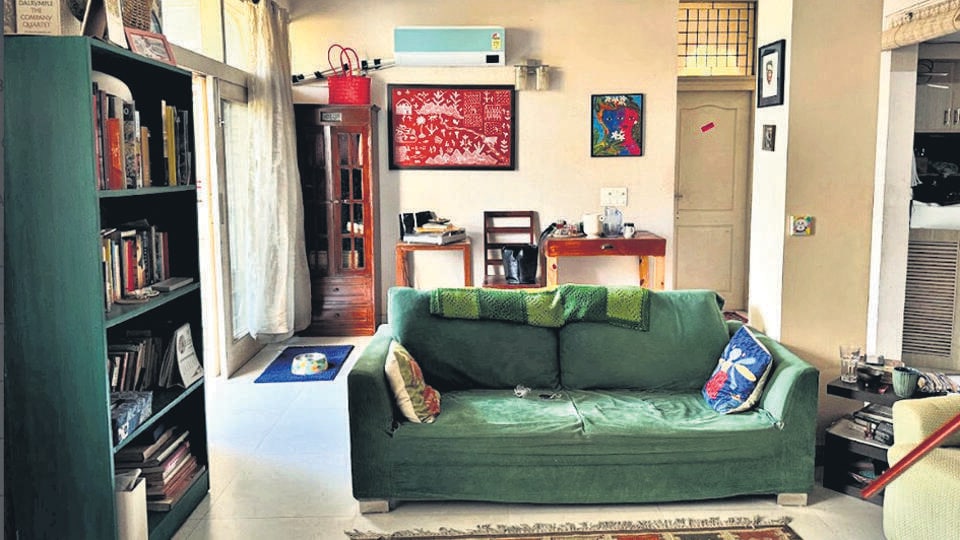
The Delhi house that emerged from this moment was a form of vernacular modernism. Homes were shaped around Indian living — indoor-outdoor kitchens, small windows to temper summer heat, verandahs with grills, roshandaans, rooftops with charpais, aangans with tulsi plants. Climate was understood. Domestic life shaped design. Often, it was the lady of the house who oversaw construction, guiding kitchens, courtyards, storage and thresholds. Architecture evolved with three intentions. First, climate science and ergonomics – the purpose of space and flow of movement. Second, memory: what one had lived behind, not always seeking a clean break from displacement but making space for heirlooms and rituals. This was rare. Finally, aspiration – to build a new life in a new India, to become a Dilliwallah.
The beginning of the end for this can be traced to the early 2010s. In 2011, amendments to Delhi’s building regulations allowed residential plots to be built on stilts for parking and permitted additional floors. Density was no longer addressed through city expansion or new housing typologies, but through vertical intensification.
This changed everything.
Houses built in the urgency of the 1950s and 1960s were never engineered for infinite vertical growth. Expecting them to carry additional floors decades later was unrealistic. Homeowners were incentivised to demolish and rebuild entirely. Not out of greed, but practicality. Why should a Dilliwallah not profit from expanding their home when the city itself offers no alternative housing vision?
The Dilliwallah is not to blame.
The failure lies in planning. A city that needed to grow outward chose instead to overload its existing fabric. Density was increased without care for material life cycles, neighbourhood character or architectural memory. The result was predictable. The architect disappeared. The homeowner lost agency. The builder took over.
Once a bungalow city, Delhi is becoming a builder city. Houses resemble hotels. Marble and tile replace terrazzo. Imported aesthetics erase climate intelligence. Roshandaans give way to sealed interiors and false ceilings. Natural ventilation is replaced HVAC systems. DDA housing, once a backbone of equity, is abandoned for privatised schemes.
What is being lost is not merely architecture, but the story of how a city rebuilt itself repeatedly. Each house contains climate science, memory, and aspiration. To document Delhi’s modern houses is to document Delhi itself, through its people.
Their erasure is not progress. It is amnesia.
Delhi deserves a better memory. And Delhi Houses is one way to begin remembering.
Anica Mann works on archaeology and contemporary art in Delhi. The views expressed as personal

Stay updated with all top Cities including, Bengaluru, Delhi, Mumbai and more across India. Stay informed on the latest happenings in World News along with Delhi Election 2025 and Delhi Election Result 2025 Live, New Delhi Election Result Live, Kalkaji Election Result Live at Hindustan Times.


