
 E-Paper



Delhiwale: Stories of stones
Delhi's monuments tell tales of power and tragedy: three tombs, linked by a single story of betrayal and revenge, offer a glimpse into Mughal history and architecture.


Monuments are made of stones and stories. Sometimes, some monuments are threaded together by a single story, such as these three.
Once upon a time there was an emperor called Akbar. This emperor had an esteemed courtier called Atgah Khan. This Atgah Khan was killed by a jealous courtier called Adam Khan. This Adam Khan was then executed by an angry Akbar in a particularly sadist way (you might recall seeing Atgah Khan’s murder and Adam Khan’s horrid killing in a four-minute sequence in the Hrithik Roshan movie Jodha Akbar). Consequently Adam Khan’s family built a tomb for him, just as Atgah Khan’s tomb was built by his son Mirza Aziz Koka. This Mirza Aziz Koka too has a tomb, and it is very special— it is the world’s first all-marble Mughal tomb. Today, dear reader, you can sightsee all three tombs in the course of half a day, because they all are here in Delhi (although Akbar didn’t rule from Delhi but from… guess!)
Overlooking the local bus adda, the hilltop monument in Mehrauli is also known as Bhool Bhullaiya, a maze where one may get lost (it surely has to be a legend—impossible to get lost in this tomb!). On lazy afternoons, the monument becomes an extension of neighbourhood life, crowded with people from the vicinity. Within the octagonal edifice lies Adam Khan’s grave, absurdly narrow.
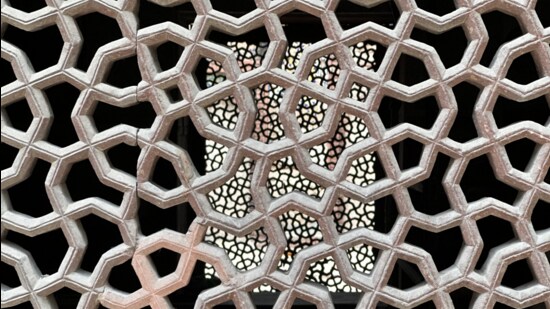
The monument in Hazrat Nizamuddin Basti is as lavish as an illustrated coffee-table book, the stone walls sculpted with calligraphies and patterns. The blue and green tiles adorning the arched gateway summon to imagination the Persian gardens of miniature paintings. Inside are three graves — those of Atgah Khan, his wife Jiji Anga, and their eldest son Yusuf Muhammad Khan. This afternoon, the sunlight is trying to enter the dark chamber through the tomb’s stone screens, and mostly failing.
Steps away from Atgah Khan’s tomb, the monument inspired the Diwan-e-Khas of Delhi’s Red Fort. Daylight enters the large hall through airy pores of the tomb’s stone screens. The two most decorative of the 10 graves belong to Mirza Aziz Koka and his wife, identity unknown. The building acquired the colloquial name of Chausath Khamba because chausath, or 64, pillars support the 25 domes of its stone ceiling. A bunch of graves lie immediately outside, some of which belong to the wives of Bahadur Shah Zafar, the last Mughal emperor.


Stay updated with all top Cities including, Bengaluru, Delhi, Mumbai and more across India. Stay informed on the latest happenings in World News along with Delhi Election 2025 and Delhi Election Result 2025 Live, New Delhi Election Result Live, Kalkaji Election Result Live at Hindustan Times.


